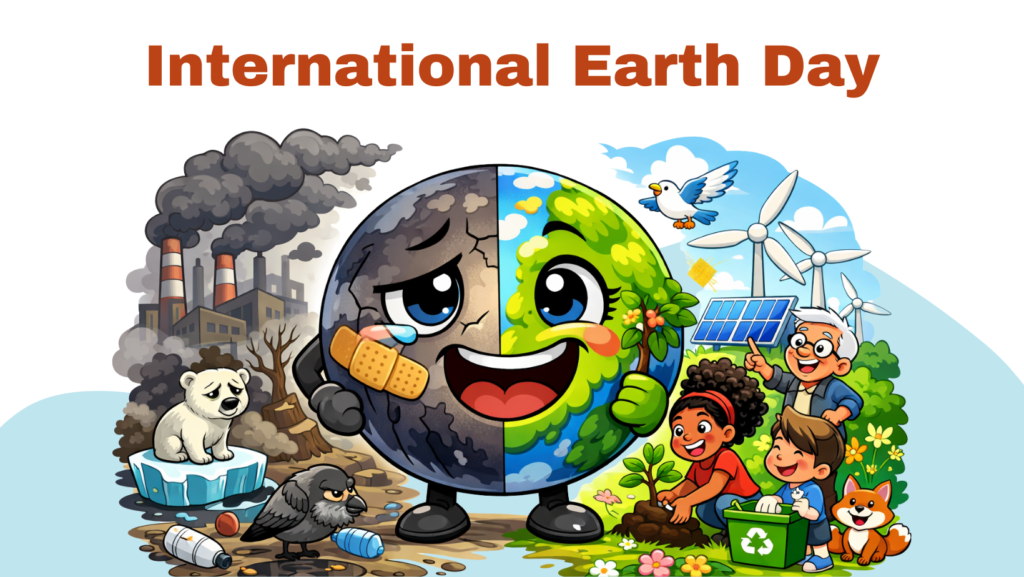
And Definitely Not Just a Seasonal Trait
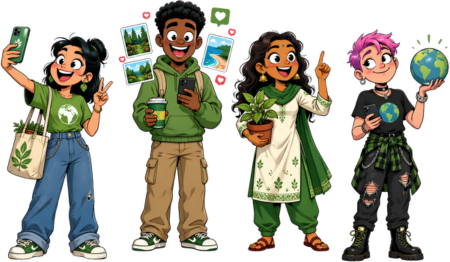
Every year around April, something predictable happens. Social media turns green. People start posting photos of forests they’ve never been to, oceans they don’t live near, and captions that sound meaningful but feel strangely recycled—like they’ve been copy-pasted from the same invisible script.
You’ve probably seen it so many times that you can almost predict the exact wording before you read it.
This is Not an Attack on Caring!
It’s an attack on how predictable that “caring” has become—how easily it turns into something automatic, performative, and oddly forgettable.
The intention behind Earth Day is not the problem. The problem is how easily something that started as a movement turns into a ritual. Something repeated, familiar, comfortable—and therefore, easy to ignore.
Because Earth Day was never supposed to be comfortable. It’s supposed to be something you do every day—not something you remember once a year.
Because if it only exists on your calendar, it doesn’t really exist in your life.
You’re Only Hearing Half the Earth Day Conversation
Every year, Earth Day shows up with the same message: protect the planet, change your habits, be more aware.
That part isn’t wrong.
But it’s incomplete.
Because most people are hearing that message in just one language—literally—and from one perspective, filtered through the same sources. And when you only see one version of a global issue, you don’t just miss information—you miss context.
This isn’t really about Earth Day anymore.
It’s about what you don’t hear when you only understand one language—and one version of the world.
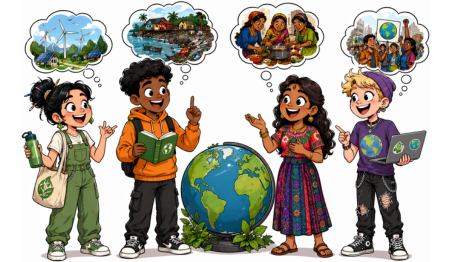
Earth Day Is Everyday
Let’s clarify something, because this is where people usually misunderstand the point.
When we say “one language,” we don’t just mean English vs Spanish—although that’s part of it. We’re also talking about something broader: one way of seeing the world, one version of the story, one simplified narrative that gets repeated until it feels complete.
And Earth Day is a perfect example of this.
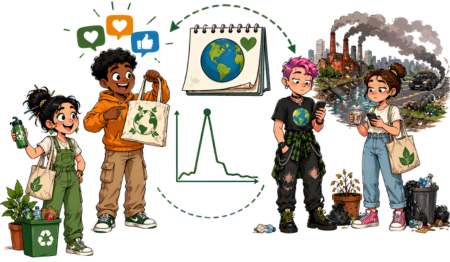
For most people, the environment becomes visible once a year. Around April, everything turns green—literally and digitally. People start posting, sharing, reacting. It feels like awareness suddenly increases.
But nothing really starts on Earth Day.And nothing should end there either.
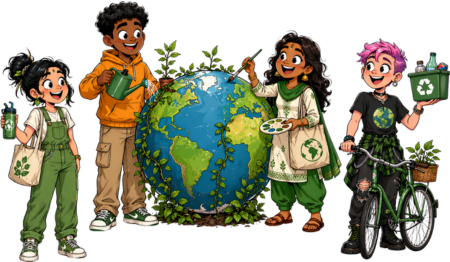
The Language of Convenience
Environmental issues don’t follow a calendar. Deforestation doesn’t pause after April 22. Pollution doesn’t slow down because people posted a quote. Climate patterns don’t adjust to hashtags.
So when we say “one language,” we’re also talking about this cycle—the idea that caring can be scheduled, contained, and expressed in a predictable way.
That’s a kind of language too.
A simplified one.
A comfortable one.
A version of reality that fits neatly into a single day. A version that feels complete—without actually changing much.
But the real conversation doesn’t work like that. It’s ongoing, messy, and often inconvenient. It shows up in daily decisions, in local news, in policies, in conflicts that don’t trend internationally.
Which is why “Earth Day is everyday” is not just a nice phrase.
It’s a correction.
A reminder that awareness is not an event—it’s a pattern.
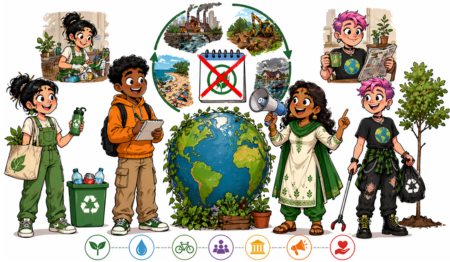
When Awareness Shows Up
So how do you move from something that shows up once a year to something that actually stays with you?
Most people assume the answer is simple: care more, try harder, be more conscious. That sounds reasonable, but it rarely works, because temporary awareness is not really about effort—it’s about timing. It shows up when everyone else is paying attention, when the topic becomes visible, when it suddenly feels relevant because it is everywhere.
In other words, it shows up when it’s safe to care.
That’s why it feels real in the moment, even if it doesn’t last.
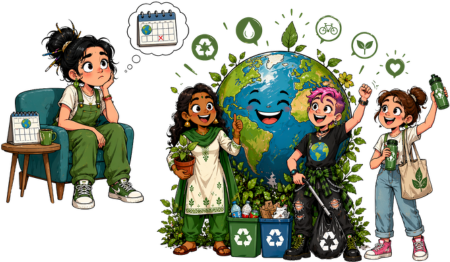
Why It Disappears Just As Fast
That kind of awareness is reactive by nature. It depends on being reminded, on seeing the same message repeated often enough that ignoring it would feel slightly uncomfortable for a moment. And once that moment passes, so does the attention. Not because people stopped caring, but because nothing around them requires them to keep caring.
The system is not designed for consistency. It’s designed for spikes.
Spikes don’t ask much from you.
And they don’t last.
What Everyday Awareness Looks Like in Real Life
Talking about “everyday awareness” sounds nice, but it only matters if it shows up in real life, not just in how we think about things.
And the truth is, most of it is not new information.
Most people already know what they’re supposed to do. The gap is not knowledge—it’s consistency.
The Things You Already Know (But Don’t Always Do)
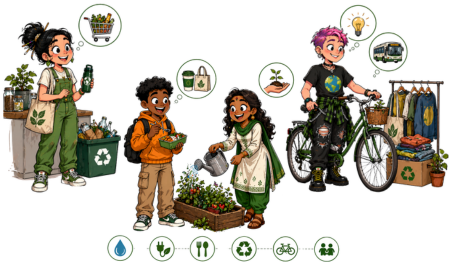
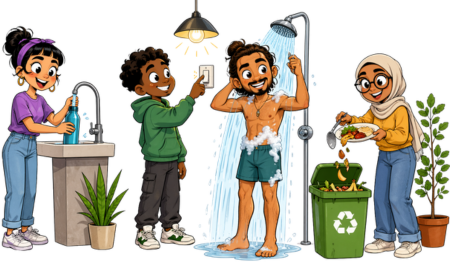
Drink tap water instead of buying plastic bottles. Turn off lights you’re not using, even if it feels insignificant. Take shorter showers, not because it’s a dramatic sacrifice, but because water doesn’t become unlimited just because it comes out of a faucet. Pay attention to how much food you throw away and how easily it happens without noticing.
None of this is surprising.
The difference is whether you do these things when no one is reminding you.
Because knowing something once a year doesn’t really change anything. Knowing it every day—even in small, imperfect ways—starts to shift how you move through the world. You begin to notice patterns, habits, and decisions that normally go unquestioned, not because they are invisible, but because they are convenient.
And convenience has a way of becoming automatic.
The Small Things That Actually Add Up
This is usually where people expect something dramatic. A big lifestyle change. A complete reset. Something that feels important enough to match the scale of the problem.
But most of the time, it’s much smaller than that.
So small, in fact, that it almost feels irrelevant. Easy to ignore. Easy to postpone. Easy to assume it won’t make a difference.
But it does.
Because if everyone thinks their small actions don’t matter, then nothing changes.
And at that point, we’re not really talking about Earth Day anymore.
We’re talking about what’s left of it.
At Home and At Work (Where It Actually Counts)
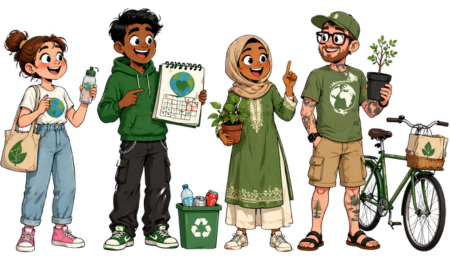
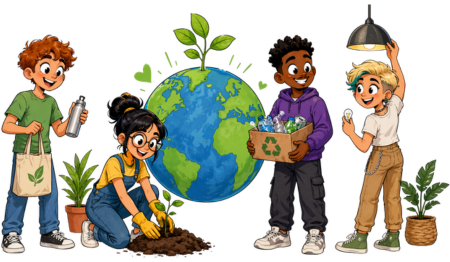
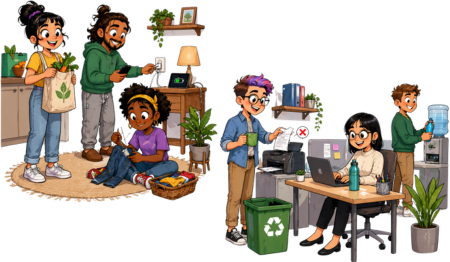
At home, it looks like using reusable bags instead of accepting plastic every time. Letting devices fully charge and unplugging them instead of leaving everything running. Being a little more intentional with electricity, even when it’s easier not to think about it. Buying less, and using what you already have a little longer before replacing it.
At work, it’s just as simple—and just as ignored. Printing less, even when it’s convenient to print everything. Avoiding unnecessary waste in shared spaces. Bringing your own bottle or cup instead of relying on disposable ones. Not treating office resources as if they don’t count just because they’re not coming out of your pocket.
None of these things are impressive on their own. They don’t trend. They don’t make for great posts. And that’s exactly why they matter.
Because they happen when there’s no audience. And that’s usually when habits are real.
That’s where everyday awareness lives—not in what you say once a year, but in what you quietly repeat the rest of the time.
Where This Actually Comes From
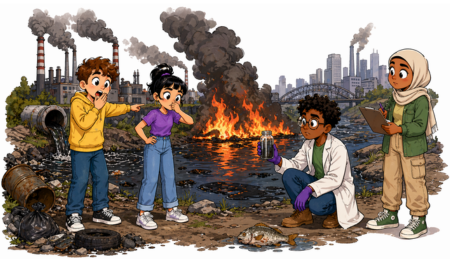
To understand Earth Day, you have to go back to a time when environmental damage was not subtle. In 1970, pollution in the United States had reached a level where it was impossible to treat it as a distant issue. This wasn’t about future generations or long-term projections. It was about what people were experiencing in real time.
Industrial waste was being dumped into rivers without serious regulation. Air pollution in major cities was dense enough to affect visibility and health. This wasn’t abstract. People didn’t need documentaries or awareness campaigns to understand the problem—they could see it, breathe it, and in some cases, watch it burn.
One of the most well-known examples—the Cuyahoga River catching fire—was not just shocking, it was symbolic. It showed, in a very literal way, that something was fundamentally wrong with the way industrial growth was being managed.
Back then, the problem didn’t need to be explained. It didn’t need awareness campaigns. It demanded attention.
It was obvious.
When Awareness Wasn’t Optional
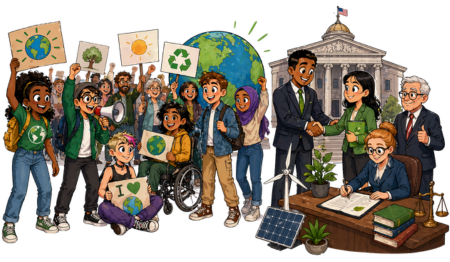
This context matters because it explains why the first Earth Day was so powerful. Around 20 million people participated. That scale of public pressure is difficult to imagine today, especially around environmental issues. But at that moment, the problem was visible enough to unify people across different backgrounds.
And more importantly, it led to concrete outcomes. Environmental policies were created. Regulatory institutions were established. The conversation moved from “this is happening” to “something needs to change.”
That shift didn’t come from hashtags.
It came from pressure.
From visibility.
From the fact that ignoring the problem was no longer an option.
Earth Day, in its original form, was not symbolic. It was strategic.
Today, it often feels like the opposite.
What Changed
—and why it feels different now. If you look at the present, it might seem like we are dealing with a completely different situation. In some ways, that’s true. Many of the most extreme forms of pollution that defined the 1960s and 70s are less visible today, at least in certain parts of the world. Regulations have improved specific conditions. Awareness is higher.
But the absence of visible crisis does not mean the absence of problems.
What changed is the nature of those problems.
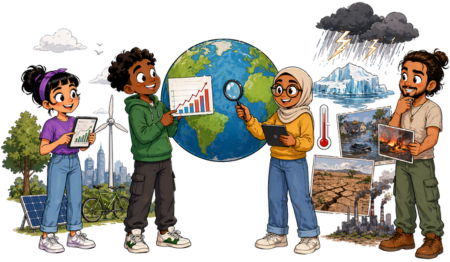
Environmental challenges today are more complex, more distributed, and often less immediately visible. Climate change, for example, does not appear as a single dramatic event. It unfolds gradually—through rising temperatures, changing weather patterns, and increasing frequency of extreme events. It requires interpretation, data, and long-term observation to fully understand.
This Creates a Psychological Gap
(And a Convenient One). When a problem is not directly visible, it becomes easier to deprioritize, even if its long-term impact is greater.
At the same time, issues like plastic pollution, biodiversity loss, and deforestation continue to evolve. They are not isolated problems; they are interconnected systems. Addressing one often involves understanding several others.
So while Earth Day still exists, the context around it has become more complicated.
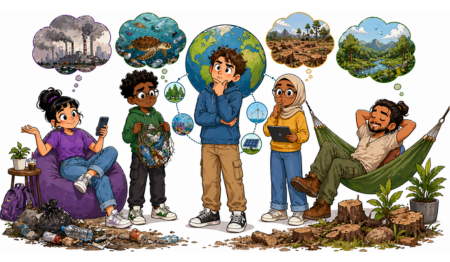
The Comfort Problem
Or when awareness replaces action. One of the most interesting shifts in modern environmental culture is the way awareness has been reframed as progress.
Being informed feels productive. Sharing information feels like participation. Expressing concern feels like engagement.
And to some extent, all of that matters.
But there is a difference between being aware of a problem and being structurally connected to it.
When Earth Day becomes primarily about signaling awareness, it risks losing its original function. Instead of pushing for change, it becomes a moment of collective acknowledgment—something closer to agreement than action.
This is not a moral failure. It’s a structural one.
Modern life is organized in a way that distances individuals from the consequences of their consumption. Supply chains are global. Production is outsourced. Waste is often invisible once it leaves your immediate environment.
So even when people care, they may not feel a clear path to meaningful impact.
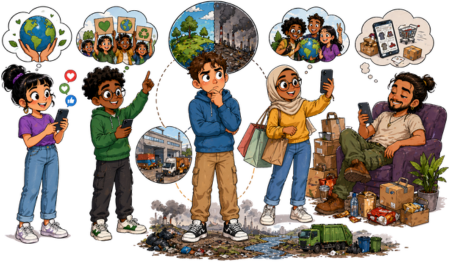
Systems vs. Individuals
And why this distinction matters. There is a tendency in environmental conversations to focus heavily on individual responsibility. What you eat, what you buy, how you travel—these are all relevant factors.
But they exist within larger systems that shape available choices.
For example, access to sustainable products often depends on location and income. Transportation options depend on infrastructure. Food choices depend on availability and cultural habits.
This doesn’t mean individual choices are irrelevant. It means they are part of a broader structure.
Understanding that structure changes how you think about solutions. It shifts the conversation from isolated actions to patterns, and from patterns to systems.
And systems, while more difficult to change, are also where large-scale impact happens.
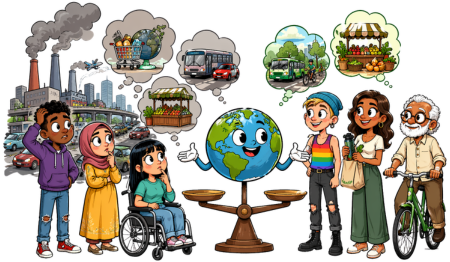
The Global Layer Most People Miss
Environmental issues are often presented as global problems, but they are not experienced equally.
Different regions contribute differently to emissions, resource extraction, and environmental degradation. At the same time, they face different levels of vulnerability to the consequences.
In many parts of the world, especially in regions with fewer economic resources, environmental challenges are not abstract. They are immediate and tied to daily life. Access to clean water, exposure to pollution, and vulnerability to climate-related events are not theoretical concerns—they are lived realities.
This creates a gap between how environmental issues are discussed globally and how they are experienced locally.
And that gap is not just about geography.
It’s also about language.
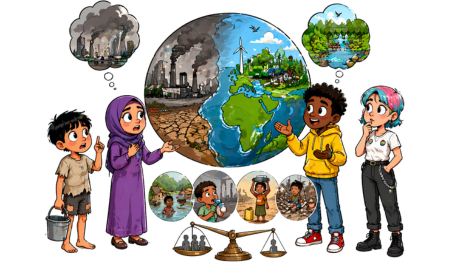
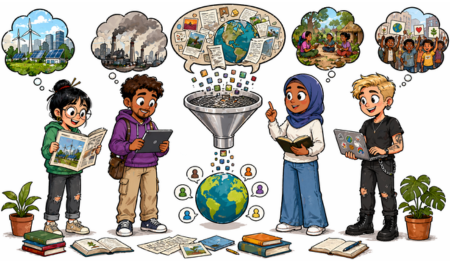
Language as a Filter
And why it matters more than it seems. Most people don’t think about language as a limitation when it comes to global issues. But it is one of the most significant filters we have.
If you only access information in one language, you are not just limiting the quantity of information—you are shaping the type of information you receive.
Translation is not a neutral process. It involves selection, interpretation, and adaptation. Certain perspectives are emphasized, others are minimized, and some are not included at all.
This doesn’t mean translated information is wrong. It means it is curated.
When you understand another language, you reduce that layer of mediation. You gain direct access to different narratives, different priorities, and different ways of framing the same issue.
And that can fundamentally change your understanding.
Why Spanish Opens a Different Conversation
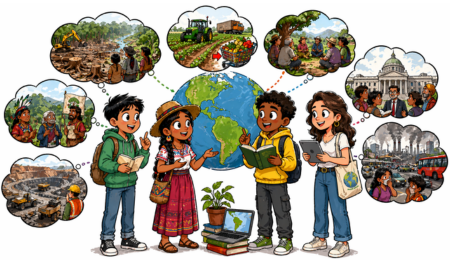
Spanish is one of the most widely spoken languages in the world, but more importantly, it connects you to regions where environmental issues are deeply embedded in social, economic, and political realities.
In Latin America, environmental topics are often tied to land use, indigenous rights, economic development, and government policy. These are not separate conversations—they are interconnected.
Deforestation in the Amazon is not just about trees. It involves agriculture, international demand, local communities, and political decisions.
Mining is not just about resources. It involves environmental impact, economic necessity, and social conflict.
Urban pollution is not just about emissions. It relates to infrastructure, planning, and population growth.
These discussions happen daily—in Spanish.
When you access them directly, you begin to see complexity that is often simplified in international coverage.
Understanding More than One Language Changes You
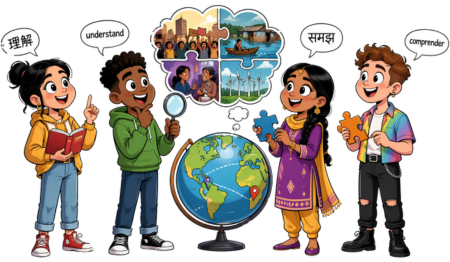
Do you actually want to know what changes when you understand more than one language? The shift is not immediate, but it is noticeable.
You start to recognize patterns in how issues are described. You notice differences in tone—what is urgent, what is normalized, what is debated.
You begin to see how language shapes not just communication, but perception.
And over time, this leads to a more layered understanding of global issues.
Instead of a single narrative, you see multiple versions of reality coexisting.
That doesn’t make things simpler.
It makes them clearer.
The KDF Perspective: Learning Beyond the Textbook
At Kasa de Franko, this is the underlying idea.
Language is not treated as an isolated subject. It is a tool that allows you to access ideas, cultures, and conversations that are otherwise unavailable.
Earth Day, in this context, is not just a theme for a lesson. It is an entry point into a broader discussion that connects vocabulary with real-world relevance.
You are not just learning words related to the environment. You are engaging with how different societies understand and respond to environmental challenges.
That is where language learning becomes meaningful.
Practical Awareness Without Unrealistic Expectations
So what does this mean on a personal level?
It means moving away from extremes.
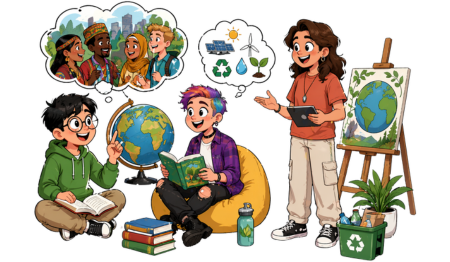
You don’t need to completely change your lifestyle to engage with environmental issues. But you do need a level of awareness that influences your decisions over time.
That might involve paying more attention to consumption habits, reducing unnecessary waste, or being more conscious of how products are sourced.
These actions are not dramatic, but they are sustainable.
And sustainability, in this sense, is not just about the environment—it’s about behavior.
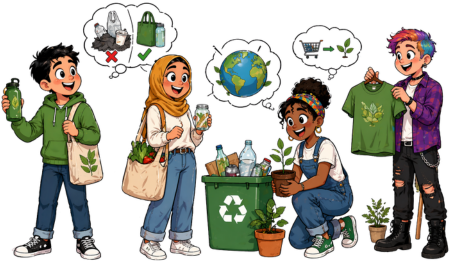
Rethinking Earth Day as a Way of Living
Not just a performance. Instead of treating Earth Day as something to participate in publicly, it can be more useful to treat it as a moment of evaluation.
A pause in routine.
A chance to reflect on patterns that usually go unquestioned.
What do you consume regularly?
What do you ignore because it feels distant?
What information are you not accessing because of language limitations?
These questions are simple, but they create awareness that can lead to gradual change.
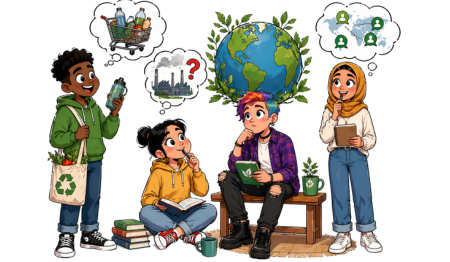
Final thought: Beyond the Annual Cycle
Earth Day is not ineffective, but it is often underutilized.
It already has visibility. It does not need more attention in the traditional sense.
What it needs is depth.
A shift from symbolic participation to meaningful engagement.
And part of that engagement involves expanding how you access information.
If learning Spanish allows you to understand perspectives that would otherwise remain out of reach, then it becomes more than a language skill.
It becomes a way of seeing the world with context you didn’t have before.
And in a conversation as complex as this one, context is not optional.
It’s essential.
And once you see more, it becomes harder to ignore.
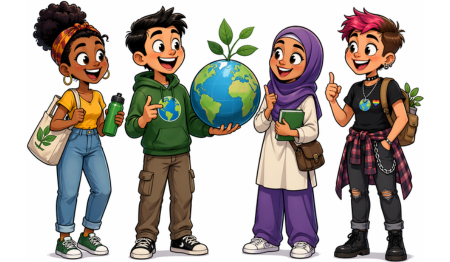
🌎 From Language to Real-World Experience
It Starts with Understanding. Understanding a language is one thing. Experiencing the world behind it is something else entirely.
When you learn Spanish, you don’t just access different conversations—you start to understand how environmental issues are lived, not just discussed. In places like Peru, these are not abstract topics. They are part of daily life, tied to land, communities, and survival.
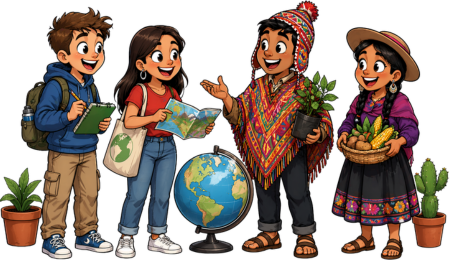
🎓 How We Approach It at KDF
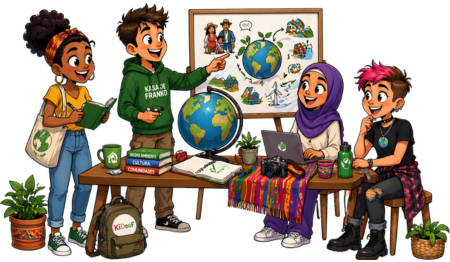
That’s why at Kasa de Franko and KiDeeF Spanish, language is never separated from context.
It’s not just about vocabulary or grammar. It’s about engaging with real topics, real perspectives, and real-world situations. The goal is not just to understand words—but to understand what’s behind them.
Because without context, language stays theoretical.
With context, it becomes perspective.
🌿 When You Experience It Directly
And sometimes, the most effective way to understand something is to step outside your routine entirely.
Visiting a place like Peru changes how you see environmental issues. It makes them immediate. Tangible. Harder to ignore.
That’s the idea behind experiential travel—like the vivencial tours offered by Koslachek. Not tourism as observation, but as participation.
Because once you experience something directly, it stops being information.
It becomes perspective.