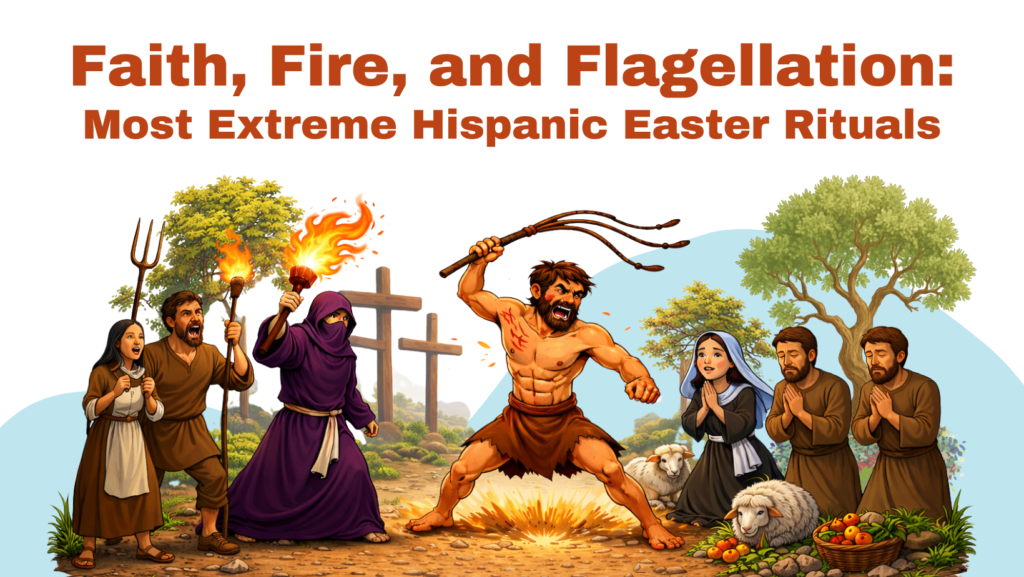
Yes… You Can Even Get Crucified!
Semana Santa (Holy Week) in Latin America isn’t quiet—and it’s definitely not subtle. It’s loud, intense, and impossible to ignore.
Streets fill with smoke, chants, and the sound of footsteps echoing through entire cities.
For a moment, it feels like something ancient is unfolding right in front of you.
This isn’t just reflection…
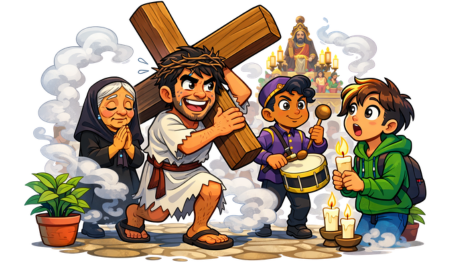
It’s Reenactment!
Across the region, devotion takes physical form. People don’t just remember the suffering of Christ—they relive it. They carry massive crosses, walk for miles barefoot, and in some cases… yes, they even allow themselves to be crucified.
Forget pastel eggs and polite hymns.
This is faith pushed to its limits—raw, visceral, and unforgettable.
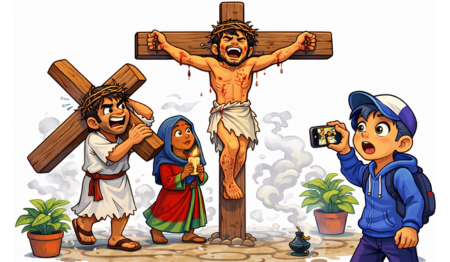
Fire, Silence, Pain, Art, & Devotion
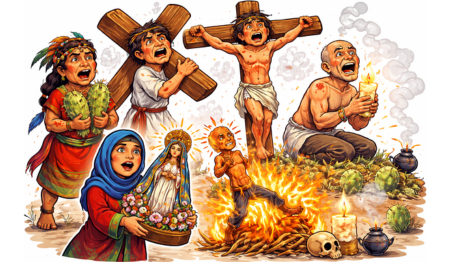
Here, Holy Week doesn’t unfold quietly—it erupts. Fire, silence, pain, art, and devotion collide in ways that are impossible to ignore.
In one town, a man is nailed to a cross.
In another, barefoot penitents whip their backs as they march through the Andes.
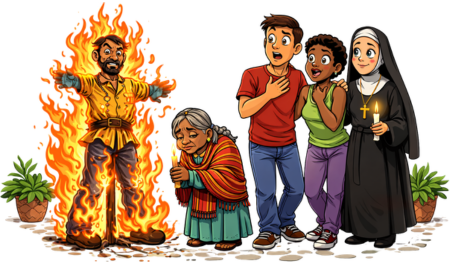
And across the region, Judas effigies packed with fireworks explode into flames—cheered on by entire communities.
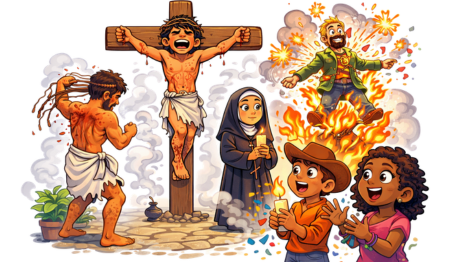
7 Jaw-Dropping Rituals You’ve Never Heard Of
From dramatic reenactments to deeply symbolic acts of devotion, these aren’t your grandma’s Easter traditions.
These are the rituals that push faith to its limits—where pain, promise, and belief collide in ways that are hard to forget.
Here are seven of the most intense, shocking, and unforgettable Holy Week traditions you’ve (probably) never heard of.
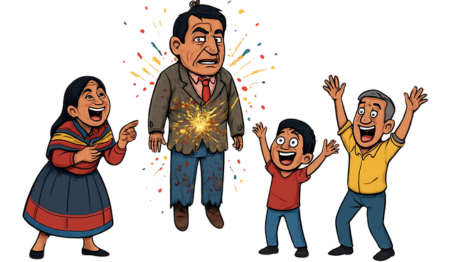
🔥 1. La Quema de Judas Traidor
When Betrayal Ends with a Bang: Across countries like Venezuela, Mexico, and Peru, Easter Sunday doesn’t end quietly—it explodes.
Communities build life-sized effigies of Judas Iscariot using old clothes, paper, and scraps, stuffing them with firecrackers, confetti, and sometimes even handwritten grievances. Then, in front of cheering crowds, the traitor is hanged, lit on fire… and blown to pieces.
But this isn’t just spectacle.
It’s symbolic justice.
Spanish Vocab Boost:
| Spanish | English |
|---|---|
| Muñeco de Judas | Judas effigy |
| Quemar al traidor | Burn the traitor |
For centuries, this ritual has represented the punishment of betrayal—the ultimate rejection of Judas, the disciple who sold out Christ for 30 coins.
Over time, it evolved into something even more powerful: a form of collective catharsis, where communities burn not just Judas, but corruption, anger, and everything they want to leave behind.
In many towns, Judas doesn’t even look biblical anymore. He might resemble a corrupt politician, a disliked celebrity, or anyone who’s “betrayed” the people. And when the effigy finally explodes, it’s not just destruction—it’s release.
The fire burns. The crowd cheers. The past goes up in smoke.
🎇 2. Popayán, Colombia — Just Processions
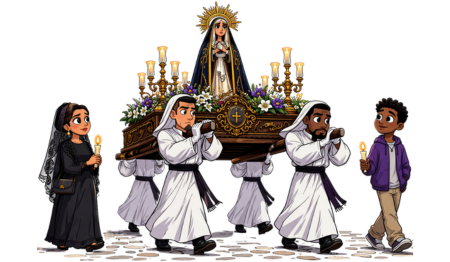
Precision, Silence… and Zero Margin for Error: In Popayán, Holy Week isn’t chaotic—it’s controlled.
For centuries, its processions have moved through the colonial streets with almost surgical precision. Massive pasos—platforms carrying centuries-old religious statues—are lifted and carried through the city in a strict, unchanging order. Every position is sacred. Every movement is intentional.
There is no improvisation here.
Men dressed in white robes walk in perfect unison, step by step, while thousands follow in silence, illuminated only by candles. The air is heavy—not with noise, but with expectation.
Because this isn’t just tradition.
It’s discipline as devotion.
Recognized by UNESCO as Intangible Cultural Heritage, these processions are the result of months of rehearsal. Every detail—the music, the pace, even the rhythm of each step—is practiced until it becomes second nature.
And yet, despite all that precision, the effect is almost hypnotic.
It feels less like a parade… and more like stepping into another century.
🎭 3. Iztapalapa, Mexico — The Passion Play
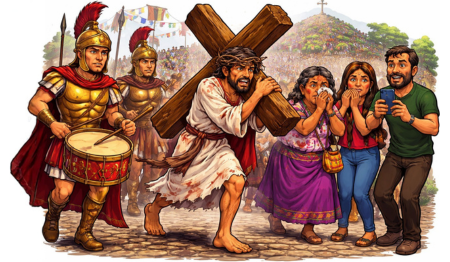
The Passion of Christ, Live and Unfiltered: In Iztapalapa, Holy Week isn’t remembered—it’s relived.
Every year, this district transforms into the stage for one of the most intense reenactments of the Passion of Christ in the world. What began in 1843 as a desperate promise during a cholera outbreak has become a massive, living tradition involving over 4,000 participants and drawing millions of spectators.
But this isn’t just a performance.
It’s a collective act of faith.
For several days, entire neighborhoods turn into biblical scenes. Roman soldiers march through the streets. Crowds follow in silence. And as the story unfolds, the line between past and present begins to blur.
Everything leads to one moment.
On Good Friday, the man chosen to play Jesus carries a massive wooden cross up the hill of Cerro de la Estrella, surrounded by thousands. He prepares for months—physically and spiritually—for this role.
Because here, playing Jesus isn’t acting. It’s sacrifice.
The weight of the cross is real. The exhaustion is real. And for those watching, the emotion is real too.
Time slows. The crowd holds its breath. And for a few hours, the story feels alive again.
🕊️ 4. La Flagelación de los Penitentes in Peru
A Silent March of Pain & Devotion: In the secluded Andean town of Calipuy, in Peru’s La Libertad region, Good Friday doesn’t arrive with noise—it arrives in silence. A heavy, unsettling silence.
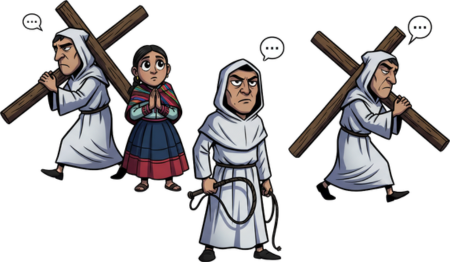
As night falls, figures dressed entirely in white emerge from the church, their faces hidden, their identities erased. They carry wooden crosses—cargapalos—and begin to walk.
Slowly. Deliberately. Eight blocks through the town. At certain points, they stop. And then it begins.
Whips crack against bare backs. Again. And again. No screams. No spectacle.
Just the sharp sound of lashes cutting through the night—and the low murmur of prayers from those who watch.
Vocab to Know:
| Español | Inglés |
|---|---|
| Los penitentes | The penitents |
| Cargapalo | Small wooden cross |
| Disciplina | A whip or scourge used for self-flagellation |
| El Currubano | Historical figure associated with the origin of the tradition |
For over 200 years, this ritual has endured: It traces back to the story of El Currubano, a man who chose pain over prison—self-inflicted punishment as a path to redemption.
Today, that choice lives on, not as performance, but as penance. In Calipuy, faith doesn’t speak—it endures, offering a powerful glimpse into how learning Spanish through extreme Holy Week Hispanic rituals can connect you to the language and culture in a deeply meaningful way.
🌈 5. Alfombras de Aserrín in Guatemala
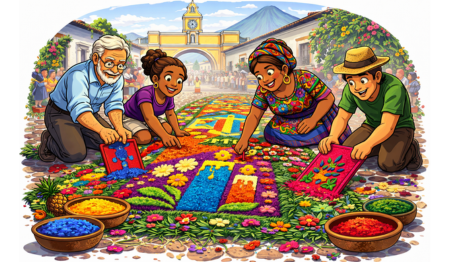
Art That Gets Walked On: In cities like Antigua, people don’t just decorate the streets for Holy Week—they transform them.
Using dyed sawdust, flowers, and pine needles, entire communities create intricate carpets—alfombras—that stretch across streets and sometimes for entire blocks. The designs can be مذهical, geometric, deeply religious, or even political. Every detail is deliberate. Every color placed by hand.
And then… they’re destroyed. Hours of work—gone in minutes.
As the procession passes, the carpets are trampled underfoot, erased step by step by the very people they were made for. No hesitation. No attempt to preserve them.
Because that’s the point. This isn’t just art—it’s an offering.
A reminder that beauty doesn’t have to last to matter. That devotion isn’t about holding on… but about letting go.
Imagine: Ephemeral Instagram-worthy masterpieces erased by barefoot believers.
🌿 6. Los Palmeros de Chacao, Venezuela —
Climbing for a Promise: This tradition didn’t begin as celebration—it began as a plea. In the 19th century, during a deadly cholera epidemic, the people of Chacao made a vow: if they were spared, they would return to the mountain each year to gather palm leaves in gratitude.
They were spared. And they kept their word.
Every year since, the Palmeros climb El Ávila before Palm Sunday—not as hikers, but as guardians of a promise made generations ago. They sing, pray, and walk the same paths, carrying with them something older than themselves.
Because this isn’t just tradition. It’s an obligation.
One that has been passed down, year after year, from those who made the promise… to those who must continue it.

🥖 7. Paraguay — Chipa, Silence, & Cemeteries
Not every Holy Week makes noise. In Paraguay, everything slows down—and then, almost disappears.
From Thursday to Saturday, a strange quiet settles over entire towns. Radios go silent. Music fades. Conversations shrink to whispers or vanish altogether. Streets that would normally pulse with life feel suspended, as if time itself decided to step aside.
It’s not abandonment. But it feels close.
Like something out of Pedro Páramo—not because the towns are empty, but because the living move through them more carefully, more quietly, as if aware of everything that came before them.
Families gather to bake chipa, the smell of cheese and anise drifting through otherwise silent streets. Ovens stay warm, hands stay busy—but voices stay low.
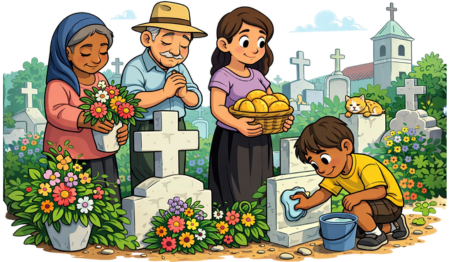
And then, they go to the cemeteries. Graves are cleaned. Names are remembered. Time is given, deliberately, to those who are no longer here.
Because here, devotion isn’t performed. It’s restrained.
After the processions, the pain, the fire, and the color seen across Latin America, Paraguay offers something different:
Not spectacle. Absence.
🎉 BONUS: The 12-Dish Feast of Good Friday
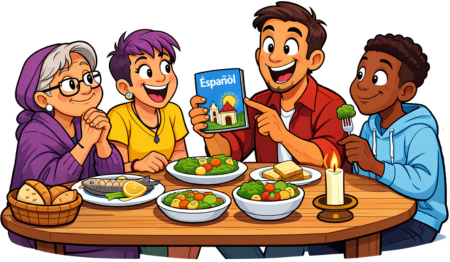
No meat. That’s the rule. But in Latin America, “no meat” doesn’t mean “eat less.”
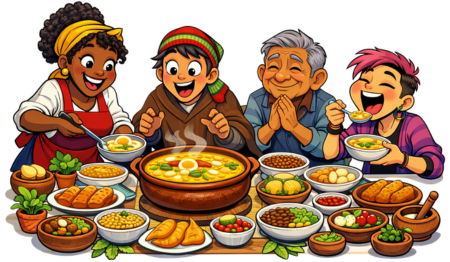
In countries like Ecuador, Good Friday turns into a culinary ritual where families prepare twelve different dishes—a symbolic nod to the apostles at the Last Supper. What starts as abstinence quickly becomes something else: careful planning, hours in the kitchen, and recipes passed down through generations.
At the center of it all is Fanesca—a rich, almost overwhelming soup made with grains, codfish, eggs, and more ingredients than you can count on one hand. It’s dense, layered, and deeply tied to the season.
Because here, restriction doesn’t simplify things. It transforms them.
What looks like sacrifice on the surface becomes something elaborate, symbolic—and yes, a little excessive.
Why No Meat?
No meat. That’s the rule—but it’s not random.
In Catholic tradition, skipping meat during Holy Week is about honoring the sacrifice of Jesus Christ. It’s a small act, sure—but it’s meant to mirror something much bigger: giving something up in recognition of suffering.
And historically, meat—especially red meat—wasn’t everyday food. It was celebration. Status. The kind of thing you look forward to.
So taking it away?
That’s the point.
From Sacrifice to Ritual
It also connects to the 40 days Jesus spent fasting in the desert, which inspired the whole season of Lent. (And yes—lentils and Lent share the same root. Language never misses a chance to be poetic.)
But this isn’t just about avoiding meat.
It’s about awareness. Restraint. A break from habit.
And like most things during Holy Week in Latin America… it doesn’t stay simple for long.
But Still Eating Christ’s Blood and Body in Mass?
So… no meat all week.
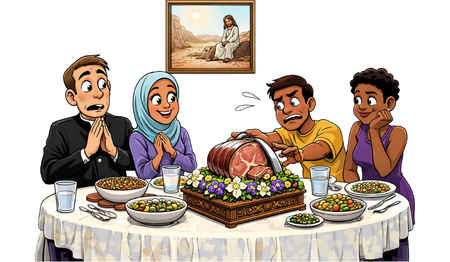
But then Sunday comes—and during Mass, the faithful receive the body and blood of Jesus Christ in the Eucharist.
At first glance, it sounds like a contradiction. Avoid flesh… but consume it? Not quite.
Because in Catholic belief, the Eucharist isn’t food in the ordinary sense. It’s symbolic, sacred, and central to the ritual itself—not a source of indulgence, but of reflection and connection.
So the idea isn’t to reject “flesh” entirely. It’s to rethink what nourishment means.
Giving up meat removes luxury.
The Eucharist replaces it with meaning.
And somehow, during Holy Week, that contrast makes perfect sense.
Lentils For Lent!
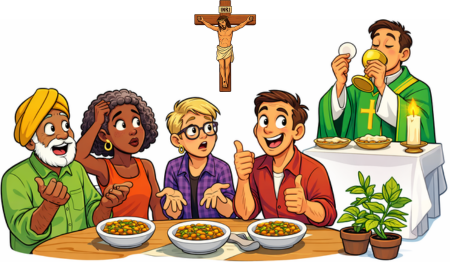
In places like Mexico, Lent has a very on-brand ingredient: lentils. Coincidence? Not really.
These humble legumes have long been associated with simplicity—exactly the point of the season. No meat, no excess, no indulgence. Just something filling, inexpensive, and… a little less exciting than a steak.
And that’s the idea.
While meat disappears from the table as a form of sacrifice, lentils step in—not to replace luxury, but to remind you it’s gone.
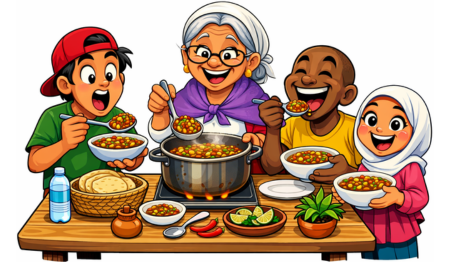
Still, they do the job. Warm, hearty, and everywhere during Lent, they prove that you don’t need extravagance to eat well.
Just don’t expect anyone to get too excited about it.
Why It Matters
Whether it’s a burning Judas or a candlelit march, these traditions reflect Latin America’s layered identity—where indigenous beliefs, Catholic rituals, and local customs don’t just coexist, they merge.
Faith here isn’t one-dimensional. It’s lived. It’s physical. It’s emotional.
Pain, celebration, silence, and community—all unfolding at the same time.
And for those exploring the language, learning Spanish with extreme Holy Week Hispanic rituals offers something deeper than vocabulary.
It gives context.
From Tradition to Conversation
And if you’re learning Spanish, this is the perfect moment to go beyond the textbook.
Listen. Watch. Ask questions. Pay attention to the words people use—and why they use them.
Try making your own muñeco (Judas effigy). Join a procession if you can (sore feet optional).
Because language doesn’t stick when it’s memorized.
It sticks when it’s experienced.
Want to take it further? Check out Kasa de Franko —where tradition turns into conversation.