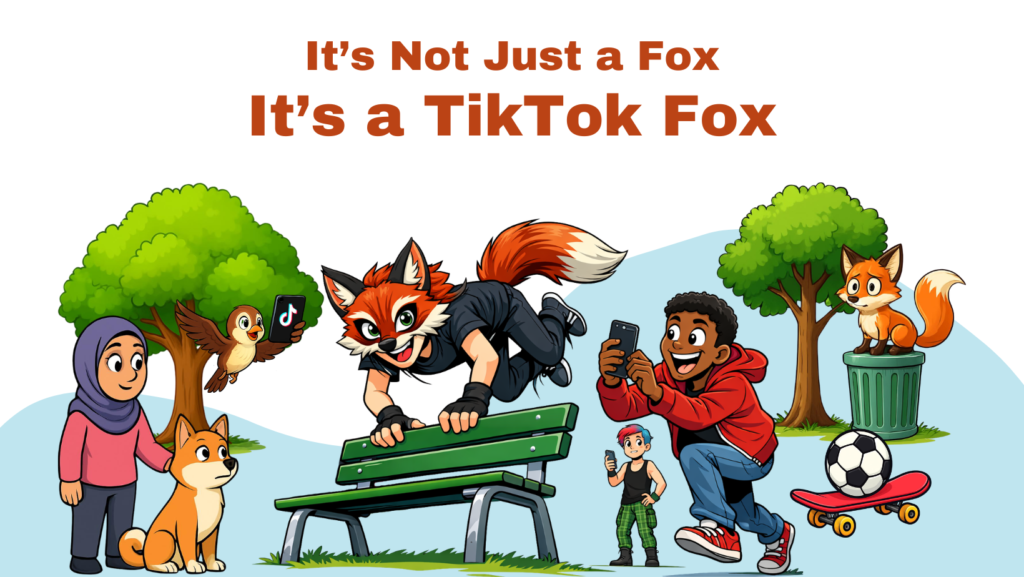
Looks Like a Wolf—But Feels Off
Is it a wolf? Is it a fox? Is it something that escaped from a nature documentary?
Not exactly.
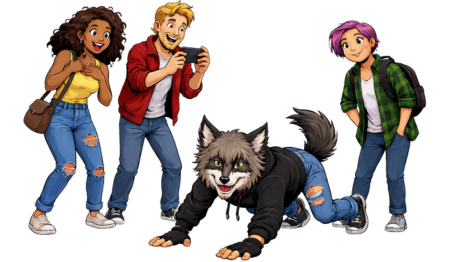
It’s a teenager wearing a handmade mask, a synthetic tail, and holding a phone—running on all fours through a public park while someone films for TikTok.
At first glance, it looks like a joke. Maybe a performance. Maybe just another trend designed to go viral and disappear.
But the longer you watch, the harder it is to dismiss. The movements are controlled. The behavior is intentional. And the camera is never accidental.
This isn’t random. Something else is happening here.
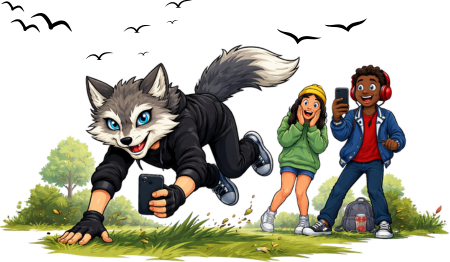
It Didn’t Start on TikTok
This didn’t begin as a trend. What you’re seeing is part of a growing subculture—one that has gained visibility in recent years, particularly among younger generations.
And despite what the algorithm suggests, it didn’t originate online.
Its recent rise has been closely tied to youth gatherings in parts of South America, where these practices are performed, recorded, and shared—before they ever reach your feed.
From there, the algorithm does what it always does: it amplifies, exaggerates, and exports. What begins as a local expression quickly becomes a global trend. Welcome to the strange—and often misunderstood—world of therians.
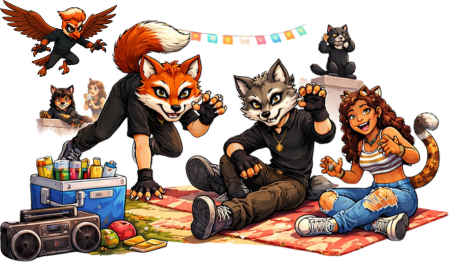
When the Scene Doesn’t Add Up
Imagine walking through a park on a quiet Sunday afternoon. People walking their dogs. Couples on the grass. Friends half-talking, half-scrolling on their phones. Everything feels normal.
Too normal.
Then something breaks it.
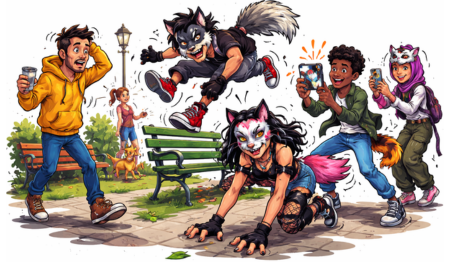
A group of teenagers runs past you—but not like you’d expect. They’re on all fours. One jumps over a bench—clean, precise. Another lands softly, almost like a cat.
Masks. Tails. Phones pointed at them from every angle.
You pause.
Your brain tries to make sense of it. A performance? A rehearsal? Some kind of prank for TikTok? But it doesn’t quite fit. No one’s laughing. No one’s explaining. And no one seems confused—except you.
What you’re looking at sits somewhere between performance, identity, and internet culture.
And whether it makes sense or not… It’s real.
They call themselves therians.
So… What Is a Therian, Exactly?
The word therian sounds more complicated than it needs to be.
At its core, it refers to someone who feels a strong personal connection to a specific animal.
Not physically.
That’s the first misconception.
And it’s where most people get it wrong.
Most therians don’t believe they are animals in a literal sense. They know that. The connection is internal—psychological, symbolic, sometimes emotional.
For some, it’s about traits. A person might relate to a wolf because of independence, instinct, or a sense of belonging to a group.
For others, it goes deeper—into something harder to explain and even harder to categorize.
And that’s where things get blurry.Because this isn’t one single experience.
It’s a spectrum.
From playful expression…
to something that feels a lot closer to identity.
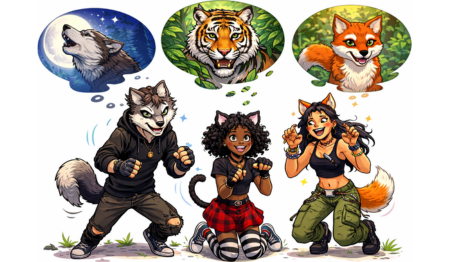
How TikTok Made It Impossible to Ignore
Therian communities didn’t start on social media. But TikTok made them visible. And not just visible—unavoidable.
The platform rewards what stands out. And a teenager sprinting on all fours through a park tends to stand out. So the videos spread.
What was once niche starts to look massive. What was local starts to feel global.
And suddenly, it’s everywhere.
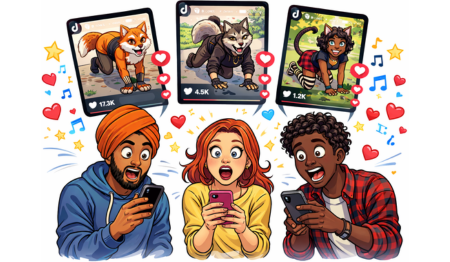
Algorithm Doesn’t Care What It’s Showing You
One of the most visible parts of this trend is something called quadrobics—a style of movement that involves running, jumping, and moving using both hands and feet.
For some, it’s just skill. Physical control. Practice. For others, it becomes something else—part performance, part identity, part content.
And here’s the problem: The algorithm doesn’t care what it is. It doesn’t care if it’s serious, ironic, performative—or something in between.
It just pushes what people watch. And in doing that, it turns something small…into something that feels much bigger than it actually is.
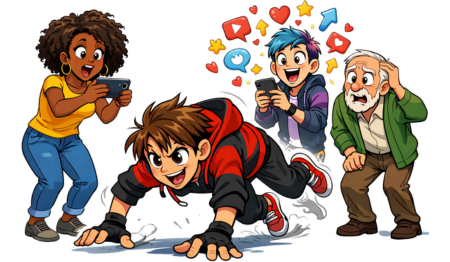
It Looks Bigger Than It Is
Later that day, you open your phone. Not for anything specific—just habit.
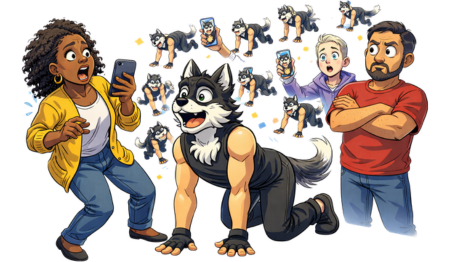
And there it is again. Another video. Different person, same movement. A mask, a tail, someone moving on all fours through a park.
At first, it feels like coincidence. Then it starts to feel like a pattern. After a few more videos, it feels like it’s everywhere.
But that feeling can be misleading. What you’re seeing isn’t necessarily scale. It’s repetition.
The same kind of content gets recorded, shared, stitched, and pushed into your feed again and again—until it starts to feel unavoidable.
And once something feels unavoidable, it starts to feel bigger than it actually is. What changed isn’t just how many people are doing it. It’s how often you’re seeing it.
The internet doesn’t just show you what exists. It shows you what keeps appearing.in starts seeing meaning in those coincidences, the illusion becomes surprisingly powerful.
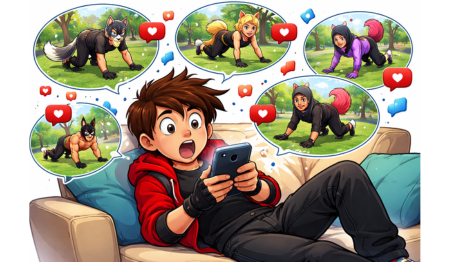
Identity Doesn’t Work the Same Anymore
To understand why this is happening, you have to zoom out a little.
Not just the masks. Not just the running. The bigger picture.
A few years ago, most people figured out who they were in relatively small circles—school, family, maybe a few close friends.
Now?
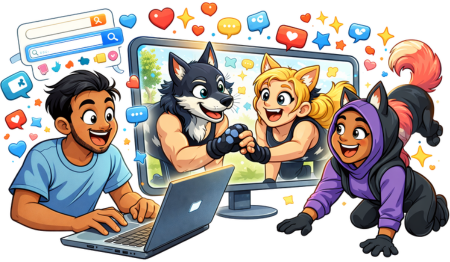
You can go online, type something oddly specific, and find thousands of people who already speak that language.
Same references. Same behaviors. Same way of seeing things. And once you find that… it changes something.What used to feel strange starts to feel shared.
What used to be private becomes something you can show.
Where Therians Fit In
That’s where this starts to make more sense. Therians don’t exist in isolation.
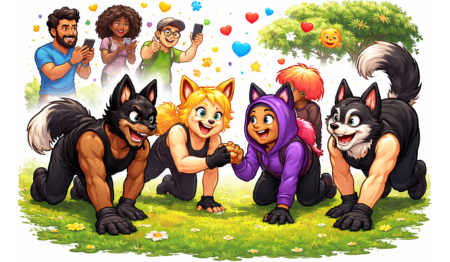
They sit right in the middle of this shift—where identity isn’t just discovered, but shaped, tested, and sometimes performed in public.
Not necessarily to convince others.But to recognize yourself in the process…
and to be recognized by others doing the same thing.
So… Is This About Mental Health?
This is where the conversation usually goes. People see it and jump straight to one conclusion:
Something must be wrong. But that doesn’t quite hold up.
Most therians aren’t confused about reality. They know they’re human. That part isn’t the issue.
The connection they describe isn’t literal. It’s closer to identification—something symbolic, sometimes emotional, sometimes hard to explain.
And that part? That’s not new.
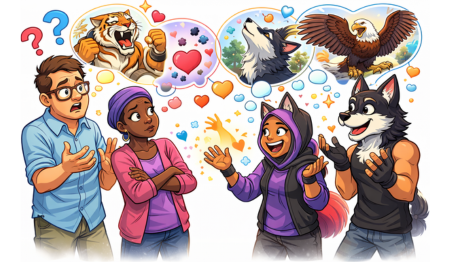
People have always used animals to describe themselves. Strength, instinct, independence, belonging. We’ve been doing that long before the internet existed.
What’s different now isn’t the idea. It’s the visibility. And the fact that it’s no longer private.
This Part Isn’t New
At some point, it starts to feel less random. Not because it makes perfect sense—but because it feels… familiar.
Humans have always done this.
Not the masks. Not the running through parks.
But the part underneath it.
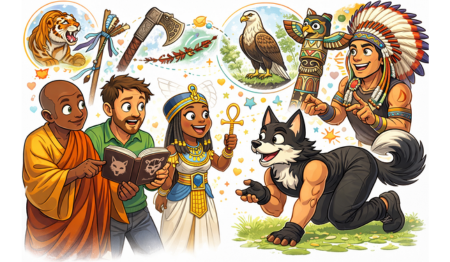
We’ve always used animals to explain something about ourselves. Strength. Instinct. Loyalty. The need to belong somewhere.
It just didn’t look like this before.
It looked like stories. Symbols. Things you kept in your head—or maybe shared with a small group.
Now it shows up on your feed. And suddenly, something that used to stay abstract…has a shape.
.
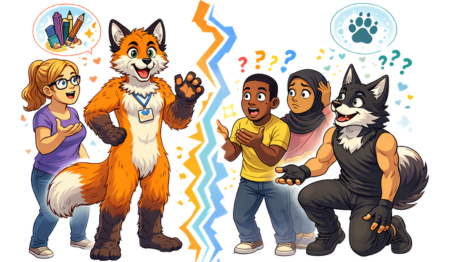
This Isn’t About Furries
At some point, people try to label it. The easiest label?
Furries.
And at first, it kind of makes sense. From the outside, it looks similar—masks, tails, characters.
But the more you look at it, the less it fits. Furries are usually building something. Creating characters. Designing identities.
This feels different.
Less about creating something…and more about recognizing something that’s already there. Not completely separate. But not the same either.
Why Is It Mostly Young People?
If you look closely, there’s a pattern. Most of the people doing this aren’t older adults. They’re younger. Teenagers. Early twenties. And that part isn’t that surprising.
That’s usually when people are already trying things out—figuring out who they are, what fits, what doesn’t.
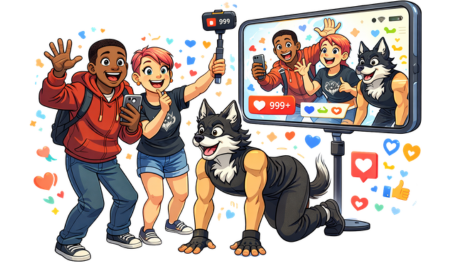
The difference now is where that happens. It’s not just in your head. Not just with a few friends. It happens in front of a camera. And once it’s there, it doesn’t stay small.
When “Weird” Becomes Visible
Every generation has its version of this—things that feel strange, hard to explain, and easy to judge from the outside.
That part isn’t new. What’s changed is how visible it is.
Before, most of it stayed within small circles, something you either understood or ignored depending on where you stood. Now it gets recorded, shared, and pushed into spaces where it was never meant to be seen.
And once that happens, it stops feeling rare—not because there’s more of it, but because you keep running into it.
So… Wolves of TikTok?
So what exactly is this? A serious identity, a passing trend, or just another form of performance?
It depends on who you’re looking at.
For some, it clearly means something. For others, it looks more like play. And for a lot of people watching from the outside, it still doesn’t fully make sense.
Maybe that’s the point.
Not everything that shows up online fits neatly into one category. Some things sit in between—part identity, part expression, part moment.
And this might be one of them.
It Feels Strange—Until It Doesn’t
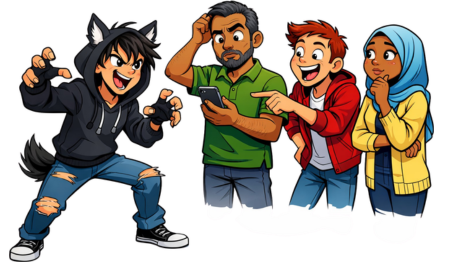
The next time you see it—a mask, a tail, someone moving on all fours across a park—it’s easy to dismiss it as something absurd or staged.
At first, it doesn’t seem to belong there.
But if you stay with that moment a little longer, it starts to feel less random. Not because it suddenly makes perfect sense, but because it connects to something familiar—people trying things out, figuring themselves out, and doing it in a space where others can see it.
That part isn’t new.
What’s changed is the scale, and how quickly something like this moves from a local moment to something that feels global.
Maybe It’s Not About the Animal
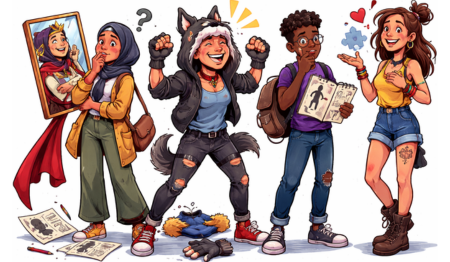
So maybe it’s not really about wolves, or foxes, or whatever animal it’s supposed to be.
Maybe it’s about something more basic, and a lot more human—people trying to answer a question that doesn’t really go away:
who they are, and where they fit.
Not the Same as “Transpecies”
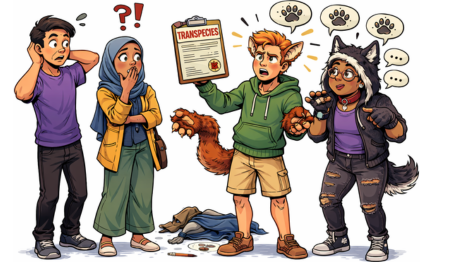
At some point, you might come across another term—transpecies—and assume it’s the same thing. It isn’t.
That idea tends to go further. Not just identifying with an animal, but framing it as something more literal—something that should be recognized that way.
And that’s usually where people pause.
Looks Like Furries at First
Because what you’re seeing with therians doesn’t quite land there. For most of them, the connection stays internal—something they relate to, express, or explore—not something they expect others to treat as physical reality.
If you’ve spent any time online, you’ve probably already seen what happens when that line starts to blur.
And once it does, the conversation changes completely. But that’s a different discussion. For now, it helps to keep the distinction clear: They’re not the same thing.