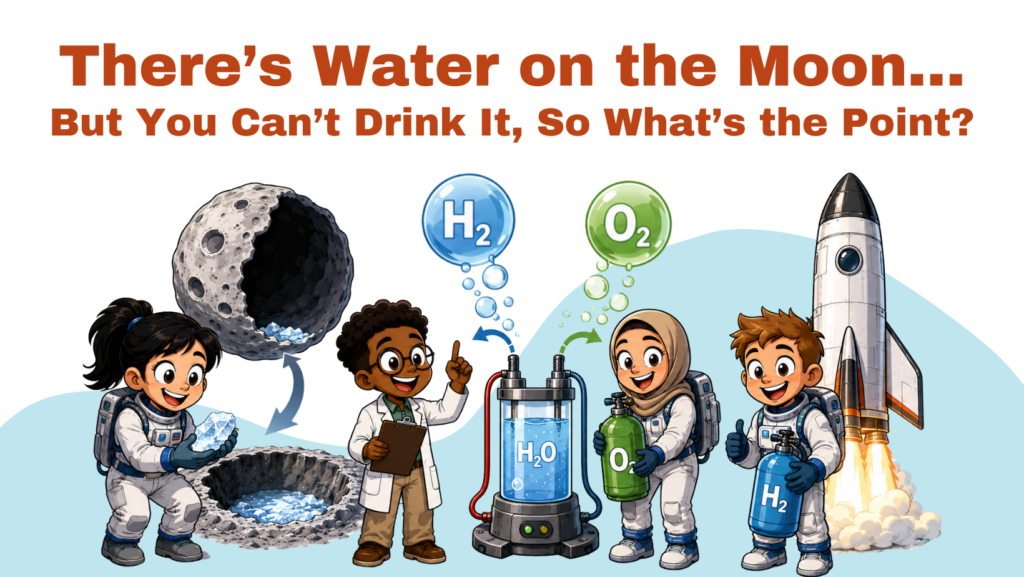
There’s Water on the Moon… Wait, What?
For a long time, we thought the Moon was completely dry.
Now we know that’s not true.
But before you start imagining oceans, rivers, or anything remotely Earth-like — stop right there.
There’s water on the Moon… but not the kind you can just scoop up and drink.
By the way, there’s no beer or wine either.
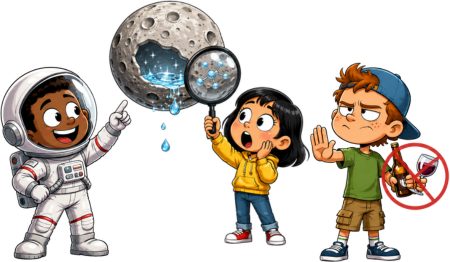
If You Can’t Drink It… What’s the Point?
Most of the Moon’s water is frozen. Locked away in permanently shadowed craters near the lunar south pole, or trapped in tiny amounts within the dusty surface.
And yet, this seemingly useless water might be one of the most important resources for the future of space exploration.
So naturally, the million-dollar question is:
If you can’t drink it… what’s the freaking point?
Then… is it even water?
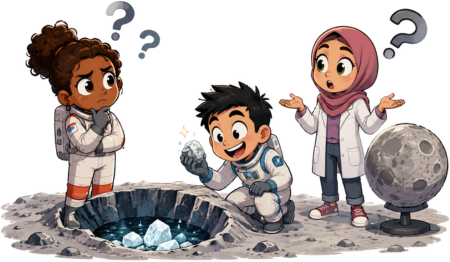
You Think You Know the Word “Water”…
But Do You Really Understand It?
In a previous discussion, we explored a simple but powerful idea:
Knowing a word doesn’t mean fully understanding it.
You can recognize the word “water,” translate it, use it in a sentence…
but that doesn’t mean you understand everything it represents in different contexts.
Today, we’re taking that idea one step further.
We’re not changing the word.
The word is still the same: water.
What we’re changing… is the context.
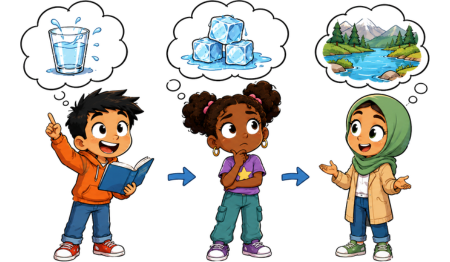
No Context, No Text
And when the context changes, something interesting happens. What once felt obvious is no longer so clear, and what seemed useless begins to take on a different meaning.
Take this sentence:
“There’s water on the Moon, but you can’t drink it.”
At first, it sounds important. But if we’re honest, most people react with indifference:
“Okay… and?”
And just like that, the conversation dies—not because the idea lacks importance, but because we’re still evaluating it through a familiar lens. We expect water to behave the way it does on Earth, and when it doesn’t, we instinctively assume it has no real value.
That assumption is where the problem begins. Because the moment you stop thinking of water only as something you drink, you start to see it differently—not as a consumable, but as a resource with entirely new possibilities.
Where Is the Water on the Moon?
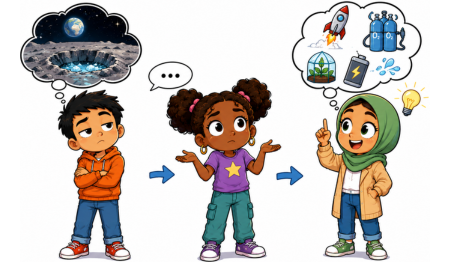
There are no oceans on the Moon. No rivers, no clouds, no rain.
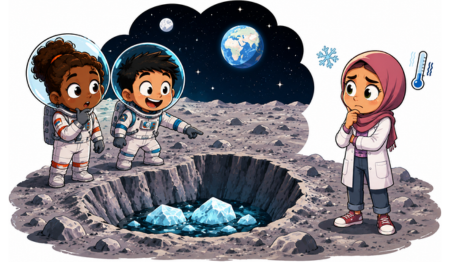
Most of the water exists as ice, concentrated in craters near the lunar south pole. These regions are in permanent darkness. Because of the Moon’s tilt, sunlight never reaches them, and temperatures remain extremely low for millions—even billions—of years.
So when water ends up there, it freezes and stays frozen. No movement, no evaporation, no cycle.
From a human perspective, it doesn’t sound very useful. It’s difficult to reach and located in one of the most extreme environments imaginable.
It’s Not Just in Craters
The story doesn’t end there.
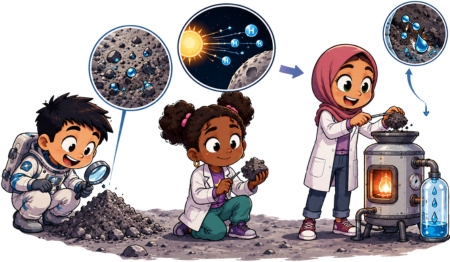
Water on the Moon isn’t limited to frozen deposits. Scientists have also detected traces of it in the lunar soil, known as regolith. Some of it forms through interactions with the solar wind, embedding hydrogen into the surface over time.
The catch is that it’s spread out in tiny amounts and often chemically bound to the material around it. Extracting it would require heating large quantities of soil just to release small amounts of water.
Difficult? Yes. But still important.
Because the more sources of water we can access, the more realistic long-term human presence on the Moon becomes.
The Meaning of Water (on Earth)
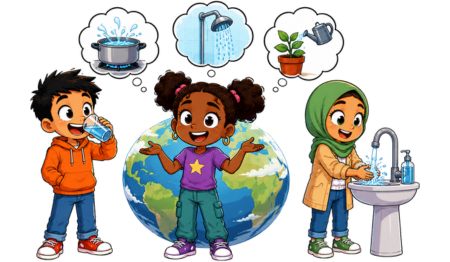
On Earth, water feels simple. It’s something we drink, cook with, and rely on every single day without thinking twice about it. That familiarity turns it into something obvious—so obvious that we stop questioning what it actually represents.
Over time, that repeated use shapes a quiet assumption: water equals consumption. It’s something meant to be used directly by us, something tied closely to comfort, survival, and daily life.
Because that idea works perfectly here, it starts to feel universal. We don’t see it as one interpretation among many—we see it as the definition of water itself.
We’re Thinking Like Humans on Earth
That assumption doesn’t travel well. It’s built for Earth, not for environments where none of our usual conditions exist.
When we look at the Moon, we carry that same definition with us. We expect water to serve the same purpose it does here. And when it doesn’t—when it can’t be easily consumed or accessed—the conclusion feels immediate and logical: it has no real value.
But that reaction says more about us than it does about the resource. We’re not evaluating the water based on what it is—we’re judging it based on what we expect it to do.
The moment you remove that expectation, the entire picture changes. What looked useless wasn’t lacking value. It was being measured with the wrong standard.
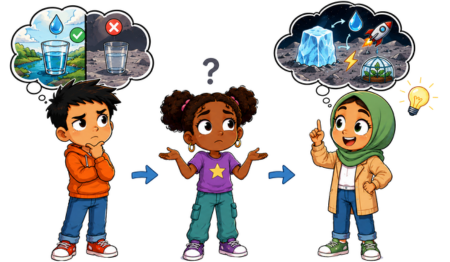
If You Can’t Drink It… Here’s What It’s Actually For
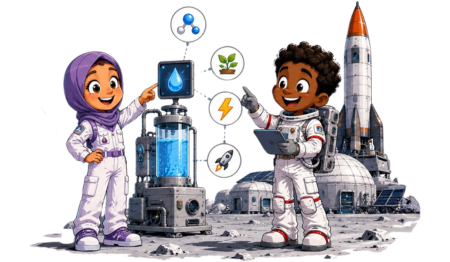
Once you stop thinking of water as something you drink, a different picture starts to emerge. On the Moon, water isn’t just a convenience — it becomes part of the infrastructure that makes long-term presence possible. It’s the difference between a place you visit and a place where you can actually stay.
To understand why, you have to look at what water really is. It’s not just a liquid; it’s made of hydrogen and oxygen, two elements that become extremely valuable in space.
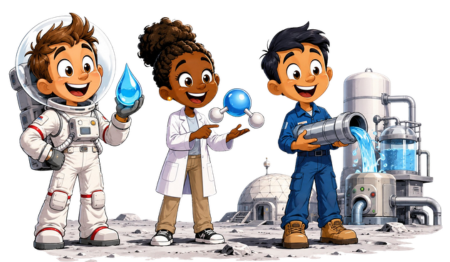
It’s Not About Drinking. It’s About Survival and Systems
Start with oxygen. On Earth, we rarely think about it because it’s always available. On the Moon, that changes completely. Every breath has to be produced, stored, and carefully managed. Water provides a reliable way to generate oxygen, making it essential for any kind of sustained human activity.
Hydrogen adds another layer of value. When combined with oxygen, it creates one of the most efficient rocket fuels we know. This changes the role of the Moon entirely. Instead of being just a destination, it can become a refueling point — a place where spacecraft land, resupply, and continue their journey deeper into space.
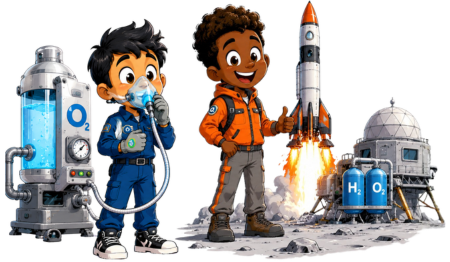
Don’t Just Consume it! Also, Use It!
At that point, water is no longer something you consume. It becomes something you use to build systems: life support, energy, fuel, and eventually even controlled agriculture.
So no, you can’t drink it.
But without it, none of this works.
Water Isn’t for Drinking — It’s for Building
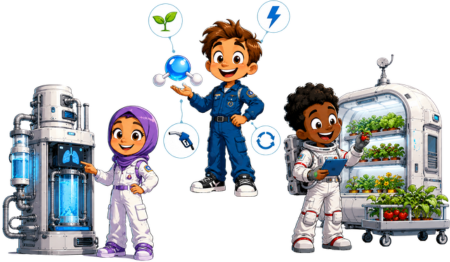
The Real Shift
On Earth, we consume water. On the Moon, we use it—not for drinking, but for building the systems that make exploration possible.
That shift changes the question entirely. It’s no longer about whether the water is drinkable, but about what we can turn it into and how it can support human activity in an environment that offers none of the conditions we rely on here on Earth.
Water as a Tool!
Once you start thinking in those terms, water stops being a limitation and becomes a tool—a resource that can be transformed, stored, and integrated into the infrastructure needed for survival and long-term presence.
And that’s where things start to get interesting. Understanding why water matters is only the first step. The real challenge is figuring out how we actually extract it, process it, and use it efficiently on the Moon.
Changing the Question Changes Everything
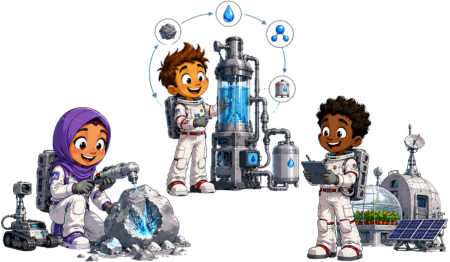
Instead of asking, “What is water for?” we should be asking, “What can we do with it?”
That shift changes everything. On the Moon, water isn’t used in the way we’re familiar with—it isn’t something you simply consume. It becomes a raw material, something that can be processed and turned into entirely different functions.
But before any of that happens, there’s a more immediate problem: access.
The Problem Isn’t Water—It’s Access
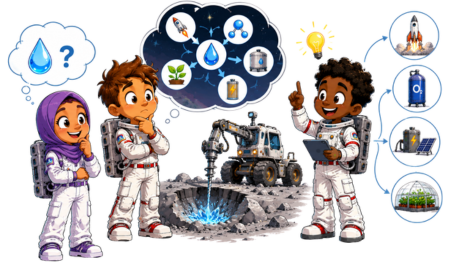
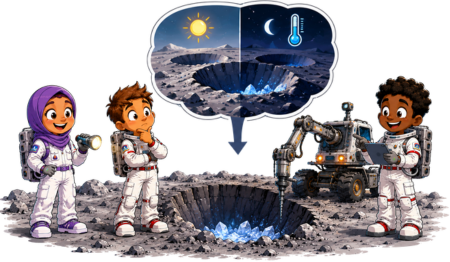
Most of this water exists as ice, trapped in craters that never see sunlight. These regions are in permanent darkness, which means extremely low temperatures and no natural energy source to work with.
So the challenge isn’t just finding water. It’s reaching it, extracting it, and doing so in an environment that actively works against you.
Melting Ice to Get Water
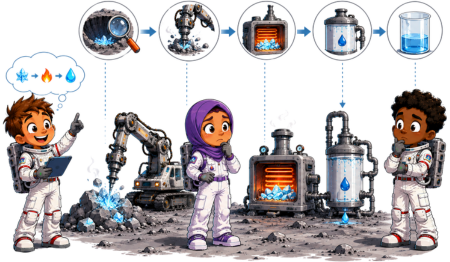
On paper, the idea sounds simple: find ice, apply heat, collect water.
But this is where things start to break down. The challenge isn’t just about knowing the ice is there—it’s about what it takes to actually use it.
There’s no atmosphere to distribute heat, no natural system to rely on, and no margin for inefficiency. Every step requires planning, energy, and precision.
What looks like a straightforward process quickly turns into a complex engineering problem, where every decision comes with trade-offs.
Getting That Water Isn’t So Simple
So how do you actually get water out of that ice?
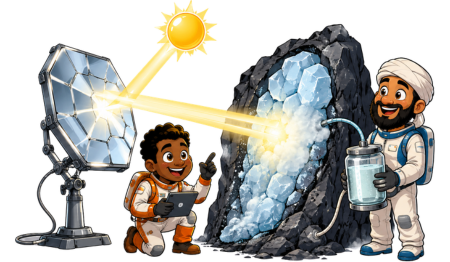
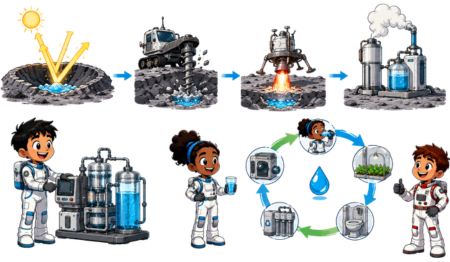
One proposed approach involves using mirrors or reflective systems placed in sunlit areas, redirecting light into permanently shadowed regions. The idea is to introduce heat where none exists, warming the ice until it begins to sublimate—turning directly from solid into vapor—so it can be captured and stored.
But even this raises new challenges. Positioning those systems, maintaining them, and managing the energy required all become part of the equation.
Extracting water isn’t just about melting ice—it’s about building a process that works in an environment designed to resist it.
Electrolysis: From Water to Something More
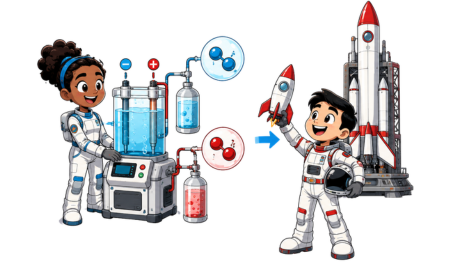
Collecting the water is only the first step. What really matters is what you can turn it into.
Through a process called electrolysis, water can be split into hydrogen and oxygen—two elements that are far more useful in this environment than water itself.
Oxygen can support breathing and life-support systems. Hydrogen, when combined with oxygen, becomes a powerful rocket fuel.
At that point, water is no longer just something you find. It becomes something you use, process, and build with.
Why This Matters: Fuel, Air, and Independence
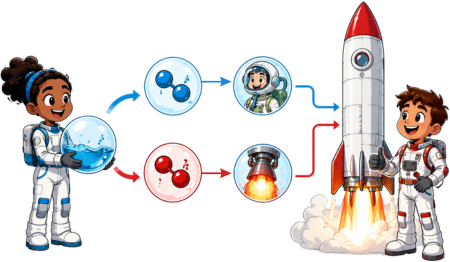
Hydrogen is one of the most efficient rocket fuels we have. Oxygen is essential not just for breathing, but also for combustion. From something that initially seemed useless, we suddenly get two of the most critical resources for space exploration.
At this point, water is no longer just something you find. It becomes something you can convert into the basic elements needed to survive and operate beyond Earth.
Beyond Survival: Independence from Earth
But the real value goes further than fuel and air.
If you can produce these resources directly on the Moon, you reduce the need to launch everything from Earth. Missions become lighter, more flexible, and far less dependent on constant resupply.
The Moon stops being just a destination. It starts becoming a support system—a place where spacecraft can refuel, resupply, and prepare for deeper missions into space.
At that point, water stops being passive. It becomes strategic, enabling a level of independence that makes long-term presence in space not just possible, but sustainable.
Getting Water on the Moon Is an Engineering Problem
There isn’t just one method.
Possible approaches include reflecting sunlight into craters, drilling into ice deposits, heating lunar soil, or vaporizing ice and capturing the steam. But the real challenge isn’t choosing a method—it’s building a system that can operate continuously in an environment with no margin for error.
In space, nothing gets wasted. Future lunar bases would likely recycle nearly all available water using closed-loop systems, similar to those already used on space stations.
So “finding water” isn’t the goal. The goal is extracting it, transforming it, and reusing it in one of the harshest environments humans have ever encountered.
The Moon Isn’t the Destination — It’s the Platform
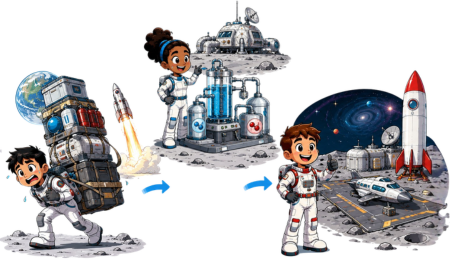
Traditionally, space missions bring everything from Earth: fuel, oxygen, water—everything needed to survive and operate.
The problem is that launching mass out of Earth’s gravity is extremely expensive. If those same resources can be produced on the Moon, the entire equation changes.
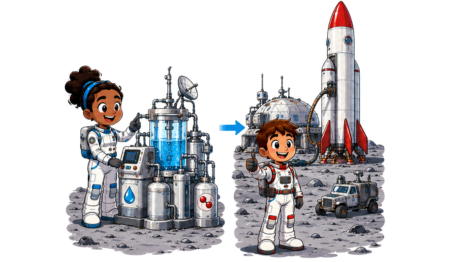
The Moon stops being just a place we visit and becomes a base of operations—a place where spacecraft can refuel, prepare for missions, and reduce their dependence on Earth.
And once the Moon becomes a platform, the question is no longer whether we can stay there, but where we can go next.
The Moon as a Bridge to Mars
Mars is not just slightly farther than the Moon—it is vastly more distant.
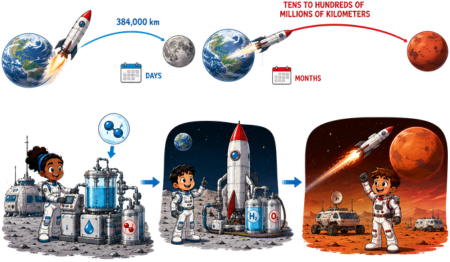
The Moon is about 384,000 kilometers away, while Mars is tens to hundreds of millions of kilometers away, depending on their positions. A trip to the Moon takes days; a journey to Mars takes months.
Because of that difference, launching everything directly from Earth becomes increasingly inefficient. An alternative approach is to use the Moon as an intermediate step: missions travel there first, produce fuel using local resources, and then continue toward Mars.
In that scenario, the Moon becomes more than a destination—it becomes a stepping stone, and water becomes one of the key resources that makes that transition possible.
The Real Question Was Never Just About Water
At the end of all this, the most interesting question isn’t simply whether there is water on the Moon.
A better question is what “water” actually means outside of Earth.
Exploring space isn’t only about discovering new places. It also forces us to confront the assumptions we take for granted, even about something as familiar as water.
Once those assumptions change, the way we interpret everything else begins to change as well.