Why Humans Still Fear Friday the 13th
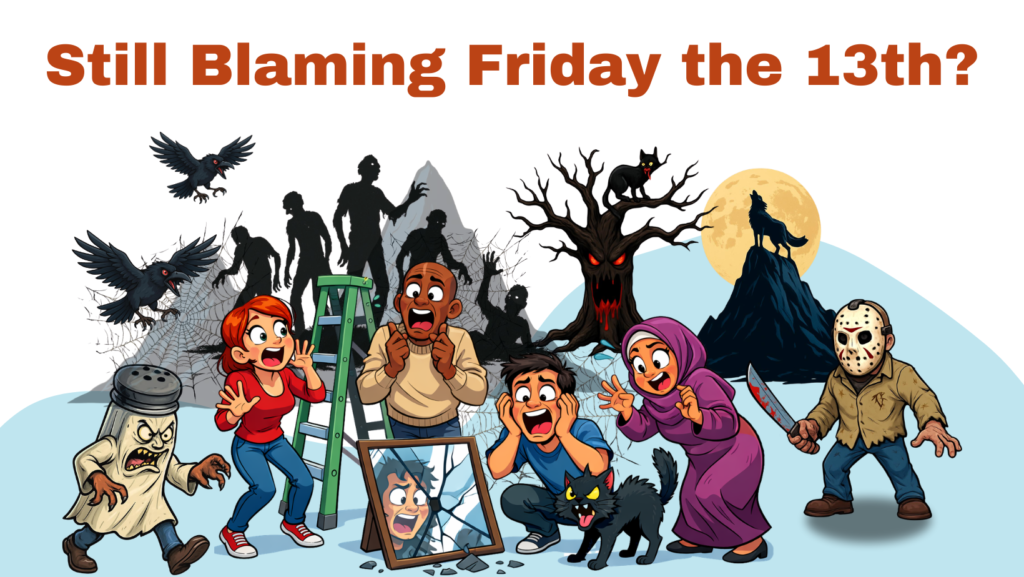
The calendar says Friday the 13th, and suddenly people become cautious. Ladders look suspicious, mirrors feel fragile, and black cats seem to acquire mysterious supernatural powers. It’s the perfect moment to ask a strange but fascinating question: why humans still fear Friday the 13th, even though most of us know it’s just another ordinary day on the calendar.
The answer turns out to be surprisingly human.
It sounds like superstition, but the real explanation has less to do with the calendar and more to do with the human brain.

So Why Do Humans Fear Friday the 13th?
If the date itself isn’t cursed, then the answer probably isn’t hiding in the calendar. It’s hiding in the human brain. Humans are extremely good at spotting patterns in the world around them. In fact, we’re so good at it that sometimes we see patterns even when none really exist. Psychologists call this tendency Apophenia.
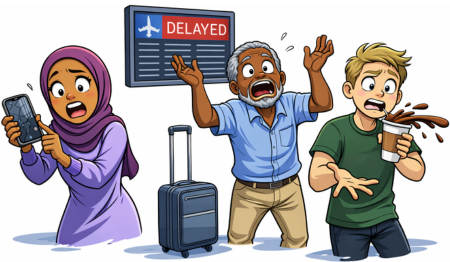
In other words, if something bad happens on Friday the 13th, we remember it. A broken phone, a delayed flight, a terrible cup of coffee. But if nothing unusual happens—which is almost always the case—we forget the day entirely. Over time, these memorable coincidences begin to pile up in our minds, until they start to feel like evidence that the date itself is unlucky.
Why the Brain Loves Patterns
ASeeing patterns is only part of the story. Once people believe a date like Friday the 13th is unlucky, the brain starts doing something even more interesting.
It begins collecting evidence.
Psychologists call this Confirmation Bias. In simple terms, humans tend to notice and remember events that support what they already believe, while quietly ignoring everything that contradicts it.

How “Bad Luck” Stories Are Born
Imagine two different Fridays.
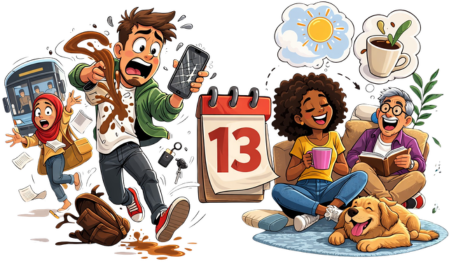
On one Friday the 13th, someone spills coffee on their shirt, misses the bus, and drops their phone.
“See?” they say. “Friday the 13th is cursed.”
But if the day passes quietly—no accidents, no disasters, no broken mirrors—no one remembers it. It becomes just another ordinary day that disappears from memory.
Over time, this selective memory creates the illusion that something mysterious is happening, when in reality the only thing at work is the human brain doing what it does best: telling itself convincing stories.ny readers that it might actually be real. But this is where the conversation becomes interesting: while the story itself is fictional, the phenomenon it touches on is not entirely imaginary.
Why Superstitions Refuse to Die
By this point you might think superstition should disappear. After all, we live in the age of science, smartphones, and satellite navigation. Humanity can send robots to Mars, yet many people still hesitate to schedule important meetings on Friday the 13th.
Why?
Because superstition doesn’t need proof to survive. It only needs a good story.
And a good story spreads much faster—and is far easier to remember—than a boring scientific explanation.

How Coincidences Become Legends
A strange coincidence here, an unlucky accident there, and suddenly the legend grows stronger. The brain connects the dots, even if the dots were never meant to be connected in the first place.
And once a story begins spreading through culture—movies, jokes, traditions, and everyday conversations—it becomes surprisingly difficult to get rid of it.
Over time, what started as a coincidence slowly begins to look like a tradition.
The Date Isn’t the Problem
At this point the evidence points in a very different direction. The problem isn’t really the calendar, and it certainly isn’t the number thirteen. The real explanation lies in how the human brain interprets events.
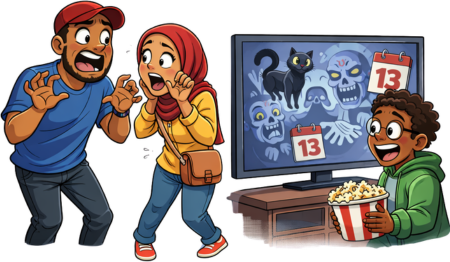
Our minds are built to detect patterns and remember unusual coincidences. When something inconvenient happens on Friday the 13th, it immediately feels meaningful.
And once the brain starts seeing meaning in those coincidences, the illusion becomes surprisingly powerful.
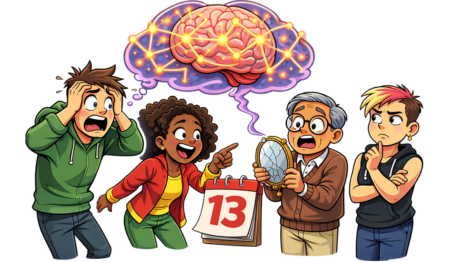
Why the Illusion Feels So Convincing
The day already carries a reputation for bad luck, so every small mishap suddenly looks like confirmation that the superstition must be true.
But when nothing unusual happens—which is the case most of the time—the day quietly disappears from memory. No story, no mystery, no reason to remember it. Over time, this process slowly reinforces the illusion that the date itself must be responsible.

The Calendar Is Innocent
In reality, the calendar is doing absolutely nothing. Dates don’t cause accidents, break mirrors, or make people spill coffee.
What really happens is that the human brain turns random events into meaningful stories. Between Apophenia and Confirmation Bias, ordinary coincidences can easily start to look like supernatural patterns.
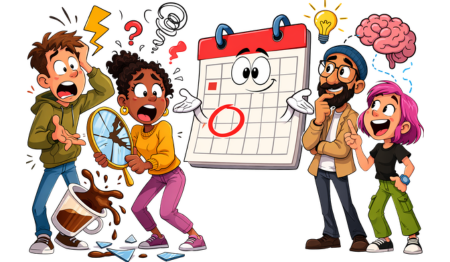
Blame Humans Instead
That is why the legend of Friday the 13th survives generation after generation. The superstition isn’t really hiding in the calendar.
It’s hiding in the human imagination.
So if something goes wrong today—a spilled coffee, a delayed bus, or a cracked phone screen—don’t blame the date.
Blame humans instead.
But that still leaves one interesting question: where did the superstition come from in the first place?
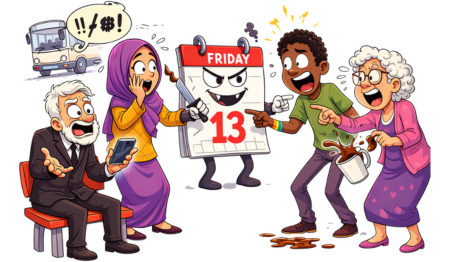
Where Did This Crazy Idea Come From?
By now we know the calendar itself isn’t doing anything mysterious. But that still leaves an obvious question: where did the strange reputation of Friday the 13th actually come from?
Like many superstitions, the answer isn’t simple. Over the centuries different stories helped give the date its unlucky reputation. One explanation often mentioned comes from Christian tradition. At the famous Last Supper, thirteen people sat at the table before the crucifixion of Jesus Christ. Because of this story, the number thirteen gradually acquired a reputation for bringing bad luck.
.
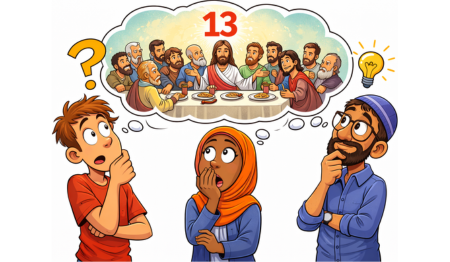
When History Meets a Good Story
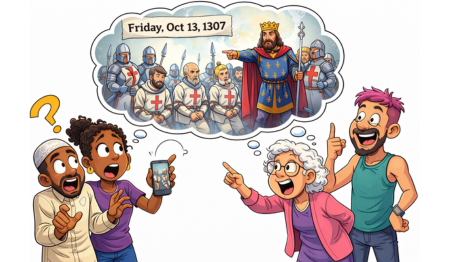
Other historians point to a dramatic medieval event. On Friday, October 13, 1307, the powerful religious order known as the Knights Templar was suddenly arrested across France by order of Philip IV of France. Over time, that historical episode became linked in popular imagination with the superstition surrounding Friday the 13th.
Whether these events truly created the superstition is still debated. What matters more is that once the idea entered popular culture, it started spreading through stories, films, jokes, and everyday conversation.
If you want the full historical story behind the superstition, you can explore it in the Kasa de Franko article dedicated to the origins of Friday the 13th.
When Pigeons Invented Their Friday 13th
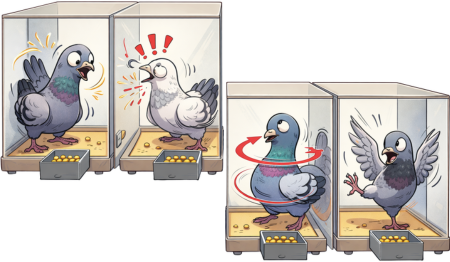
Humans are not the only creatures capable of inventing superstitions. In the 1940s, psychologist B. F. Skinner conducted a curious experiment with pigeons.
The setup was surprisingly simple. The birds were placed inside a box where food appeared automatically every few seconds.
There was only one important detail.The food arrived whether the pigeons did anything or not.
Pigeon Logic at Work
But the pigeons didn’t know that — they didn’t get the memo, of course.
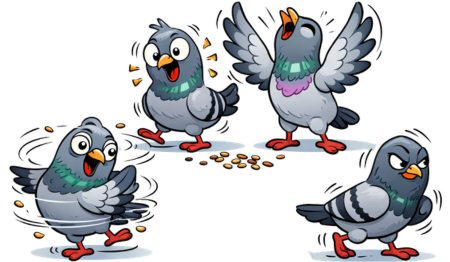
If one bird happened to spin in a circle just before the food appeared, it often began repeating that movement again and again, apparently convinced that spinning was the secret to making lunch arrive.
Another pigeon started bobbing its head like an overly enthusiastic dancer. One stretched its wings in a strange little ritual. Another shuffled sideways along the cage wall as if performing a mysterious ceremony.
Each pigeon had accidentally invented its own superstition.
When the Brain Connects the Wrong Dots
From the pigeon’s perspective, the logic made perfect sense: “I spun in a circle and food appeared. Clearly the spinning caused the food.”
B. F. Skinner called this “superstitious behavior.” The pigeons had connected two completely unrelated events and turned coincidence into a ritual.
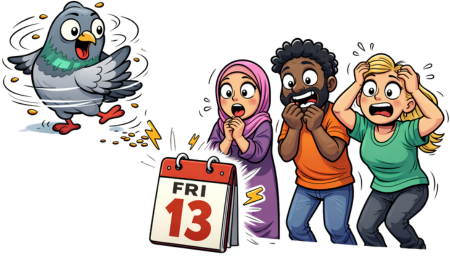
Humans sometimes do something very similar when they blame a bit of bad luck on a date like Friday the 13th.
In other words, sometimes the difference between a pigeon spinning in circles and a human worrying about an unlucky date is smaller than we might like to admit.
Even More “Superstitious” Animals
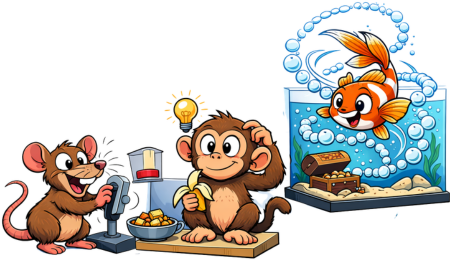
Pigeons weren’t the only ones showing the power of coincidence. Other animals—rats, monkeys, and even fish—have been observed creating little rituals when random rewards or events happened near them.
For example, a rat in a lab might start tapping a lever in a certain way if a treat shows up nearby, or a fish might follow a specific swimming pattern, practically doing a water ballet, convinced it will summon dinner.
These behaviors all share one thing in common: the animals are connecting unrelated events and inventing rules for themselves—just like humans invent superstitions to make sense of life’s randomness.
Superstitious Animals, Take Two
It turns out that superstition isn’t just a human hobby—it’s a surprisingly widespread survival trick for creatures wired to find patterns, even where none exist.
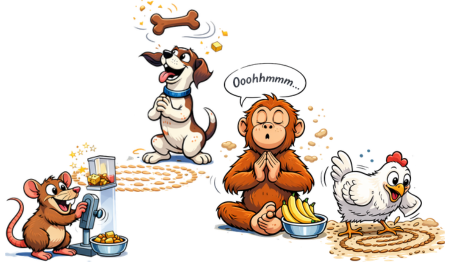
It’s not just humans who invent strange rituals out of thin air. Rats, dogs, orangutans… even chickens get in on the act.
Chickens, for example, will scratch the ground in elaborate patterns while waiting for food—basically turning normal foraging into a little magical ritual. When outcomes are random, brains of all shapes and sizes seem to invent patterns that simply aren’t there.
Humans: The Masters of Rituals
And then there’s us. In a famous experiment, psychologist Koichi Ono put college students in a booth where points appeared completely at random. Some students started jumping to touch the ceiling or pulling levers in exact sequences, convinced their actions were controlling the points.
Basically, humans just took what pigeons and chickens were doing and leveled it up: more imagination, more drama, more superstitions.
So next time you knock on wood or avoid number 13, just remember—you’re in stellar company: pigeons, chickens, rats… and humans, the undefeated champions of superstition. Are humans better than other creatures, then? Maybe not!

Superstitions Beyond Friday the 13th
Of course, our quirky rituals don’t stop at unlucky dates. Around the world—and especially in the Hispanic world—people have a rich collection of traditions meant to bring luck or keep misfortune away.
From eating twelve grapes at midnight on New Year’s Eve to carrying lucky charms, humans everywhere seem wired to invent rules for randomness.Curious to see some of the most fun and fascinating Hispanic superstitions in action? You can explore them in our guide to Hispanic New Year’s Eve superstitions.

Superstition Vocabulary: Español & English
Before you start knocking on wood or avoiding the number 13 in Spanish-speaking lands, it helps to know the words! Here’s a quick chart of essential superstition vocabulary in Spanish and English—perfect for spotting superstitious behaviors, festive rituals, or just impressing your friends:
| Spanish | English | Notes / Fun Fact |
|---|---|---|
| superstición | superstition | That feeling that bad luck is lurking… or that your black cat is plotting |
| suerte | luck | Good luck, bad luck… it’s all about perspective |
| mala suerte | bad luck | Friday the 13th in a nutshell |
| buena suerte | good luck | Found under a ladder? Probably not… but why not hope |
| amuleto | charm / talisman | A little object that supposedly protects you from misfortune |
| ritual | ritual | Not just fancy dances—any repeated action believed to bring results |
| azar | chance / randomness | Where pigeons, rats, and humans all fail spectacularly |
| predicción | prediction | Often unreliable, but fun to pretend it works |
| tradición | tradition | Passed down over generations, sometimes with magical flair |
| número de la suerte | lucky number | Spoiler: 13 rarely makes the cut |
| supersticioso/a | superstitious | The person (or pigeon) who sees meaning where there isn’t any |
Ready to see these in action? These words pop up in New Year’s Eve celebrations, Friday the 13th stories, and countless other superstitions across the Hispanic world.