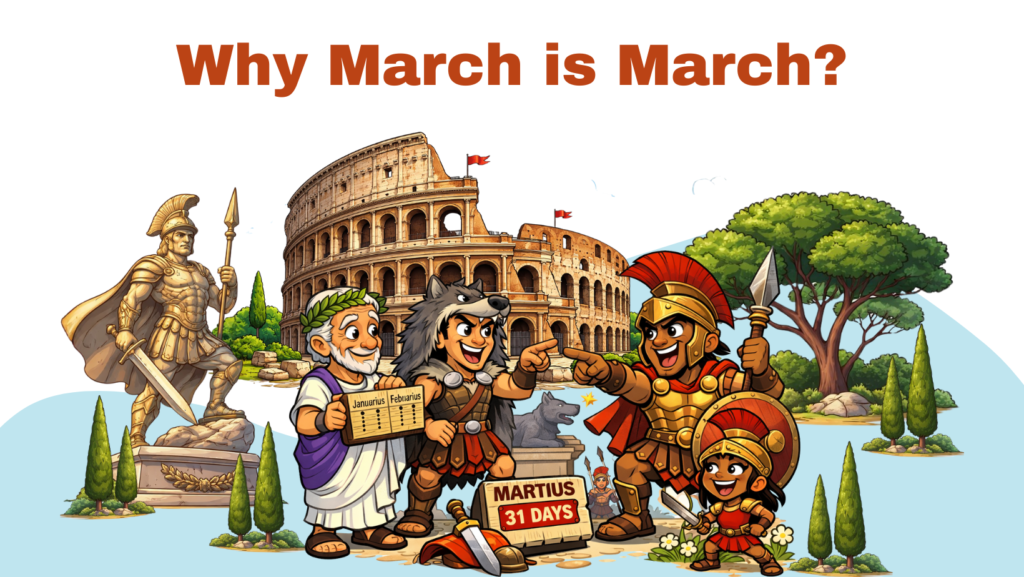
What happens in Mars, Stays in March?
Ready to travel back in time and step into the sandals of Roman rulers? Ever wondered why March is called March? Is it really named after Mars, or is that just a cosmic coincidence? Who was Martius? And why do Martians come from Mars?
Well, what happens in Mars… stays in March. No idea what that means? Don’t worry—we’re about to unravel the mystery.
And yes… March really was named after Mars, the Roman god of war. You may already know that March is marzo en español — but if you want to learn how to say it in other languages, wait until the end.

Romulus’ Bright Idea
Back in ancient Rome, when togas were all the rage and Julius Caesar wasn’t just a salad, there was a legendary figure named Romulus—yeah, the founder of Rome, the kidnapper of the Sabine women, and the mastermind behind some pretty wild ideas, including how to organize the Roman calendar.
Maybe it was all that divine destiny, or maybe being raised on wolf milk gave him an overconfidence boost, but Romulus had thoughts on how time should work.
And yes… this is where March finally steps in.

March: The Perfect Starter
Romulus, being the practical guy that he was, figured, “You know what? Let’s start the year when things start getting lively again — when winter’s finally taking a hike and spring is peeking around the corner.” And just like that, March became the head honcho of the Roman calendar.
And it wasn’t just about nicer weather — this was the season when armies could finally move again. Starting the year in March meant kicking things off with action, not hibernation. Very on-brand for a month named after Mars, the god of war.
This early Roman calendar consisted of ten months, totaling 304 days. The other months in the Roman calendar were:
| Month | Day | Month | Day |
|---|---|---|---|
| Martius | 31 days | Sextilis | 30 days |
| Aprilis | 30 days | September | 30 days |
| Maius | 31 days | October | 31 days |
| Junius | 30 days | November | 30 days |
| Quintilis | 31 days | December | 30 days |
Named After Mars, the War God
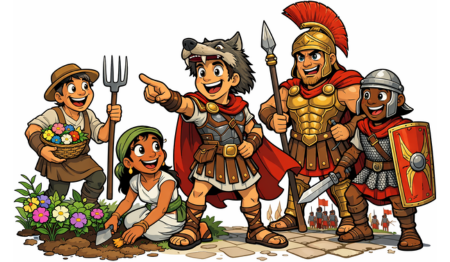
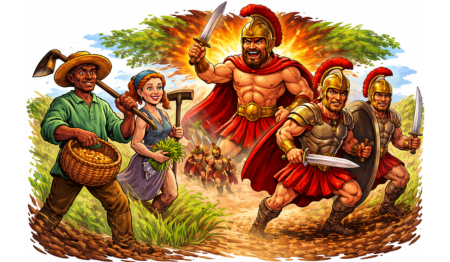
March was the time when farmers were itching to till their fields, flowers were starting to bloom, and, oh yeah, it was prime time for kicking off military campaigns. So, Romulus was like, “March it is, folks!”
A month built for action—very on-brand for Mars, the god of war. The Romans, after all, weren’t exactly known for relaxing… unless “relaxing” meant preparing to conquer their neighbors.
Numa: The Peacemaker Who Switched Things Up
But not everyone was all about the battlefield. Enter Numa Pompilius, Rome’s second king — the guy who thought maybe, just maybe, Rome should chill out for a second.
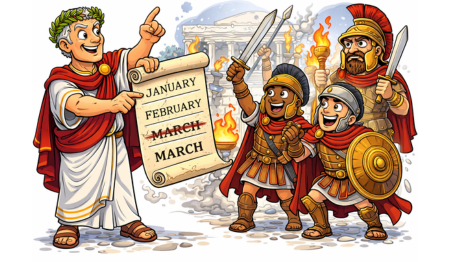
Unlike Romulus, who was all about expansion and war, Numa was a peacemaker. He reshaped Roman traditions, introduced a bunch of religious rituals, and, most importantly for our story, added two new months to the calendar: January and February.
And just like that, March lost its spot at the top.

Wait… The Calendar Only Had 10 Months?
Yep. Romulus’ original calendar kicked off in March and wrapped up in December, making it a neat 10-month system. But here’s the catch — there were no official months for winter. Timekeeping just kind of… stopped.
The Romans didn’t bother tracking the cold, dark months because, well, there wasn’t much happening—no farming, no wars, just waiting for better weather.
Basically, winter didn’t count. It just… existed.

Numa’s Big Fix
Numa, not exactly a fan of this timekeeping black hole, decided to do something about it. So, he added January and February to account for the winter months and bring a bit of order to the chaos.
This also helped align the calendar more closely with the lunar cycle and, more importantly, made it easier to schedule religious festivals properly — because if there’s one thing Romans took seriously (besides conquering), it was keeping their gods happy.

Julius Caesar’s Calendar Remix
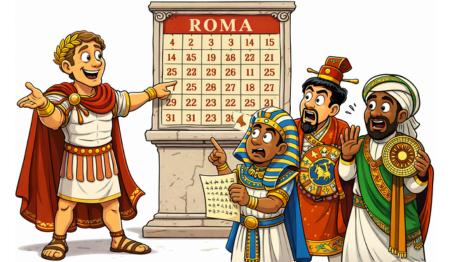
Fast forward a bit, and Julius Caesar — another big shot in Roman history — decides it’s time to shake things up.
By this point, thanks to Numa Pompilius, January and February had already joined the calendar party, pushing March out of the top spot. But Caesar took things further, reforming the whole system to make it more accurate and a lot less chaotic.
But you know what they say — you can take March out of first place, but you can’t take the warrior spirit out of it.
March: The OG Kickoff Month
Even though March lost its top spot, its legacy as the OG kickoff month stuck around. It’s still a time of renewal, growth, and maybe a little bit of war… metaphorically speaking.
So next time you’re flipping through your calendar, give March a little nod of respect — it was the original trailblazer.
But wait… was March really born with the Romans, or did the idea of a “starter month” exist long before them?

Romans Didn’t Invent Timekeeping Anyway!
Turns out, timekeeping goes way back — way before Rome was even a thing. So, how did ancient civilizations mark the beginning of the year? And more importantly, did they also name their months after war gods, or were they a little less… dramatic?
And what does all of this have to do with March?
Pre-Romulus Timekeeping
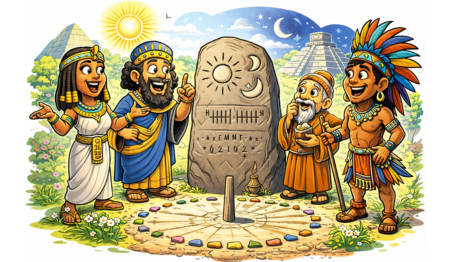
Before Romulus and his calendar shenanigans, civilizations across the ancient world had their own ways of tracking time — some practical, some downright mind-bending. Egyptians, Greeks, and Babylonians? They had their own systems, each with unique twists to keep life (and taxes) in order.
But here’s the real question — when did their year actually start? And did any of them have their own version of a “March moment”?
But what about other parts of the world?

Timekeeping in the Americas
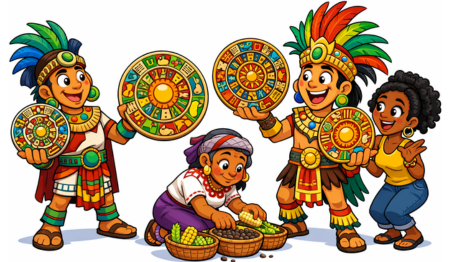
The Mayans were absolute calendar wizards, juggling two systems at once — one ritual, one solar. Their 260-day ritual calendar (Tzolk’in) worked alongside a 365-day agricultural calendar (Haab’) to keep both their spiritual and farming schedules in check.
The Aztecs followed a similar setup, with their Tonalpohualli (260-day religious calendar) and Xiuhpohualli (365-day solar calendar) working together like clockwork.
But here’s the twist — unlike the Romans, their calendars weren’t built around a single “starting month” like March. Time was more cyclical, less about a dramatic kickoff and more about keeping everything in balance.
What About the Incas in Peru?
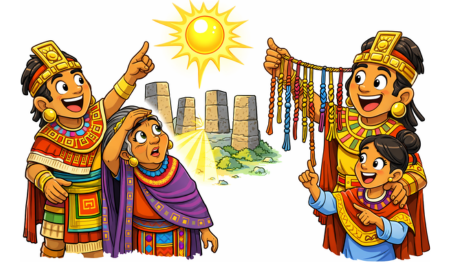
And then there were the Incas, who tracked time through a solar calendar based on the movement of the sun. They used stone pillars to mark solstices and equinoxes, ensuring they knew exactly when to celebrate Inti Raymi, the festival of the sun god Inti. No written records?
No problem — Incas used quipus (knotted cords) to record important dates and data.
But just like in Mesoamerica, time wasn’t about a single “starting month” like March. Instead, everything revolved around the sun and agricultural cycles — less about a dramatic beginning, more about staying in sync with nature.
Timekeeping in Asia
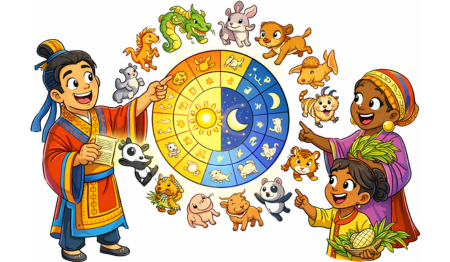
Meanwhile, over in China, people had been tracking time for centuries using a lunisolar calendar, combining both the sun and the moon’s cycles to determine the best times for planting, harvesting, and celebrating. The famous Chinese Zodiac? Yep, it comes from this ancient system.
In South Asia — especially in India — timekeeping followed a similar rhythm, blending lunar and solar cycles to keep festivals, harvests, and everything else on track.
Here’s where it gets even more interesting — there wasn’t a single “starting month” like March either. The new year shifted each time, based on lunar cycles, so no month held permanent top-dog status.
So yeah… no Roman-style March moment here.
Meanwhile, in Africa!
Across Africa, different cultures developed their own ways of measuring time. The ancient Egyptians, for example, based their calendar on the Nile’s flooding cycle, which was crucial for their survival. Meanwhile, Ethiopian and Berber calendars still operate on timelines very different from the Gregorian system we use today.
Time here wasn’t about a single fixed starting point — it followed natural cycles, shaped by the environment rather than a designated “first” month.
Now, here’s the million-dollar question: why were the Romans so obsessed with having a beginning month?

Rome Didn’t Do “Vibes” — They Did Launches
You know why? Simple — they weren’t just tracking time… they were organizing action.
Unlike other civilizations that followed nature’s cycles, the Romans wanted structure. A clear starting point. A moment where everything reset and kicked into motion.
And what better time than March?
Spring was rolling in, the weather was improving, and more importantly — armies were ready to move. Roads cleared up, campaigns could begin, and Rome could get back to doing what it did best: expanding.
For the Romans, the year didn’t just begin—it launched. And that’s exactly why March mattered. Not just as a month, but as a signal: it was go time.

Before Rome Ruled Time…
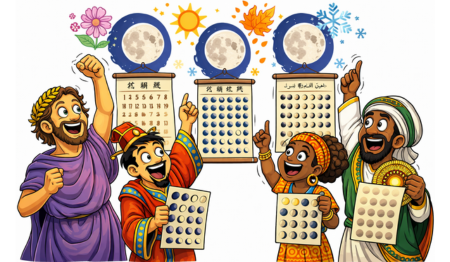
Before Rome took over the calendar game, most civilizations followed the moon.
Lunar calendars made sense — they were visible, predictable, and deeply connected to nature. You could literally look up and track time.
But here’s the catch: they didn’t always line up neatly with the solar year. Seasons drifted, dates shifted, and over time… things got messy.
And that’s exactly the kind of chaos the Romans weren’t too fond of.
Lunar Calendar Craze
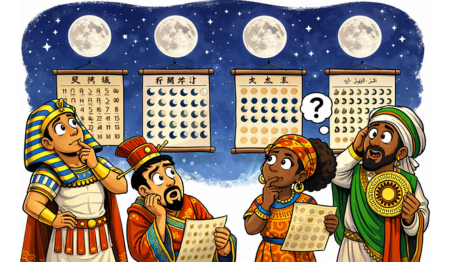
Now imagine this: lunar calendars were all the rage. People looked up at the sky and basically went, “You see that glowing thing? Yeah… that’s our planner now.”
Months followed the phases of the moon — about 12 cycles, neat, visible, and easy to track.
But here’s the kicker: the moon doesn’t care about your seasons. Lunar months are slightly shorter than a solar year, which means things slowly drift out of sync.
So every now and then, calendars had to get creative — adding extra days or even entire months — just to keep harvests, festivals, and real life from falling into chaos.
March, Before March
And as for March? Well… it wasn’t always March.
Different cultures had their own versions of months, so while some lined up roughly with what we’d call March today, they weren’t named the same — and definitely didn’t come with the same “god of war, let’s start the year” energy.
In other words, March didn’t exactly walk into history as a global superstar. It was just one version of time… among many.
So while March wasn’t a global superstar yet, civilizations like the Babylonians were already busy perfecting their own calendars — each with its own rules, quirks, and cosmic drama.

Mesopotamian Calendar Quirks
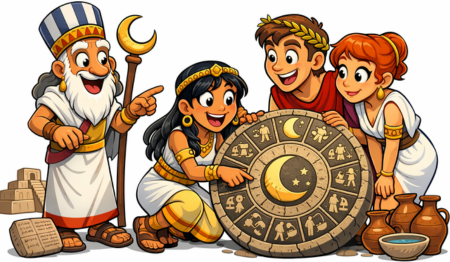
Take Mesopotamia, for example. The Babylonians had their own lunar calendar with 12 months, but it wasn’t a carbon copy of the Roman deal. Actually, it should have been the other way around — Rome’s calendar borrowed a lot from the Babylonians, who had been fine-tuning their lunar system long before Rome even existed.
So if even Rome was borrowing ideas… where does that leave March?
Egyptian Calendar Secrets
And don’t even get me started on the ancient Egyptians — they had their own calendar game going on, totally different from what the Romans were cooking up. Instead of obsessing over war gods and “starting months,” the Egyptians were all about the Nile.
Their year revolved around the annual flooding, which basically told them when to plant crops and when to chill. They even used a 365-day solar calendar and kept track of time with the stars — way more about survival than drama.
Meanwhile, back in Rome, March was just getting warmed up…

March and Beyond
So, long story short, yeah, other ancient peeps were counting months, but it was like a whole mixed bag of flavors. The concept of “March” as we know it today — springtime vibes and all — was pretty much a Roman invention, courtesy of Romulus and his crew.
Which naturally begs the question… if everyone else had their calendars, how did Rome’s version end up becoming the one most of the world follows today? Did they win? If so…

Why Did Rome’s Calendar Win?
Was it just Roman stubbornness, or did they actually build something that made sense beyond their own world?
Spoiler: it wasn’t perfect… but it stuck.
And that’s where things get even more interesting. Because if you think Romulus and Numa had the final say, wait till you hear what Julius Caesar and Pope Gregory did to time. Well… that’s a story for another article.
Rome may have set the stage for calendars everywhere… but for the Romans, some months weren’t just about dates—they were about drama, politics, and gods. Which brings us back to March — the month that wasn’t just a start, it was a statement.
Mars Meant Wars!
That’s right! To the Romans, March (Martius) was more than just a month — it was a tribute to Mars, the Roman god of war.
According to Roman mythology, Mars was believed to be the father of Romulus and Remus, the legendary founders of Rome.
As a result, Mars held immense significance in Roman culture, and March was dedicated to honoring him.

Mars: The God & the Planet!
And here’s the cool part — “Martius” (March) and “Mars” (god/planet) share the same root: “Mārs.” Deeply connected, right? The Romans were basically like: “March = war, life, action, repeat.”
The origin of Mars is a little hazy — some say he started as a farming/fertility god. Yeah, the Romans loved mixing war and crops.
Makes perfect sense.

March Was Indeed for Wars!
Over time, Mars didn’t just stick to farming duties — no, he leveled up. He became the full-on god of war, the poster deity for strength, courage, and all things “let’s kick some butt.”
March got the honor because it wasn’t just springtime fluff — it was go-time. The ice was melting, the fields were calling, and armies? Yeah, they were dusting off their armor and sharpening their swords.
So, farmers were planting crops, warriors were preparing campaigns… and the Romans? They called it Martius — a perfect mix of vitality, renewal, and yes, a little flexing of power.
“Martius” for “Mars”
So, basically, the names Martius (March) and Mars (the god of war) are tightly linked — a reflection of the Roman obsession with power, conquest, and the endless cycles of life. It’s all about honoring Mars and the warrior spirit that ran through Roman culture.
Romans weren’t just conquering lands; they were conquering calendars too! Got it? Power moves everywhere. Time is money, money is time, and that makes things happen. Business as usual: same shit, different time.
Now, let’s figure out why New Year didn’t start in January.

New Year’s in March
Back in the day, New Year’s actually kicked off in March. Yep, New Year’s in March: the Romans weren’t ringing in January like we do now — springtime was the real party starter. Curious how they celebrated? Check out our full article to see if Romans were more romantic or just really into fireworks… or, well, swords.
And don’t miss our Leap Day section — that’s where the Romans sneakily added an extra day to February every four years. Let’s dive down this rabbit hole and unravel the mysteries of time, Roman-style.

March Around the World
Turns out, March isn’t just a Roman thing—it sneaks into languages all over the globe. Curious how to say “March” in español, français, 中文, or even in Hindi? We’ve got a handy chart for you. Get ready to flex those language muscles and impress your friends.
| Language | Word for “March” | Notes |
|---|---|---|
| Spanish | marzo | From Latin Martius; not capitalized |
| Portuguese | março | Same Latin origin |
| French | mars | Softened from Latin |
| Italian | marzo | Retains Latin structure |
| Romanian | martie | Very close to original Latin |
| English | March | From Latin via Old French |
| German | März | Direct Latin inheritance |
| Dutch | maart | Lowercase common noun |
| Swedish | mars | Same Latin root |
| Norwegian | mars | Simplified spelling |
| Danish | marts | Similar to Norwegian |
| Finnish | maaliskuu | Literally “month of the plowing season” |
| Polish | marzec | From Latin Martius |
| Czech | březen | Related to “breaking” (start of spring) |
| Slovak | marec | Retains Latin structure |
| Russian | март (mart) | From Latin via Byzantine tradition |
| Ukrainian | березень (berezen’) | From “birch,” associated with spring |
| Greek | Μάρτιος | Direct from Latin |
| Turkish | Mart | From Latin |
| Arabic | مارس (Māris) | Loanword from European forms |
| Japanese | 3月 (sangatsu) | Literally “third month” |
| Chinese | 三月 (sān yuè) | “Month three” |
| Korean | 3월 (sam-wol) | Same numeric system |
| Quechua | marzo (loanword) | Modern borrowed usage |
Some Spanish Romance
Speaking of mysteries, Love is a mystery that Spanish speakers solved a long time ago. Check out our blog for some Spanish Romance—not Romans, of course.

Sexy Spanish Romance
Want to add some romance to your Spanish vocabulary? Dive into our blog sections: ‘Things Spanish People Say in Bed’ and “El Sexi Chupacabras”. There, you’ll uncover sensual phrases, including how to express ‘I love you’ in Spanish and much more.

Looking for a Laugh & not Love?
Looking for a language-related laugh? While phrases like ‘¡Feliz Año Nuevo!’ or ‘¡Me Gusta la Chucha de tu Madre!’ might raise a smile, it’s important to approach language learning with respect and cultural sensitivity. Embrace the diversity of languages and immerse yourself in the lively Spanish-speaking world.

Interested in Legends and Folklore?
Explore our ‘Legends & Folktales’ section, where you’ll find stories about mythical beings like la Santa Muerte, la Llorona, la Ciguapa, El Sexi Chupacabras, and others from Hispanic tradition.
Curious about the Easter season? Check out our ‘Pascua’ section for articles related to the eggy season. And be sure to read our ‘About’ section to discover our passion for teaching and don’t forget the complimentary lessons at Kasa de Franko.

Ready for a Free Ticket?
Hey there! Ready to dive into Spanish? Join us at Kasa De Franko, your one-stop language hub in the San Jose & San Francisco Bay Area! Whether you’re into one-on-one sessions or group fun, snag a spot for a free Spanish class today. Hit that red button to kick things off, and remember…