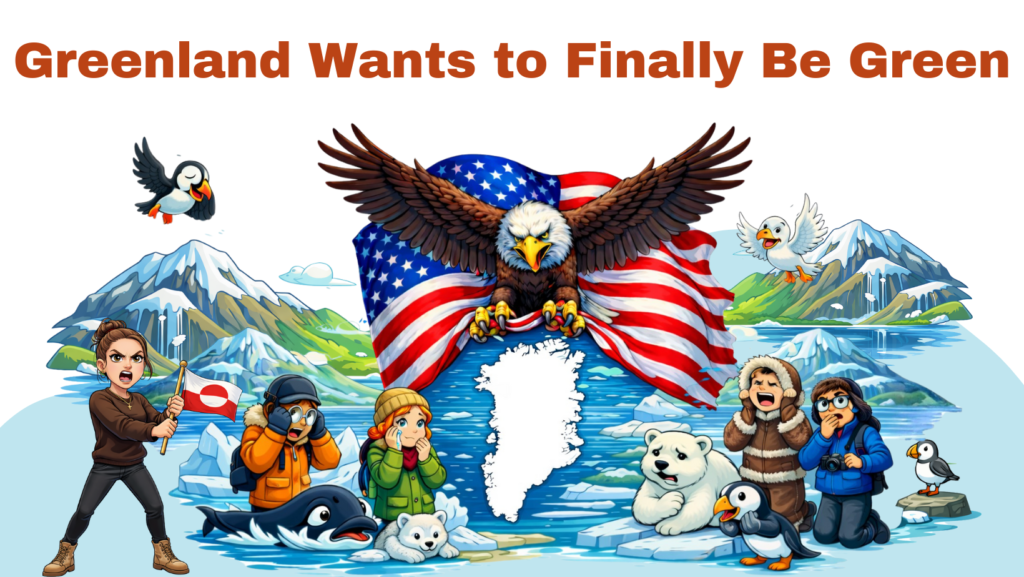
“All I Want Is Just a Piece of ICE”
President Trump said — and for a moment it was unclear whether he was talking about an agency, an island, or simply something cold enough to freeze reality.
Given his track record with Iceland, Greenland, and basic geography, the ambiguity felt less accidental than convenient.
Whatever he meant by ICE, he soon started acting on it.
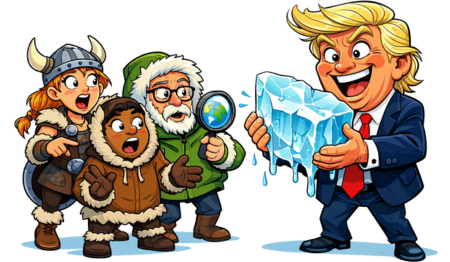
Losing Allies While Acquiring Ice
Speaking at the World Economic Forum in Davos — where presidents, CEOs, and billionaires gather annually in the Swiss Alps to pretend they’re solving the future — Trump attacked NATO, dismissed Europe as “unrecognisable,” declared the US the only country capable of “securing” Greenland, threatened annexation without force (except, possibly, with overwhelming force), and reduced the whole thing to a simple request: just a piece of ICE.
Davos was the stage; the Arctic is the prize. Because what happens in the Arctic never stays in the Arctic.

Global Power Politics in the Arctic
“Green” has never been a simple word in Greenland.
It began as a Viking marketing strategy, evolved into a climate symbol, and now quietly points to something else entirely: money, leverage, and attention.
In today’s Arctic, being “green” means attracting investment, negotiating power, and surviving geopolitical interest—especially when it comes from the United States.
The irony is that Greenland has always been green—just not in the way people think. And it all starts with a name.
Why? Because the answer is simpler than it seems…
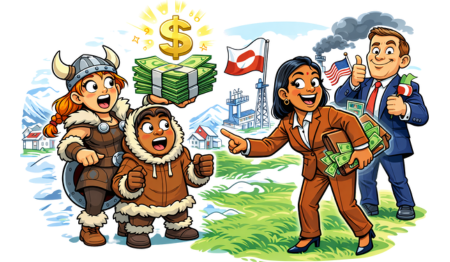
Greenland Was Never Green
It was named to sound attractive.
And it worked — just not in the way its creators intended.
And a thousand years later, the name still works.
In the Arctic, “green” no longer refers to color or climate. It now refers to power in a world moving beyond Pax Americana. As ice retreats, interest accelerates. Shipping routes shorten. Resources become accessible. What once looked distant now looks strategic.
And Greenland ends up at the center of it.
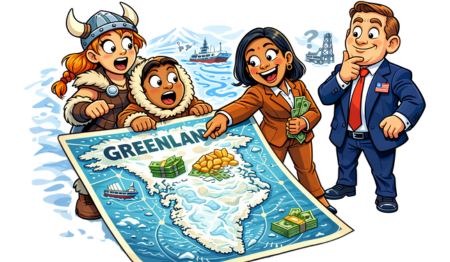
It Is Not About Ice Alone!
Yeah — this is not a story about ice alone.
It is about resources, sovereignty, and the uncomfortable reality that global interest rarely arrives alone. It is about an island that governs itself—but not entirely on its own terms. And it is about why the United States, along with other global powers, has rediscovered a place it once treated as peripheral.
Greenland did not ask to become central.
It became valuable.
And in geopolitics, value attracts pressure—usually from people who arrive smiling.
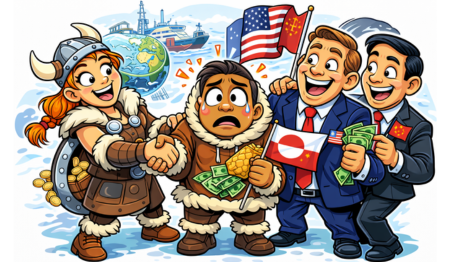
Why Greenland Isn’t Really Green!
It isn’t European in the way most people assume.
And despite being the largest island on Earth, it lives at the margins of global imagination—quietly massive, quietly important.
Mention Greenland and most people picture ice, emptiness, maybe polar bears or Papa Noel (o sea, Santa). Few stop to ask what Greenland actually is, who lives there, or why it keeps appearing in conversations about climate change, geopolitics, and the future of the Arctic.
This is not a postcard destination or a frozen footnote.
Greenland is where history, language, ice, and power intersect.
Let’s unpack it—KDF style.
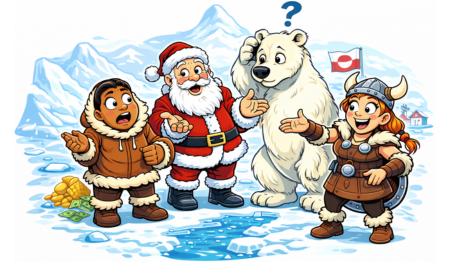
How “Greenland” Was Sold
The first Europeans did not arrive in Greenland because it was welcoming.
They arrived because Erik the Red needed settlers.
Exiled from Iceland around the year 982, Erik explored the southwestern coast of the island and found land that was harsh, icy, and marginal—but not entirely uninhabitable.
When he returned to Iceland, he did not call it Ice Land II.
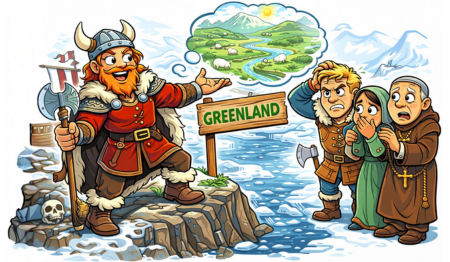
He Called It Greenland
And that choice was not poetic innocence—it was strategy.
The name was a pitch. A recruitment strategy. A promise just believable enough to work.
Erik understood something very modern: people migrate not just because land exists, but because a story makes it desirable. “Greenland” sounded promising, fertile, almost generous.
It suggested pastures instead of permafrost, opportunity instead of exile. According to later Icelandic sagas, Erik openly admitted the logic: people would be more willing to go there if it had a good name.
What began as branding became destiny.
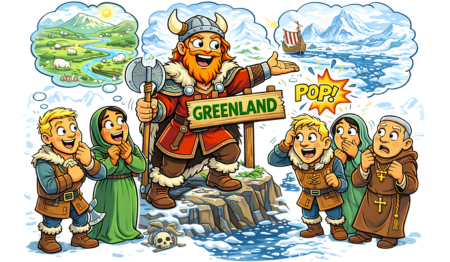
Sold Before Even Being Bought
So Greenland was, quite literally, sold before it was settled.
To be fair, Erik wasn’t completely lying. During the Medieval Warm Period, parts of southwestern Greenland were greener than they are today.
There were fjords where grass grew in summer, enough for sheep and cattle, enough to scrape together a fragile Norse farming society. But this was never an easy land.
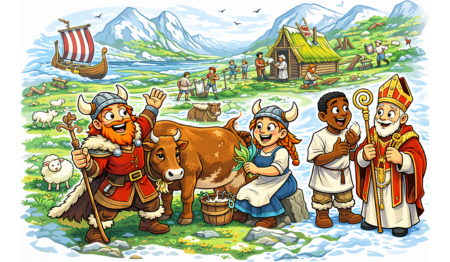
How Greenland’s Identity Was Shaped
Norse settlement there demanded constant adaptation, trade with Europe, and a delicate balance with climate.
The name did the heavy lifting long before reality set in.
From the very beginning, then, Greenland’s identity was shaped by marketing, necessity, and geopolitical imagination—a place defined less by what it was, and more by what outsiders needed it to be.
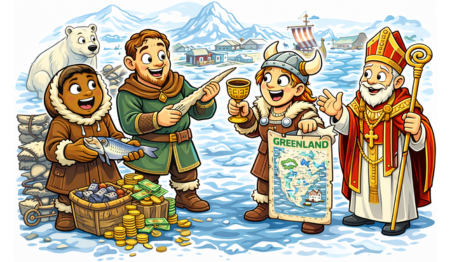
Where Is Greenland, Really?
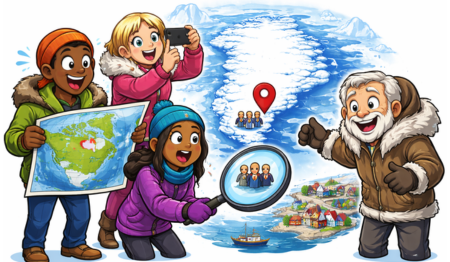
Geographically speaking, Greenland belongs to North America. It sits between the Arctic and Atlantic Oceans, closer to Canada than to Europe.
On a globe, this is obvious. On a flat map, it’s often distorted—much like our understanding of the island itself.
Politically, however, Greenland remains part of the Kingdom of Denmark.
Yes. North American land. European administration.
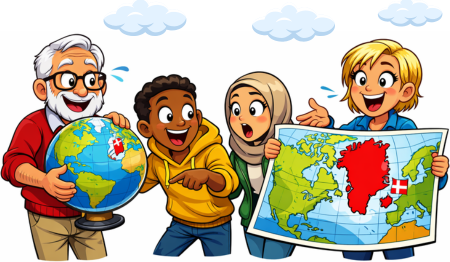
A Contradiction Called Greenland
That contradiction alone explains why Greenland feels so confusing.
Greenland is not an independent country, but it is far from a passive territory. It has its own parliament, manages most internal affairs, and has steadily expanded its autonomy since gaining Home Rule in 1979 and Self-Government in 2009.
Denmark still oversees defense, foreign policy, and currency, but daily governance happens locally.
In short: Greenland governs itself—just not entirely on its own terms.
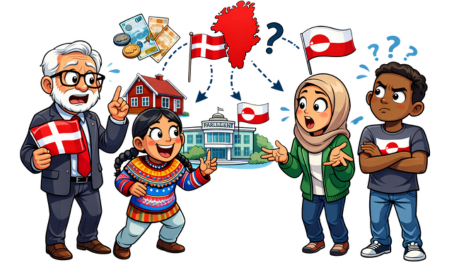
The Largest Island With One of the Smallest Populations
Greenland is enormous.
With more than 2.1 million square kilometers, it is larger than Mexico, Saudi Arabia, or Alaska.
And yet, only about 56,000 people live there.
Most Greenlanders reside along the coast, where the climate—while still extreme—is survivable. The island’s interior is dominated by ice.
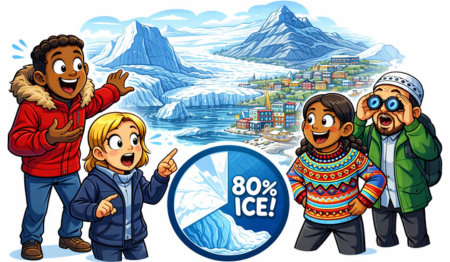
80% Is Ice!
Roughly 80% of Greenland is covered by the Greenland Ice Sheet, one of the largest freshwater reserves on Earth.
The capital city, Nuuk, has fewer than 20,000 inhabitants.
It’s modern, compact, and surrounded by raw Arctic landscapes.
There are no highways crossing the island, no massive urban sprawls. Life here operates on a different scale—one dictated by weather, geography, and resilience.
Language, Identity, & Survival
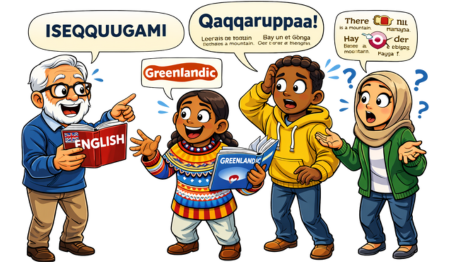
The primary language of Greenland is Greenlandic, or Kalaallisut, an Inuit language fundamentally different from English, Spanish, or Danish.
Greenlandic is polysynthetic, meaning a single word can express what would require an entire sentence in many other languages. It’s a language shaped by environment, precision, and survival—perfectly adapted to Arctic life.
Language Isn’t Just Communication
Language is also politics. Language is culture. Projects like Kasa de Franko and KiDeeF Spanish exist precisely because language carries identity, memory, and power.
And in Greenland, language has never been neutral.
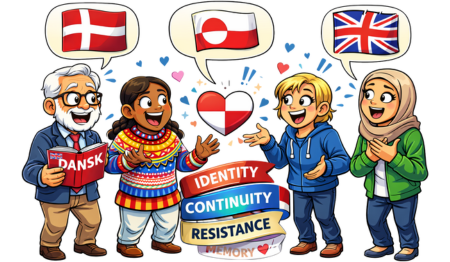
Danish remains widely spoken due to centuries of political connection, and English is increasingly common among younger generations. Still, the promotion of Greenlandic is deeply tied to cultural identity.
Language in Greenland is not just communication. It’s continuity. It’s resistance. It’s memory.
Ice That Shapes the Planet
Ice is not just part of Greenland’s landscape. It defines its global significance.
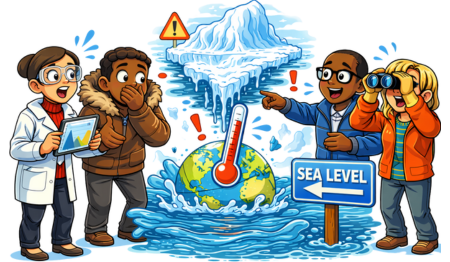
The Greenland Ice Sheet plays a critical role in regulating Earth’s climate.
Scientists closely monitor its melting patterns because Greenland acts as an early warning system for global sea-level rise.
If the ice sheet were to melt entirely—a process that would take centuries—sea levels worldwide would rise by several meters.
Climate Change Isn’t an Abstraction
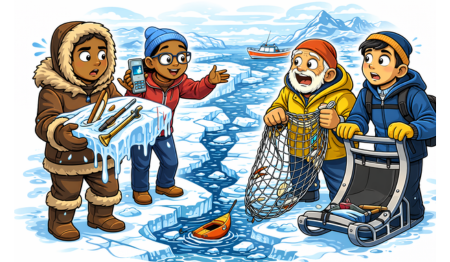
But climate change in Greenland is not abstract. It affects hunting routes, fishing seasons, transportation, and daily life.
Communities that adapted to stable Arctic conditions for generations are now navigating rapid, unpredictable change.
Greenland is not a future scenario. It is the present tense of climate change.
Why Greenland Suddenly Matters
For most of modern history, Greenland existed at the edge of global politics.
That era is over.
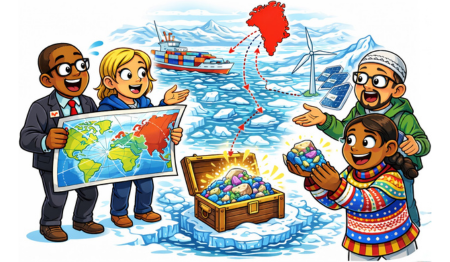
As Arctic ice melts, new shipping routes are emerging, reducing travel times between Asia, Europe, and North America.
At the same time, Greenland holds valuable natural resources, including rare earth minerals essential for renewable energy, electronics, and defense technologies.
And Guess What?
This has drawn the attention of major global powers.
The Arctic is no longer remote. It’s strategic.
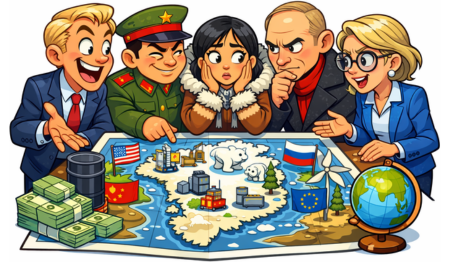
Greenland now finds itself at the center of geopolitical discussions involving the United States, China, Russia, and Europe—often without asking to be there.
This raises difficult questions:
How do you balance economic opportunity with environmental protection?
How do you engage globally without sacrificing cultural autonomy?
How do you remain yourself when the world starts watching closely?
Beyond Ice and Geopolitics
Reducing Greenland to melting ice or strategic minerals misses the point.
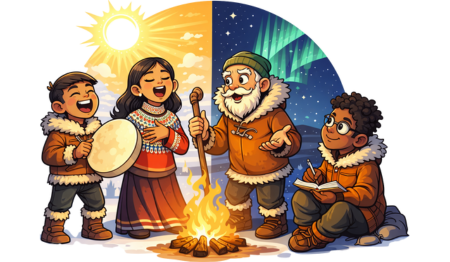
Greenland is also music, art, oral storytelling, and community. It’s a culture shaped by endurance and adaptation. It’s daily life unfolding under extreme light and darkness—months of sun, months of night.
Time behaves differently here.
And perhaps that’s why Greenland captures attention. It reminds us that human life does not follow a single template. Culture survives in many forms—even in places that seem inhospitable from the outside.
An Island That Challenges Assumptions
Greenland resists easy categories.
It is North American, but not politically independent.
It is linked to Europe, but culturally Indigenous.
It is called green, yet shaped by ice.
And while it may appear distant, what happens in Greenland affects the entire planet.
Often portrayed as peripheral, Greenland is increasingly central to conversations about climate, identity, and global power.
Quiet, vast, and frequently misunderstood, Greenland doesn’t need spectacle to matter.
Its story is already unfolding.
And it’s worth paying attention to.