
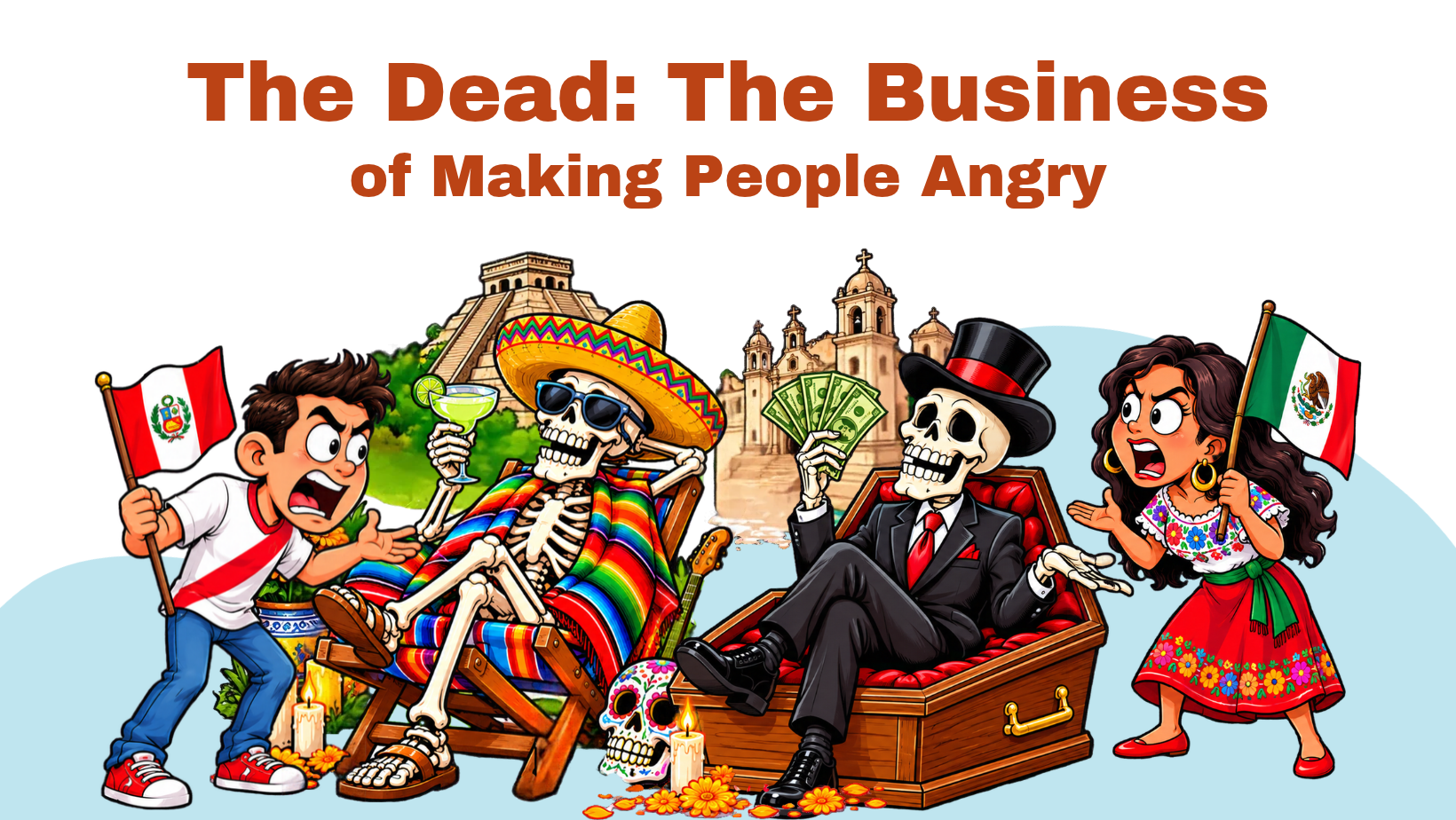
Who Owns the Dead?
Apparently, dying isn’t the end of your problems. Even after you’ve kicked the bucket, crossed the rainbow bridge, or been promoted to the great beyond, somebody might still be fighting over your cultural identity.
And if you happen to be part of a centuries-old tradition, congratulations! You may have just become the subject of an international ownership dispute. Forget resting in peace. Why? Because…
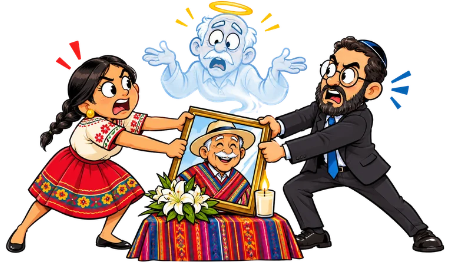
They Won’t Even Let the Dead Rest in Peace
Not even a little! Come on, guys! Give the dead a break! Do we really need another cultural war over who’s entitled to them?
Your ancestors are now caught up in a cultural tug-of-war, with national pride on one side, historical claims on the other, and a whole lot of people ready to defend their heritage as if someone were about to repossess it —or even worse, possess the dead all over again.
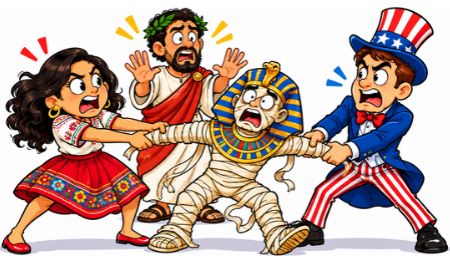
Haven’t We Been There Already?
We’ve already been down this rabbit hole with Mexico, Peru, and Spain.
First came the question of who borrowed what from whom; then came the historical family reunion nobody seemed particularly eager to attend.
We started pulling at this thread in Do Mexicans Think They’re the Only Ones Who Die?, then discovered that Spain had a few things to answer for in The Dead That Mexico & Peru Stole from Spain.
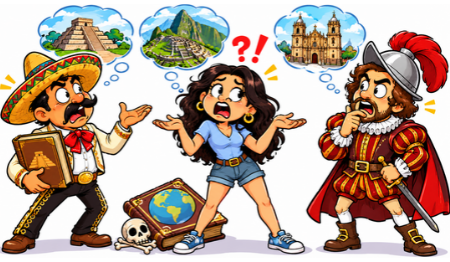
When Cultural Pride Becomes a Trademark Competition
Who gets to claim the dead? Who gets bragging rights over the traditions surrounding them? And seriously, when did honoring your ancestors become some sort of a competition?
Like, everybody seems determined to prove that their dead are older, more authentic, and somehow more culturally significant than everybody else’s.
Because apparently, even death isn’t exempt from national rivalries. And while the dead may not have much to say about the matter—yet, the living certainly do.
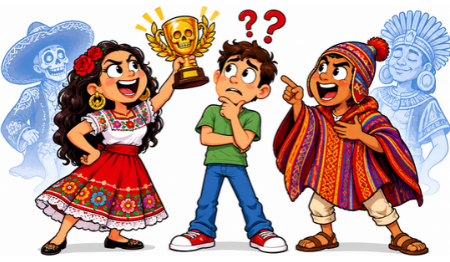
The National Scoreboard
And once cultural heritage becomes a matter of ownership, the next question is almost inevitable: who gets the bragging rights?
Suddenly, we’re not just talking about traditions, ancestors, or the ways different communities remember their dead.
We’re keeping score—and, even worse, acting like teenagers arguing over whose school has the better football team. Nobody wants to lose, and nobody is particularly interested in admitting the other side might have a point.
I know! We’ve all been there
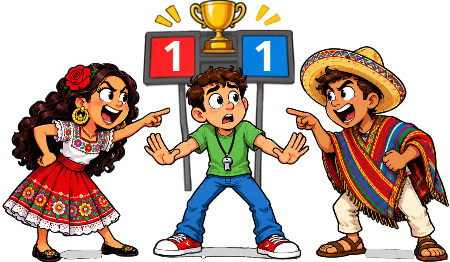
Part of It Is Understandable
Let’s be fair. People don’t defend their traditions just because they want to win an argument.
These traditions are part of who they are, their families, their ancestors, and the stories they’ve grown up hearing.
And when a community has spent generations being ignored, misrepresented, or conveniently left out of history books, you can understand why people might get a little too protective—and, of course, very defensive. And then what…
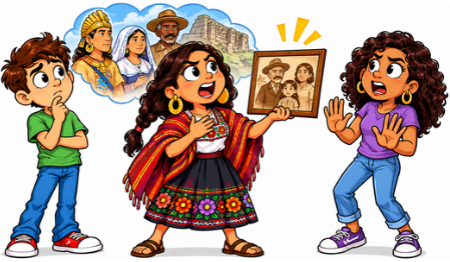
Traditions? Swipe ‘Em At Your Ass!
Especially if you get toxic about it!
After all, when somebody takes a swipe at your traditions, it feels personal—like they’re taking a swipe at your grandparents.
And let’s face it, defending a tradition is usually about defending the people who fought like hell to keep it alive. Culture is a living thing, bro.
There’s nothing ridiculous about that. Quite the opposite.
Hold on! Don’t get me wrong!
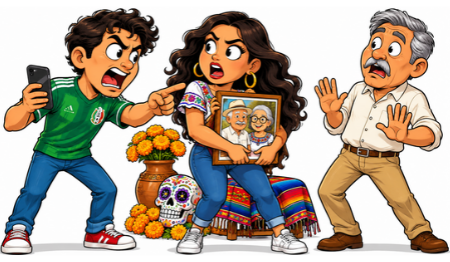
Don’t Confuse Dead with Toxic Bro!
So, let’s not confuse honoring your abuela’s memory with turning her ghost into a geopolitical football.
There is a massive difference between keeping a ritual alive around the kitchen table and letting internet trolls or government departments weaponize your heritage just to score points on an international scoreboard.
When “defending your roots” turns into a toxic trademark competition where you’re ready to sue a neighboring country over who invented a sugar skull, you can take that elite cultural pride and swipe it right at your ass.
Why? Because we know…
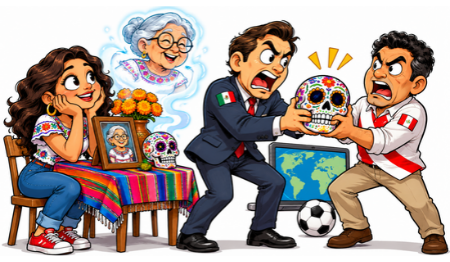
It’s About Your F*cking Ego…
…And not about your traditions anymore.
And because at that point, you’re no longer honoring the dead—you’re just gatekeeping the graveyard.
So… Why not leave the lawyers and internet warriors to their petty playground fights? As for us?
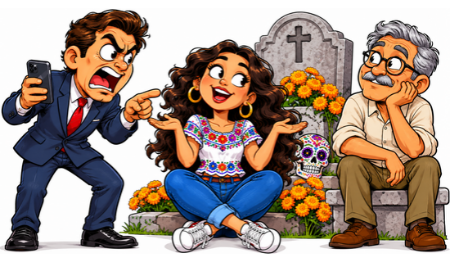
Us But no Ass, Tho!
Let’s just set up our altar, pour a shot of tequila, light the candles, and let our ancestors enjoy their well-earned cosmic vacation.
Trust me, the dead don’t give a sh*t about geopolitical borders or trademark certificates.
Why? Because… they just want to visit their families, eat some good food, and be left in peace.
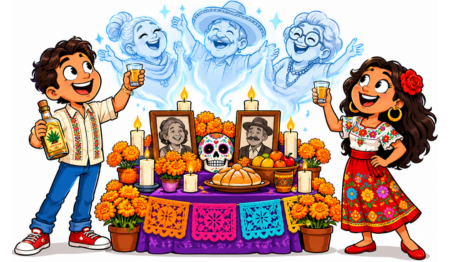
Let the Dead Be Dead…
For God’s sake!
At the end of the day, the dead are doing just fine—they’re resting. It’s the living who are making a mess out of everything.
So instead of turning your heritage into an elite country club where nobody else is allowed to play, just honor your roots at home, share a drink with the spirits, and stop gatekeeping eternity.
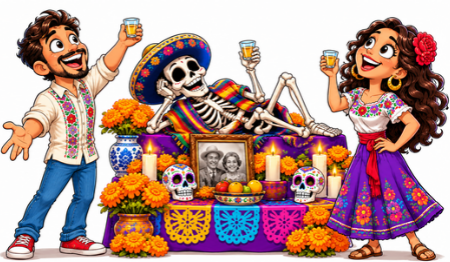
Digging Up the Dead
After all, we’re all going to end up in the exact same ground anyway, no matter whose flag is waving above it.
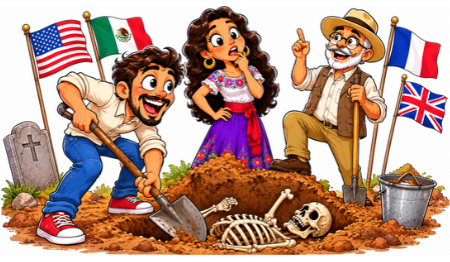
You’d think that would put the whole thing to rest. But no. Some people would rather keep digging—especially when national pride is on the line.
And digging is what we do best when it comes to the dead, right?
When Pride Becomes a Pissing Contest
The trouble starts when pride turns into a national pissing contest, where another country’s cultural achievement somehow diminishes your own.
If their tradition looks anything like ours, they must have stolen it. If their cuisine is famous, naturally, they must have copied ours. And if their festival is attracting international attention, hold on a minute! Who gave them permission to take the spotlight away from us?
And just like that, history becomes a national scoreboard. Everybody wants to win, preferably by proving that somebody else cheated.

History Isn’t a Football Match
Here’s where things start getting messy.
Everybody wants to win the historical argument, but somewhere along the way, people start mixing up the rules, moving the goalposts, and treating completely different questions as if they were one and the same.
And, surprise, surprise, that doesn’t make anybody’s case stronger.

Not Every Question Scores a Goal
Did a particular practice exist earlier in one place? Did two traditions share certain features? Did one community influence another? Did a modern celebration develop through several historical influences? And does a tradition hold a distinctive meaning for a community today?
Those aren’t five different ways of asking the same question. They’re five different questions, each requiring its own evidence.
Proving one doesn’t automatically score you a goal on the others. History doesn’t work that way, no matter how badly everybody wants to win.

One Tradition, Several Histories
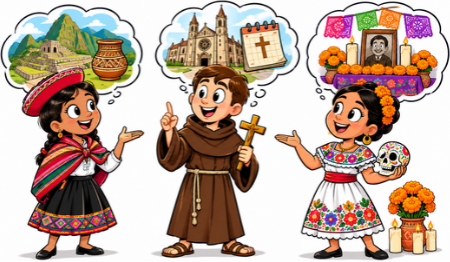
An ancient practice in Peru does not, by itself, establish that modern Mexican Día de Muertos originated there.
The medieval European roots of the Catholic calendar do not establish that the entire modern Mexican celebration is European.
And the presence of Indigenous practices in both regions doesn’t prove that one was copied from the other.
No Ownership Certificates from History
History rarely hands out the neat little ownership certificates people seem to want. Traditions aren’t frozen in time, sitting in some cultural museum waiting for someone to claim them.
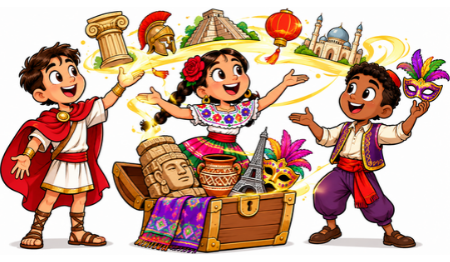
They travel, adapt, survive, mix with other influences, borrow—and may steal sometimes. And sometimes, in the process, they become something nobody could have predicted.
Traditions Are Free Spirits!
Sometimes two traditions share roots. Sometimes they develop on their own. And sometimes, no matter how badly somebody wants to prove otherwise, the evidence just isn’t there.
That’s the thing about history: it doesn’t always give you the answer you want, and it sure as hell doesn’t hand out trophies for being first. Not everything has to be a competition, bro!

Modern Borders, Ancient People
Now, here’s where this whole cultural ownership business gets even sillier.
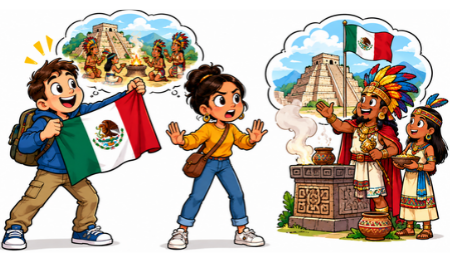
Apparently, we can travel a few centuries back in time, find an ancient ritual, slap today’s national flag on it, and shout: “That’s ours!”
Well, hold your horses! History didn’t come with today’s political map attached.
Who Ordered Those Borders?
Now, here’s a little problem with this whole business of national ownership: apparently, people were supposed to wait for somebody to draw today’s political map before they could start moving around, trading, migrating, or sharing religious traditions.
Well, somebody forgot to tell our ancestors!
Why?
Because before Peru, Mexico or Spain…
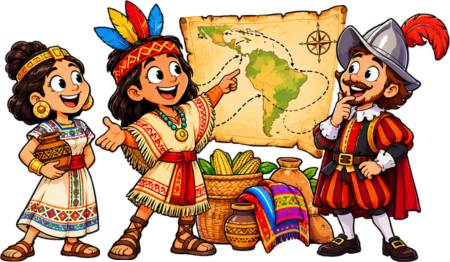
Are the Accounts Contradictory?
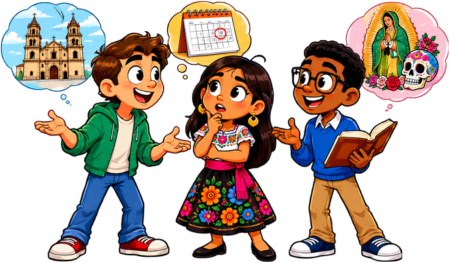
Not necessarily on every point. The authors may simply be using the word origin differently.
Where did the Catholic calendar come from?
How did a modern celebration develop in Mexican communities? Are we talking about formal religious observances or the customs people practiced around them? Those questions overlap, but they aren’t identical.
Still, there is a real difference in interpretation, particularly over whether syncretism accurately describes the celebration’s development. We shouldn’t pretend both publications say the same thing. Nor should we conclude that historians have no idea what happened simply because they disagree.
There Were Just Humans!
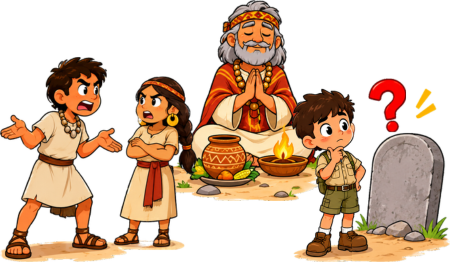
People had their own lives to get on with. They had their rituals, their communities, their neighbors—and, I’m sure, their fair share of arguments with the people next door.
But they weren’t doing any of this under a Peruvian, Mexican, or Spanish flag. Those countries, in their present-day form, came much later.
Nobody was asking for a passport or checking which national anthem to sing.
So, whose flag exactly are we planting on their graves?
Not Everyone Is Buying the Story!
And while we’re busy handing out historical verdicts, let’s not assume everybody sharing some outrageous claim actually believes the damn thing.
Some people are genuinely convinced they’ve uncovered the scandal of the century. Others are defending their country, taking a swipe at a neighbor, trolling somebody, or simply having a laugh. And then there’s the person who shares something because it sounds hilarious. Checking whether it’s true? That’s apparently asking too much!

Welcome to the Internet!
By the time a post has been shared, mocked, reshared, and turned into a full-blown national argument, the original context may be halfway to another continent.
Suddenly, a questionable meme is being treated like an archaeological discovery, and everybody’s an expert.
Easy there, Indiana Jones! Maybe it’s just a Facebook post.

Nuance Doesn’t Win Football Matches!
Now, try telling somebody who’s spent their entire afternoon defending their country’s honor that the historical evidence is a little more complicated.
You might as well interrupt a football match to explain that both teams have interesting agricultural histories.
Nobody came for that!

Everybody Wants to Win!
Once national pride enters the picture, historical nuance becomes about as welcome as a referee’s bad call. Nobody wants to hear that the other team might have a point.
They want the goal, the trophy, and preferably a victory parade.

But History Isn’t a Football Match
If the evidence supports a claim, make it. If it doesn’t, say so. We’re not here to hand out participation trophies or massage anybody’s national ego.
Your ancestors’ achievements don’t lose their shine because somebody else’s ancestors also did something remarkable.

Outrage Is Good for Engagement
But here’s where things get interesting. What happens when getting people worked up becomes a business?
Well, let’s face it, the internet has never been short of people looking for a fight. And apparently, you don’t even need to pick one.
Just throw a little cultural accusation into the mix, sit back, and watch everybody lose their marbles.

It’s All About Clicks
Because social media doesn’t necessarily reward the most thoughtful, historically accurate explanation. It rewards whatever gets people to pay attention. And what gets more attention than telling an entire country that somebody else stole its culture?
Before you know it, you’ve got comments, shares, rebuttals, reaction videos, and enough outrage to keep everybody busy for days.
The original claim might be buried under an avalanche of angry responses, but who’s complaining?
It’s still getting clicks!

Guess Which One Gets the Clicks?
A careful explanation of colonial religious history? Oh, fascinating! I’m sure it’ll keep everybody glued to their screens.
Now, accuse an entire country of stealing another country’s traditions, and suddenly everybody’s an expert, everybody’s offended, and everybody has something to say.
Funny how that works, isn’t it?
That’s Life Bro!
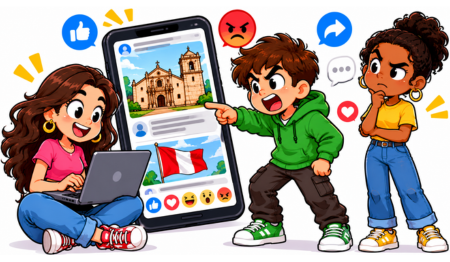
Somebody makes a provocative claim. Somebody else takes offense. Another person jumps in to defend their country. And then along comes the self-appointed historian to debunk the whole damn thing. Here we are!
And here’s the kicker: they’re all helping spread the original claim.
The post doesn’t have to convince anybody. It just has to get people talking. Or arguing. Or throwing a fit. Whatever gets the job done!

Everybody’s Helping to Spread It!
The person who believes the claim shares it. The person who thinks it’s ridiculous shares it to make fun of it. The person who feels insulted shares it to defend their country. And the person who wants to debunk it shares a lengthy explanation.
Different reasons, same result. Everybody’s giving the original claim another round of free publicity.

And the Best Part?
Nobody even has to agree with it!
Before long, the argument has acquired a life of its own.
The dead remain silent, but the engagement numbers are thriving.

Who Is Making a Killing?
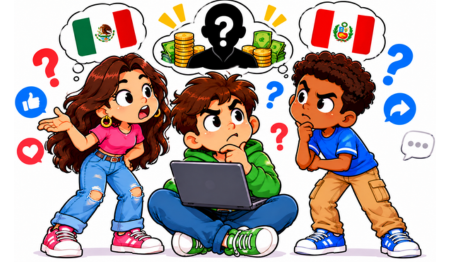
Now, let’s not get carried away and start accusing the person behind this particular Peru–Mexico claim of making the whole thing up just to cash in.
We don’t know that.
Maybe they genuinely believe it. Maybe they’re having a laugh. Maybe they’re looking for clicks. We simply don’t have enough evidence to say.
But Here’s the Thing:
You don’t necessarily have to invent a controversy to benefit from one. The online attention game can reward provocative content regardless of what the person posting it originally had in mind.
And let’s not forget the potential audience. Peru and Mexico have substantial Spanish-speaking populations, and their cultural rivalries can attract attention well beyond their borders.
That’s a pretty sizeable audience for anyone looking to get people talking.

Nobody Has to Be the Villain
The distinction matters. We can criticize the incentives without inventing a villain.
And there’s an uncomfortable irony here. People may believe they’re defending their national heritage while helping turn it into a shouting match.
They may be trying to correct misinformation while giving it an even bigger audience.
And they may be outraged by the suggestion that someone is stealing their culture while inadvertently helping turn that culture into somebody else’s content.

Online, Everything Becomes a Competition
The internet can turn almost anything into a competition: food, language, music, clothing, historical achievements—and now the rituals through which people remember their dead.
Perhaps the next dispute will concern which country invented grief.
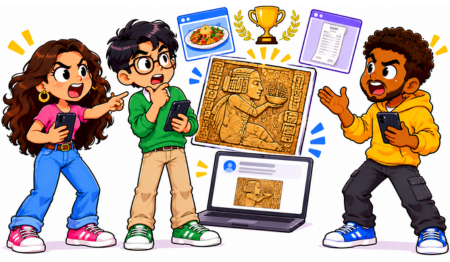
I wouldn’t rule it out. Someone will produce an ancient carving, somebody else will post a screenshot, and a third person will insist that the carving is actually a receipt.
So, Who’s Really Making a Killing?
The joke works because the mechanism is real: outrage attracts attention, and attention can have value.
The most successful participant in a cultural dispute may not be the person with the strongest historical argument. It may be the person who keeps everyone arguing.
While Peru and Mexico debate who owns the dead, somebody else may be counting the clicks.

Defend Your Roots, Not Your Ego!
By all means, defend your traditions! Celebrate your ancestors! Be proud of where you come from! Nobody’s asking you to surrender your cultural heritage at the nearest border crossing.
But for crying out loud, not everything that looks remotely familiar is a cultural robbery! Not every historical disagreement is an international incident!
And not every tradition needs a bloody birth certificate stamped by the Ministry of National Identity.
History Is Messy
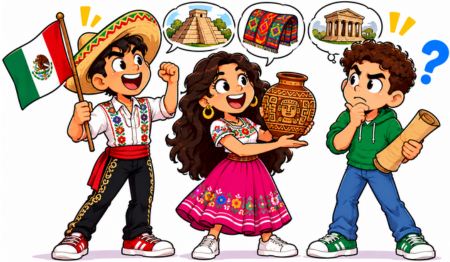
People move around. Traditions travel. They mix, mutate, pick up a few things along the way, and sometimes become something nobody could have imagined a few centuries earlier.
That’s how culture works, folks!
It doesn’t sit around waiting for modern countries to draw borders and issue ownership papers.
And here’s the thing: your ancestors don’t become any less impressive just because somebody else’s ancestors did something remarkable too. This isn’t a damn talent show. Nobody’s handing out trophies!

Give the Dead a Break!
And what are we actually accomplishing here? Winning an argument on Facebook? Getting the last word in a comment thread? Or keeping some cultural pissing contest alive long enough for everybody to forget what the original argument was about?
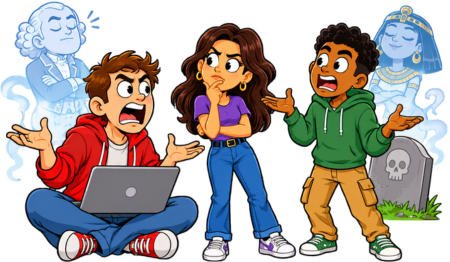
For God’s sake, the people we’re fighting over are dead! They’ve got better things to do—or, depending on what you believe, absolutely nothing to do!
Don’t Make Ammunition Out of Tradition
Meanwhile, we’re busy turning their traditions into ammunition, their history into bragging rights, and their memory into internet content.
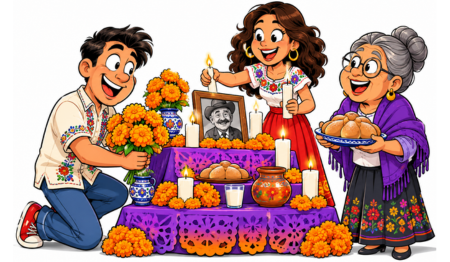
So go ahead. Honor your ancestors. Keep your traditions alive. Put flowers on the altar, light the candles, pour a drink, eat your pan de muerto, or whatever the hell your family does to remember those who came before you.
Loving Isn’t Owning
Just don’t confuse loving your culture with owning everybody else’s.
You don’t have to own the dead to remember them. And you certainly don’t have to bury somebody else’s culture to celebrate your own.
Now, for crying out loud, can we let the dead rest? We’ve got enough trouble with the living!
