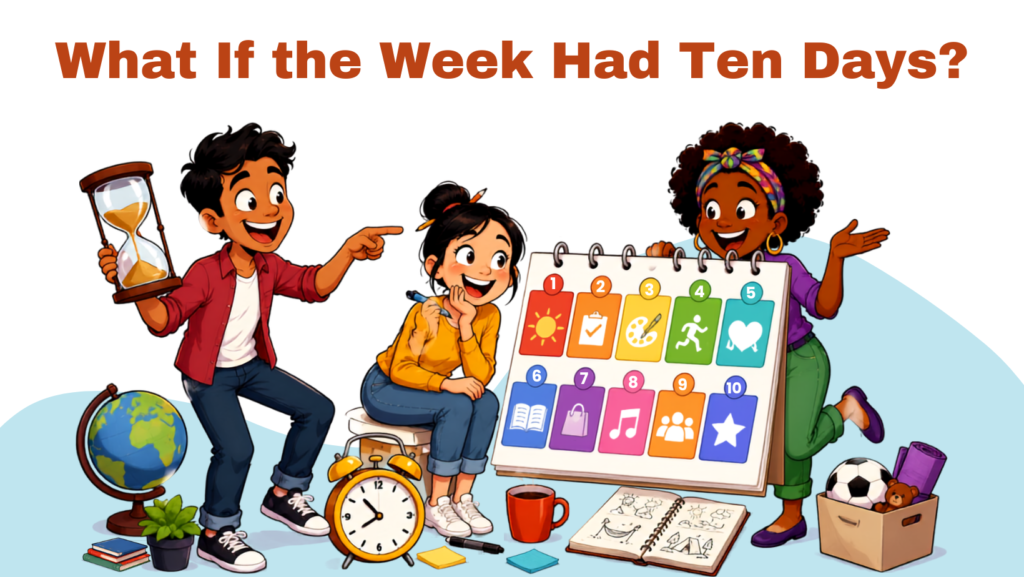
The Trap of Seven
There are seven days in a week.
Seven deadly sins.
Seven wonders of the world.
Seven musical notes. Seven colors of the rainbow.
At this point, it almost sounds like a Lizandro Meza song.

The Mysterious Seven
The number seven shows up so often that it almost seems to have something special about it. As if it were a number personally chosen by the universe.
But perhaps the truth is much less mysterious.
Things survive not because they are natural, but because they manage to stick around.
Seven Doesn’t Follow Us Because It’s Magical
It follows us because it worked.
And when an idea works for long enough, it stops looking like an idea and starts looking like a law of nature.
The seven-day week is exactly that. It wasn’t born because nature divided time into perfect groups of seven. Certain civilizations organized the world that way, others inherited it, and over the centuries we simply stopped asking why.
Seven stopped being a human decision and became something that simply “is.”
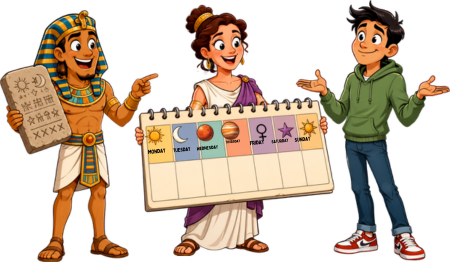
Stuck With Seven Instead of Four
Have you ever wondered why we ended up with seven?
Every Monday, the same thing happens.
Millions of people look at the calendar with the same tragic expression and think:
“Well… here we go again.”
But wait a second.
Why does the week start on Monday?
Who decided that after seven days we have to start over?

Why Is Seven Still Up?
And no, we’re not talking about 7UP. The soda. The one pretending to be refreshing while delivering a nice little sugar bomb.
I’m talking about the other seven. The one that’s been bossing us around every week for thousands of years.
Because if you really think about it, the seven-day week is pretty strange. There’s nothing particularly special about it. It’s not like the day, which comes with the Sun.
It’s not like the month, which comes from the Moon. It’s not like the year, which comes from the Earth’s trip around the Sun.
So, It Just Showed Up Like 7Up?
Yes! Pretty much!
Nobody discovered the week. It just showed up, and, somehow, we all agreed to go along with it.
The week wasn’t discovered.
It was adopted.
Seven days to work.
Seven days to organize meetings.
Seven days to desperately wait for Friday.

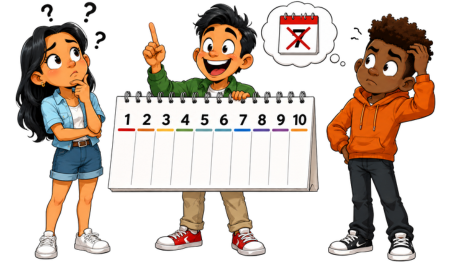
But What If It Were Ten?
It sounds strange, of course. Your brain immediately says:
“No, that wouldn’t be normal.”
And that’s the interesting part.
Because “normal” often just means “something we’ve repeated for a very long time.”
Humanity could have ended up with ten-day weeks. In fact, some societies tried. But changing the way we count time turned out to be much harder than changing a calendar on a sheet of paper.
Because Time Isn’t Just Numbers
Time is also habits, memories, work, religion, and even our little Monday complaints.
And the strangest thing is that while we argue about whether a week should have seven or ten days, other cultures didn’t even organize life around a week.
The Andes had a different question:
Not “What day is it?”
But:
“What point in the cycle are we in?”

The Strange Way We Measure Time
There’s something pretty curious about the week.
We use it our entire lives. We organize our vacations, our meetings, our jobs, and even our moods around it.
Monday arrives and suddenly it feels like life is starting all over again.
Friday appears and we feel like we’ve survived a battle.
And Sunday afternoon has that strange ability to remind us that “tomorrow we have to go back to reality.”
But we almost never ask ourselves a pretty basic question:

Why Exactly Seven Days?
Because think about it for a moment.
We already said that…
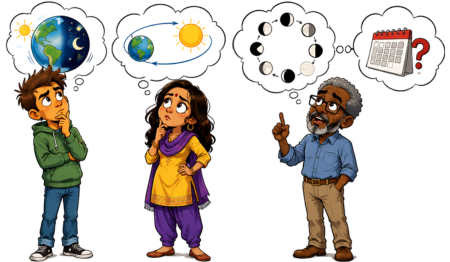
The day makes sense: the Earth rotates.
The year makes sense: the Earth revolves around the Sun.
Even the month makes sense—well, more or less: the Moon takes about 29.5 days to go through its four phases, from one full moon to the next.
But the week…
Where the Hell Did Seven Come From?
From Tom Thumb’s seven-league boots? Snow White’s seven dwarfs?
Well, let’s just say somebody came up with the 7-day week and we decided to accept its rules.
Nobody was born thinking:
“Perfect. When I’m an adult I’ll work five days, rest for two, and call the second day of the week Tuesday.”
We learned that.
And we learned it so well that now it seems completely normal.
We Made This Shit Up
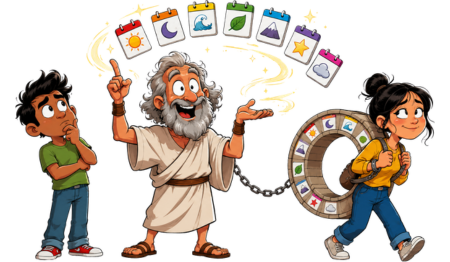
In fact, the week works so well that we almost forget that somebody had to invent it.
And this is where things get interesting:
The week isn’t a law of nature. It’s a human decision that survived for thousands of years.
So at least we know where it didn’t come from.
Not from the universe.
Not from nature.
We came up with it.
However, do you know what’s most interesting?

The Strangest Part Is That You Don’t Question It Anymore
You never ask:
- Why seven days?
- Why not four or ten?
- Why do you work five days and rest two?
Because the system works so well…
that it became invisible.
Monday. Tuesday. Wednesday.
You repeat this sequence your entire life as if it were part of nature. As if it had always been there. As if time, exactly as you understand it today, were something obvious.
But it isn’t.
Because here comes the uncomfortable question:

Who Decided the Week Has Seven Days?
And more importantly:
- Why are you still organizing your life around that decision?
The week: what looks natural… but isn’t
There are things about time that do have a real basis, as we discussed above: the year, the day, the seasons, and even the months, which at least have some logic behind them.
However…

The Week Has No Match in the Universe
The week doesn’t correspond to any exact natural phenomenon.
There is nothing in nature that says:
“Every seven days, start again.”
So where did it come from?

Looking at the Sky (and Making Decisions)
Thousands of years ago, people looked at the sky and tried to make sense of what they were seeing.
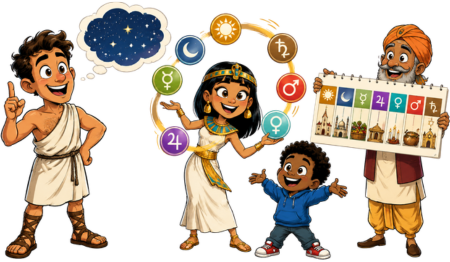
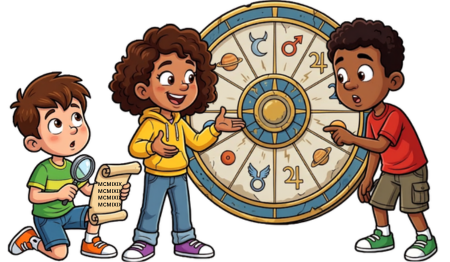
The Babylonians noticed seven celestial bodies that seemed to move across the sky:
| English | Spanish |
|---|---|
| Sun | Sol |
| Moon | Luna |
| Mercury | Mercurio |
| Venus | Venus |
| Mars | Marte |
| Jupiter | Júpiter |
| Saturn | Saturno |
| Seven | Siete |
There you go! You got Seven UP! Again!
And when you keep seeing the same number up there, you start giving it meaning.
It wasn’t just another number anymore.
It was everywhere.
And if seven was important enough to show up in the heavens…
Well, that’s when things got interesting.
They kept looking at each other, not knowing what to do… until someone shouted:

“Hey guys, let’s make seven days. Why not?”
Obviously, that’s not exactly how it happened.
But the basic idea is pretty simple.
It wasn’t a universal law.
It wasn’t exact science.
It was a way of organizing time.
And it worked. Yeah … Why not?

Why Not Seven Days?
…why not use it to organize time?
It wasn’t written in the stars.
Well… not literally.
It was a human decision.
And honestly, it wasn’t a bad one.
Seven days gave people a repeating cycle that was easy to recognize and organize around.
Once the idea caught on, other cultures adopted it, modified it, attached their own religions and traditions to it…
And eventually, we inherited the whole thing.
Seven stuck.
When Religion Gets Involved… It Gets Harder to Change
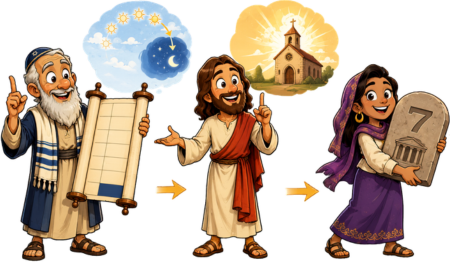
Later, the number seven became sacred.
In Jewish tradition, the world is created in six days, and the seventh becomes a day of rest. That rhythm is repeated again and again.
Then Christianity adopts that structure…
and expands it.
And something important happens here:
When an idea enters religion, it stops being flexible.
It is no longer just an option.
Now it’s tradition.
The Empire Does the Rest
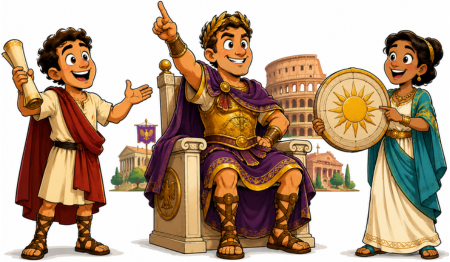
By 321 AD, Emperor Constantine officially made Sunday a day of rest across the Roman Empire.
And when the Roman Empire officially establishes something…
it’s not exactly a suggestion.
The seven-day week was already in use by then. Constantine didn’t invent it, but his decision helped give the existing system a much stronger place in Roman society.
And Then It Went Global
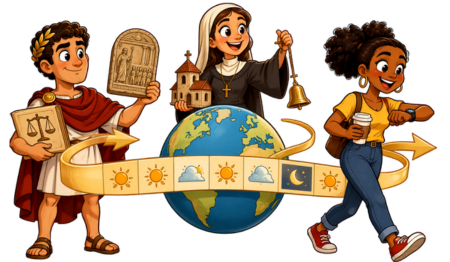
From there, the seven-day rhythm became increasingly tied to law, Christianity, and everyday life. Eventually, it spread far beyond the Roman Empire.
And here we are, thousands of years later, still organizing our lives around the same seven-day cycle.
A system that wasn’t born with us…
but somehow became ours.
Why Do the Days Sound Different in Spanish?
Why Don’t the Days of the Week in Spanish Look Like English?
You may never have wondered about this.
You know that Monday is lunes, that Tuesday is martes… and you simply accept it. As if it were just another translation.
But look a little closer and something doesn’t quite add up. Why do the days sound so different in English?
Why doesn’t Thursday look anything like jueves? And why do the Spanish names seem to have a common logic?
Well, there’s a reason for that. And it has nothing to do with translation.
The answer isn’t linguistic.
It’s historical.
And cultural, too.
One Week, Two Worlds
Both English and Spanish use a seven-day week. So far, everything matches.
But the names come from completely different traditions.
- In Spanish, most of the days come from the Roman world.
- In English, most come from Germanic mythology.
In other words:
We’re naming the same days… with different gods.
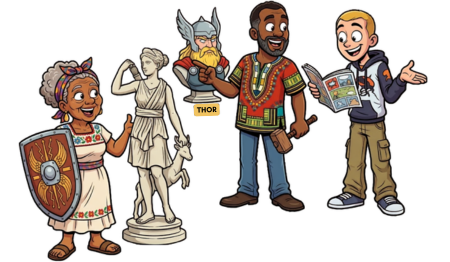
The Same Seven Days, Different Gods
How Spanish and English inherited the ancient planetary week
The connection becomes even clearer when we put Spanish and English side by side. They may look different, but underneath, both languages inherited the same basic idea: seven days connected to the Moon, the Sun, and the five visible planets.
The interesting part is what happened to those planetary names when different cultures put their own gods into the mix.
| Spanish | English | Origin / Meaning |
|---|---|---|
| lunes | Monday | Moon |
| martes | Tuesday | Mars / Týr |
| miércoles | Wednesday | Mercury / Woden (Odin) |
| jueves | Thursday | Jupiter / Thor |
| viernes | Friday | Venus / Frigg or Freyja |
| sábado | Saturday | Hebrew Sabbath |
| domingo | Sunday | Latin dies dominicus / “the Lord’s day” |
This is where it gets fun: the names changed, but the seven-day structure survived. The Romans connected the days to their gods and planets; Germanic-speaking peoples later matched several of those Roman gods with their own.
Same week. Different gods.

The Days in English: Gods of the North
Wanna see what happens when the Roman week gets to meet Germanic mythology?
Now look at English.
The seven-day structure stayed. The planets stayed in the background. But the gods changed.
Instead of simply adopting the Roman names, Germanic-speaking peoples matched several of those Roman gods with gods from their own mythology.
| English | Roman equivalent | Germanic god | Meaning |
|---|---|---|---|
| Monday | Moon | — | Moon |
| Tuesday | Mars | Tiw | God of war |
| Wednesday | Mercury | Woden | Related to Odin |
| Thursday | Jupiter | Thor | God of thunder |
| Friday | Venus | Frigg / Freyja | Associated with love |
So the pattern becomes surprisingly clear.
Mars didn’t disappear… He became Tiw.
Jupiter didn’t disappear… He became Thor.
Mercury didn’t disappear… He became Woden.
The names changed because the culture changed.
The week itself didn’t. It’s not a new system. It’s a cultural adaptation.

So Why Don’t They Match?
Because each language took the same system…
and reinterpreted it in its own way.
- Spanish preserved the Roman world.
- English transformed it through Germanic mythology.
- And both later absorbed religious influence.
It’s not a direct translation.
👉 It’s a different evolution of the same idea.
That actually fits the surrounding sections better than my rewrite. Don’t fix something that isn’t broken.

And Now It Gets Interesting
It may look like simple vocabulary.
But it isn’t.
Every time you say martes or Thursday, you’re using names that are thousands of years old. Names that come from gods, beliefs, and cultures that are no longer part of your everyday life… but are still sitting there inside your language.
And the strangest part?
You never think about it.
But there’s something even more interesting here:
Not even all the Romance languages agreed.
Why?
Well…
Portuguese speakers took another path.
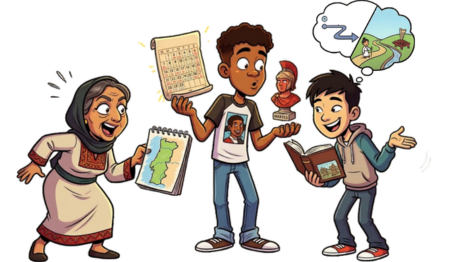
Guess What Happened in Portuguese?
Here’s something curious.
If Spanish kept many of the Roman names, why didn’t Portuguese do the same?
Well… Portuguese took a completely different path.
Instead of keeping names associated with Mars, Mercury, Jupiter, and Venus, Portuguese gradually replaced them with numbers and feira**.**
| Portuguese | English | Spanish |
|---|---|---|
| segunda-feira | Monday | lunes |
| terça-feira | Tuesday | martes |
| quarta-feira | Wednesday | miércoles |
| quinta-feira | Thursday | jueves |
| sexta-feira | Friday | viernes |
| sábado | Saturday | sábado |
| domingo | Sunday | domingo |
But What’s Feira?
The word feira comes from the Latin feria, meaning a day of rest, a religious festival, or simply a holy day.
But here’s where it gets interesting.
In Christian tradition, Sunday was the first day of the week because it was the day of Jesus’s Resurrection. That is what makes the Portuguese names suddenly make sense.
Monday was the second day:
- segunda-feira → second day
- terça-feira → third day
- quarta-feira → fourth day
- quinta-feira → fifth day
- sexta-feira → sixth day
So Portuguese wasn’t randomly numbering the days. It was numbering them from Sunday.
And this is where religion changed the language in a very practical way.
Spanish kept Mars, Mercury, Jupiter, and Venus in the names of its weekdays. English replaced several of those Roman gods with Germanic ones.
Portuguese took another route: it numbered the days instead.
Same seven-day week. Different cultural fingerprints.
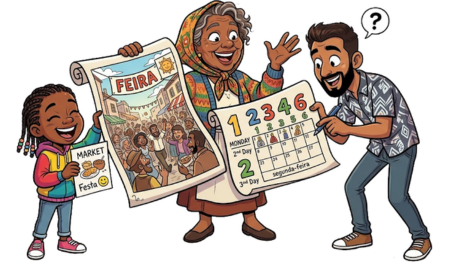
And Here’s a Pretty Funny Difference
Spanish says martes because Mars is still there, hiding inside the word.
English says Tuesday because it took another route and ended up associating the day with Tiw, a figure from Germanic tradition.
Portuguese says terça-feira.
Basically:
“It’s the third one. Next question.”
And that shows us something important.
There was never one single “correct” way to name the days.
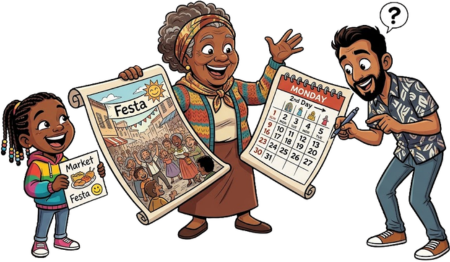
Same Week, Different History
The same seven-day system passed from one culture to another, and each language left its own mark.
- Spanish preserved part of the Roman world.
- English reinterpreted it through Germanic names.
- Portuguese received strong Christian influence and ended up using a formula based on feria.
The week remained the same.
What changed was the history each language carried inside it.
And That’s the Strange Part
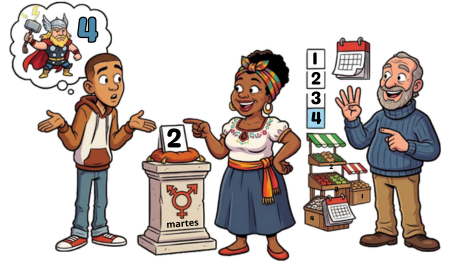
When you say martes, you’re probably not thinking about Mars.
When someone says Thursday, they’re probably not thinking about Thor.
And when a Portuguese speaker says quarta-feira, nobody is standing there thinking:
“Ah yes, the fourth day.”
But there they are.
Ancient gods, religions, and old cultural decisions hiding inside words we use without giving them a second thought.
You say martes because that’s just… Tuesday.
You say Thursday because that’s just Thursday.
And quarta-feira?
Well, that’s just what Portuguese speakers call Wednesday.
Except it isn’t “just” anything.
There’s thousands of years of history sitting inside those words.
And Somehow, We Inherited All of It
And this brings us back to the question we started with.
Why seven?
Because at some point, people organized time that way. Then other cultures came along, adopted it, changed it, added their own traditions, and eventually passed the whole package on to us.
And we inherited it so well that we stopped seeing the history behind it.
We just see Monday, Tuesday, Wednesday…
and then Monday comes back around.
And we complain about it.
Until someone asks the question we probably should have asked a long time ago:
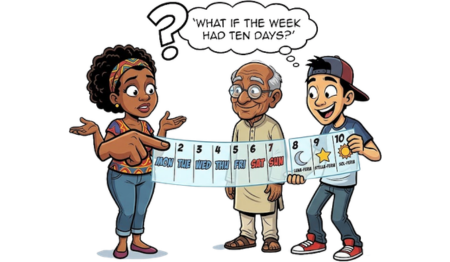
What If the Week Had Ten Days?
The Final Question
If the names of the days change depending on the culture…
👉 What else do you use every day
without realizing that it comes from another world?
👉 And if the week had 10 days, what would you name the other three—and of those three, how many would you rather have as days off and how many as workdays?