February Is the Shortest & the Hottest!
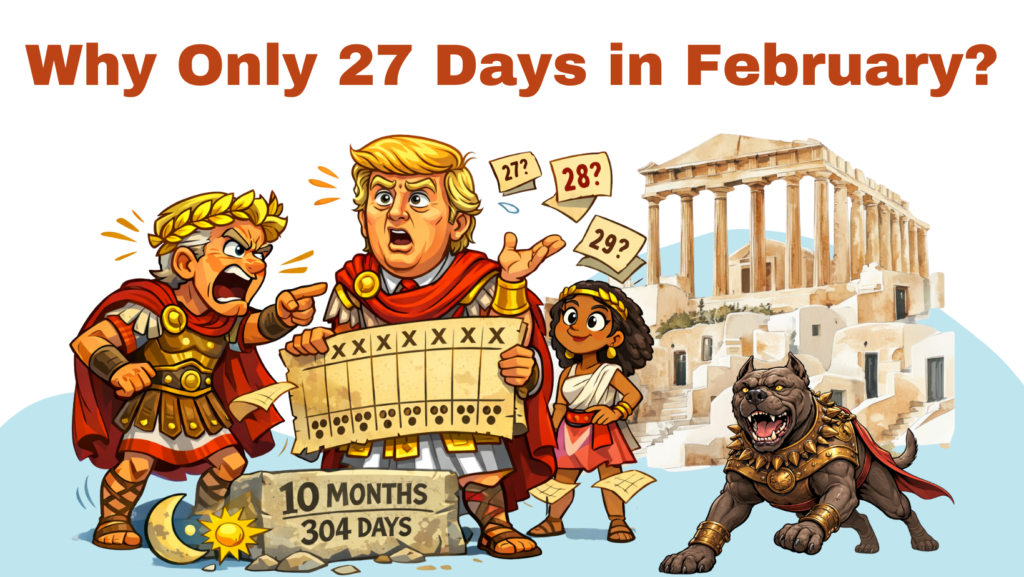
Do you know why February is the shortest month of the year — and why it almost got even shorter after Trump and Zelensky met in February 2025? Wait… what?
Yeah! During the first year of his second term, Donald Trump wanted to decree February 28th a day to be forgotten after Volodymyr Zelenskyy supposedly disrespected him in the Oval Office.
And Trump — being Trump — was apparently ready to just erase February 28th from the calendar.
Honestly? Still less ridiculous than the real reasons why February only has 28 days.
But relax… because this may have been…

Just a Bad Dream!
Yup! Thank God it was just a nightmare! For a moment, it just looked like an April Fools’ in February—or maybe March. But chill! February still has 28 days — and 29 on leap years!
Being the shortest doesn’t stop it from being the hottest, does it? Here’s why: Good (and maybe big) things come in small packages — that’s what he said!
But let’s cool down to better understand the actual reasons why February only has 28 days—the real (and not-so-real) reasons why it’s the shortest—and sexiest—month of them all.

The Oval House Shouting Match Spectacle!
That wasn’t, per se, a bad dream — and February 28th, 2025, is definitely a day to remember.
We’ll get to that Volodymyr Zelenskyy–Donald Trump discussion later.
But for now, let’s use today — 2/28/2025 — to answer a far more enduring question:
Why does February have fewer days than every other month?

The Fashionista of the Calendar!
With its sassy 28 days — plus the occasional leap year cameo for that extra je ne sais quoi — February is basically the fashionista of the calendar lineup.
Short. Dramatic. Slightly unpredictable.
And fully aware that it used to be the last month of the old Roman calendar — which makes its current main-character energy even more suspicious.
While the other months just sit there with their 30s and 31s like it’s a personality trait, February shows up late, leaves early, and somehow still steals the spotlight

The Last Shall Be First?
That wasn’t exactly the case for February.
Back in the days of Numa Pompilius — yes, that Numa, our guy from the “New Year’s in March” situation — February was actually the last month of the year.
Let that sink in. The shortest month… used to close the year.
Numa, the second (semi-mythical, semi-we-made-him-up-but-roll-with-it) king of Rome and successor to Romulus, decided the calendar needed a glow-up. So he stretched the year, shuffled some months around, and parked February at the very end like it was an afterthought.
And honestly? The man was everywhere. Reforming religion. Fixing the calendar. Probably rearranging furniture in the Forum.
Well… he was king of Rome. What did you expect?
From Rome with Love: February’s Final Act
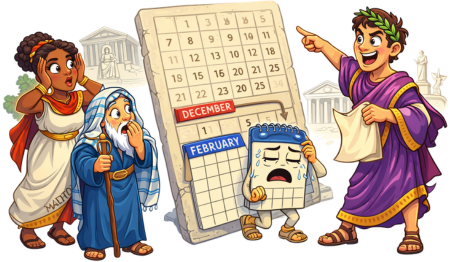
Alright, if we really want to understand why February is so different, we need to take a dramatic little field trip back to ancient Rome.
Because yes — as mentioned — February used to be the grand finale. The curtain call. The mic drop. The last month of the year.
And then… Rome did what Rome always does.
It rebranded.
Calendars shifted. Months were shuffled. Power moved. February got demoted, relocated, resized — basically put through the imperial equivalent of a makeover show.
So grab your Roman sandals. We’re walking this one out.
Roman Travel Machine!
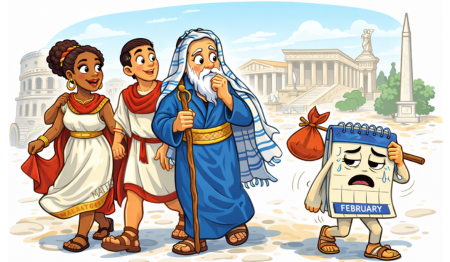
It’s time to travel back to ancient Rome — think togas, sandals, and some truly questionable calendar decisions.
Because according to legend, Romulus — the OG Roman himself — whipped up the first Roman calendar sometime around the 8th century BCE.
And what a calendar it was. Ten lunar months. Just strutting their stuff. A neat little 304-day year… and then a whole stretch of winter that basically didn’t count.
Yes. The early Romans looked at several weeks of cold darkness and went:
“Yeah, let’s just not put that on the calendar.”

Playing Musical Chairs with the Calendar!
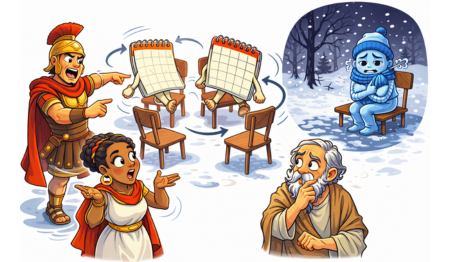
YYou know the Romans — always playing musical chairs with their days. Some months got 30, others 31… and winter?
Winter just sat there like the kid with no assigned homework.
Literally unaccounted for.
No winter-specific months. No official timeline. Just a long stretch of cold darkness the Romans basically chose to ignore.
Chilly, right?
Blame it on the Romans!
So back to our original mystery — the ridiculous reasons why February only has 28 days.
Spoiler alert: logic wasn’t exactly running the show.
If you’re looking for someone to blame, look no further than Roman superstition. Because when in doubt, the Romans didn’t consult science — they consulted vibes. Omens. Signs. The occasional sacred chicken.
And somehow, February ended up taking the hit.

Nothing More Scientific than Roman Superstition?
So yes — let’s blame Roman superstition.
No high-tech reasoning. No astronomical precision. Just a group of empire-builders making calendar decisions based on vibes, lunar phases, and whether the number of days felt… unlucky.
The Romans weren’t exactly losing sleep over cosmic randomness. They were busy founding an empire.
Who has time for mathematical consistency when you’re conquering Gaul?
Exactly.
And somewhere in the middle of all that imperial multitasking, February got stuck with 28 days.

An Even Legend!
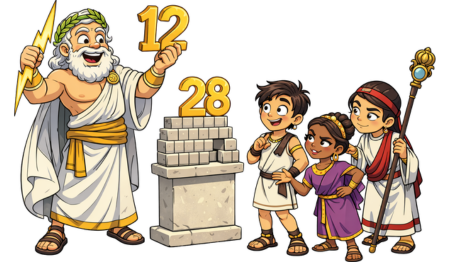
One of the oldest legends links February’s awkward 28 days to none other than Jupiter — king of the Roman gods and, apparently, a fan of numerology.
The story goes that Jupiter had a thing for the number 12. Nice. Even. Orderly.
And since February was the last month of the year in the early Roman calendar, it got stuck with an even number of days — 28 — to keep things cosmically balanced.
Or at least… that’s what they told themselves.
But then again, nothing says “scientific calendar reform” quite like divine number preferences.
Historical & Superstitious Reasons!
Now, if we drop the drama for a second, the real reason February is shorter isn’t carved in marble.
Historians aren’t entirely sure. But one solid theory? The Romans had a thing about even numbers. They didn’t like them. Too symmetrical. Too suspicious. Odd numbers felt luckier.
So they shuffled days around to keep most months safely odd.
And since February was the last month of the year back then, it basically got the leftovers.
By the time the other months were done grabbing their 30s and 31s, February showed up like the hottie who arrived late to the party — and the candy bowl was empty.

No even, No Steven!
So back in ancient Rome, Numa Pompilius — and the people whispering in his royal ear — had a thing about numbers.
Odd numbers? Lucky.
Even numbers? Suspicious. Possibly cursed. Definitely not invited.
Now here’s where it gets messy.
They wanted the total number of days in the year to be lucky — meaning odd. But with 12 months to deal with, giving every month an odd number of days would’ve added up to an even-numbered year.
And that simply would not do.
So an even number of days had to go somewhere…
Guess who volunteered?
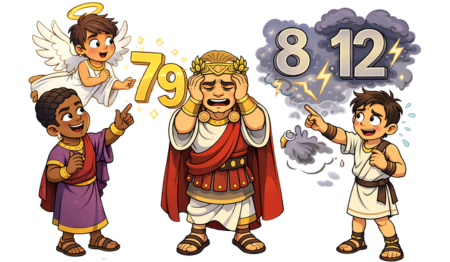
Guess Who Got the Lucky Number?
February, of course!
Our boy drew the short straw and ended up with 28 days.
Why? Because February wasn’t just any month — it was tied to the less festive side of Roman life. Think purification rites, honoring the dead, all that end-of-year spiritual housekeeping.
Not exactly party vibes.
So the Romans gave it an even number of days to absorb the bad luck and keep the rest of the year comfortably odd — like a cosmic insurance policy against misfortune.
In other words: balance the luck, dump the evenness on February, and hope Jupiter doesn’t notice.
Numa: More Confusing than Confucius!
By now, you’ve probably noticed that our guy Numa Pompilius had some… interesting ideas about numbers.
Odd was lucky. Even was suspicious. Possibly cursed. Definitely not ideal for something as important as time itself.
So when Numa set up his shiny new 12-month calendar, he tried to keep most months safely odd — just in case the gods were counting.
Because nothing says “scientific reform” like hedging your bets against divine numerology.
Breaking Down Numa’s Calendar
So here’s where our numerology enthusiast, Numa Pompilius, got creative.
He established a 12-month calendar. But instead of the clean 30- or 31-day months we’re used to today, he went mostly with 29s… and a few 28s. Because, you know — odd numbers were lucky.
Here’s how that masterpiece looked:
| Month Type | Number of Months | Days per Month | Total Days |
|---|---|---|---|
| 29-day months | 6 | 29 | 174 |
| 28-day months | 5 | 28 | 140 |
| February | 1 | 28 | 28 |
| Subtotal | 12 months | — | 342 days |
Wait… That’s Not a Full Year!
Now here’s the awkward part. A lunar year — the time it takes the Moon to cycle through its phases — is about 354 days.
Numa’s version? We are missing nearly two weeks of existence.
So what did he do? He invented a bonus round.
Enter Mercedonius — the pop-up month that randomly appeared every few years to patch the gap and drag the calendar back into alignment.
| Added Month | Days | New Total |
|---|---|---|
| Mercedonius | 22-23 | 364-365 days |
So… What Was the Logic?
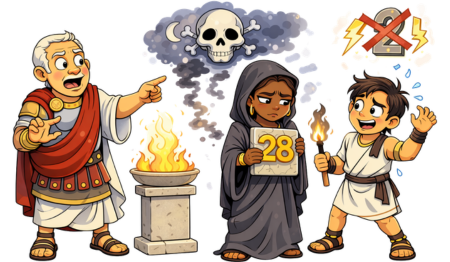
To the Romans, even numbers were unlucky, so they avoided them whenever possible. But to make a 12-month year work, Numa had to sacrifice February and give it an even 28 days—perhaps because it was already considered the “unlucky” month dedicated to purification rituals.
Still Confused?
Yeah… me too. Did you know that February once had 27 days and even 30 days? It all depends on the context, of course—period, historical figures, space, and so on.
But hey, let’s fast-forward to Julius Caesar, who actually made sense of this mess!

August Wanted What July Had!
Of course, he wanted it! If July had it, why not me? I am August, after all! Yeah, that’s exactly what happened. But let’s break down how it all went down.
To get to the calendar we use today, we had to endure a series of chaotic (and, let’s be honest, pretty weird) adjustments—most of them fueled by Roman superstitions.

From Numa’s Odd Math to Julius Caesar’s Fix
During Numa’s reign, months had either 30 or 29 days. Then things got messier. Numa, obsessed with even and odd numbers, reduced some months to 29 and even gave February just 28 days.
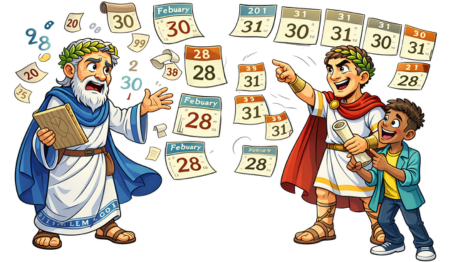
Later, the Julian calendar attempted to fix things by standardizing months to 30 or 31 days—but February still got the short end of the stick. When Julius Caesar reworked the calendar, things took another wild turn. Let’s see what happens next!
If July Has It, I Want It!
The reason February has 28 or 29 days has both historical and legendary explanations. One popular legend blames Emperor Augustus and his predecessor, Julius Caesar.
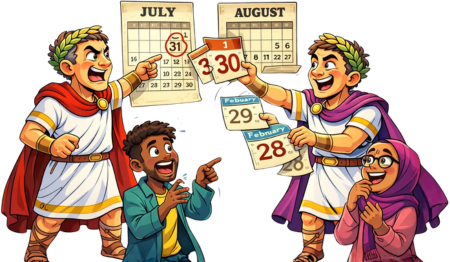
According to the story, Augustus wanted the month named after him—August—to have 31 days, just like July (Julius Caesar’s month). So, to balance things out, he supposedly stole a day from February, which allegedly had 30 days at the time.
Sounds dramatic?
Well, it’s just a legend—there’s no historical evidence to back it up. But hey, it makes for a fun story!

Let’s Recap!
The Roman calendar went through more makeovers than a reality TV star. It all started with 10 months, adding up to 304 days—because who needs winter, right?
The Romans didn’t even bother assigning days to that awkward, cold period. Then, January and February joined the party, but February? Well, it got the short end of the stick from the start.

Blame Julius Caesar (Again!)
Julius Caesar, the man who basically fixed Rome’s chaotic timekeeping, introduced the Leap Year concept in his Julian calendar reform. Every four years, February gets a little ego boost with an extra day, making up for the fact that the solar year is actually 365.25 days long.
So, if you’ve ever wondered why your birthday skips a day every four years, you can thank (or curse) Caesar for that. Or else, just blame it on the Romans!

Legend vs. Reality
The idea that Augustus stole a day from February to make August as long as July? Great story, but historians aren’t buying it. The real reason behind February’s 28 days is a mix of:
✅ Ancient Roman superstition about even and odd numbers
✅ Attempts to align the calendar with astronomical cycles
✅ A whole lot of chaotic decision-making
Now that you know why February is the shortest (and arguably the most dramatic) month, check out our blog for more sexy history like this! The Ridiculous Reasons Why February Only Has 28 Days will make you appreciate just how messy the calendar used to be.

Sexy, Funny & Creepy Stories in Spanish?
Check out our sagas Things Spanish People Say in the Bedroom and el Sexy Chupacabras to learn dirty phrases in Spanish. If you like eerie stories, check out our Legends & Folktales section.
For a laugh, read our section Language Bloopers and learn from other mistakes when learning a new language. If wanna know more about Kasa De Franko, book a free lesson with us.

Red for Free
Yes, click on the red button to secure a spot for our next FREE group lesson. If interested in free private lessons, also click the red button. And always remember…