Honoring Freedom & Resilience
June 19, 1865.
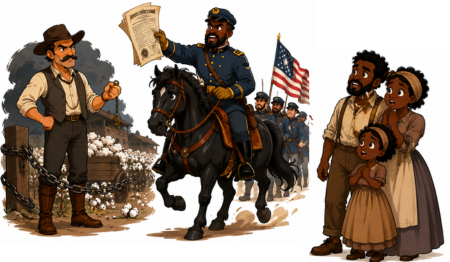
The Texas sun burned overhead as Union soldiers arrived in Galveston.
On their lips: freedom.
On the faces of the enslaved: disbelief… then joy.
But this wasn’t new freedom.
It was delayed freedom.
News that should’ve arrived years earlier—finally spoken out loud.
That day, long overdue and hard-won, would come to be known as Juneteenth:
a celebration not just of emancipation, but of endurance, hope, and the ongoing struggle for justice.

From Resistance to Recognition
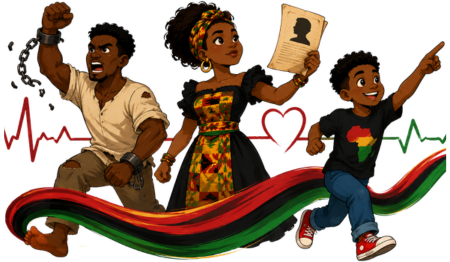
Juneteenth isn’t just a day—it’s a heartbeat. A legacy still pulsing through generations, reminding us that freedom is fought for, not handed over.
But that moment didn’t come out of nowhere.
It was built on centuries of resistance.
A war.
And a proclamation that took way too long to reach the people it was meant for.
So how did we get here?
Let’s rewind.
Origins & Evolution of Juneteenth
The news of freedom reached Galveston two and a half years after the Emancipation Proclamation had already been signed.
Two and a half years late!
On June 19, 1865, enslaved people in Texas finally learned they were free.
What started as small, local gatherings to mark that delayed liberation slowly grew into something bigger.
Today, Juneteenth is celebrated across the country—through parades, barbecues, music, and moments of reflection.
A vibrant tribute not just to freedom…
but to resilience, memory, and the long, unfinished journey toward justice.

A Promise, Not Yet a Reality
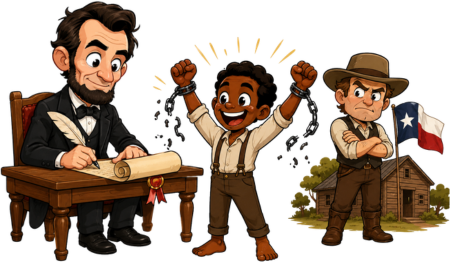
The Emancipation Proclamation was signed by President Abraham Lincoln on January 1, 1863.
Sounds definitive.
But here’s the catch: it only applied to states in rebellion—and even then, it couldn’t be enforced everywhere.
So freedom was declared…
but not delivered.
Not immediately.
And definitely not equally.
In places like Texas—remote, resistant, and far from Union control—slavery didn’t just disappear.
It continued.
When Freedom Finally Arrived
Even after the Civil War ended in April 1865, many enslavers in Texas didn’t inform the people they held captive.
Some historians believe they deliberately withheld the news—just to squeeze out one last cotton harvest.
So the system didn’t just end.
It lingered.
That’s why it wasn’t until June 19, 1865—when Union Major General Gordon Granger arrived in Galveston with federal troops and issued General Order No. 3—that the promise of freedom finally rang out in Texas.
And even then, it didn’t arrive gently.
It came with resistance.
With violence.
With uncertainty.
The Reality of Reconstruction
Freedom didn’t come with guarantees. It didn’t mean safety, land, or political power—despite what the word might suggest.
What followed Juneteenth was Reconstruction, a period often described as a “new beginning.” And for a brief moment, it almost looked like one.
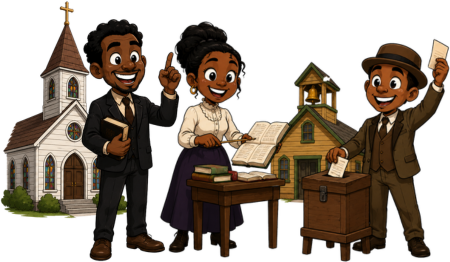
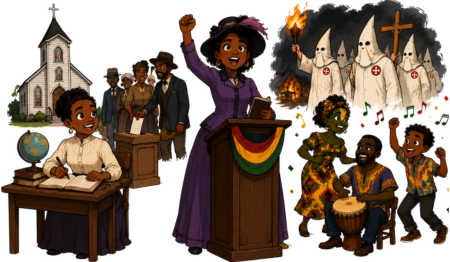
Newly freed Black Americans built churches, opened schools, and stepped into political life. They voted, ran for office, and began shaping communities on their own terms.
So yes, something was changing. You could actually see it.
The Backlash
But that version of the story doesn’t last very long.
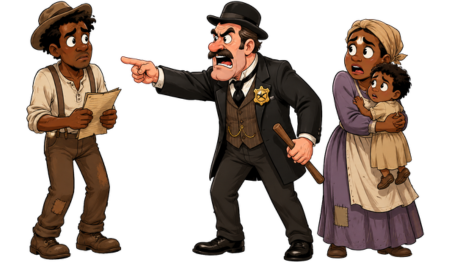
The backlash came quickly, and it wasn’t subtle. Across the South, violence and legal restrictions began tightening control almost as soon as freedom started to expand. Black Codes narrowed basic rights, while voter suppression and intimidation became part of daily life.
Undoing Reconstruction
This wasn’t just resistance. It was organized reversal.
White supremacist groups, including the Ku Klux Klan, worked deliberately to dismantle progress and reassert control.
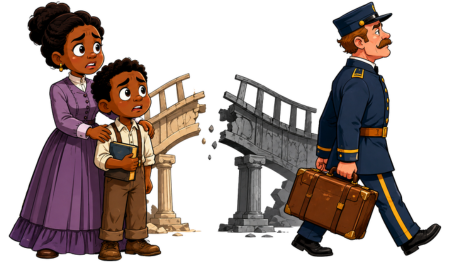
By 1877, federal troops withdrew from the South, and Reconstruction came to an end. And just like that, protection disappeared.
What followed wasn’t a reset. It was a transition into a new system—one that would solidify into Jim Crow and shape life for nearly a century.
The Spirit That Endured
And still, the spirit of Juneteenth didn’t fade.
Despite the setbacks, celebrations continued—first in homes and churchyards, then in parks and community spaces. It became more than a celebration of freedom; it was a way to protect it.
A way to resist erasure, to affirm identity, and to remember that freedom isn’t just declared—it’s defended, generation after generation.
Voices That Didn’t Go Quiet
Even in the face of injustice, some voices refused to fade.
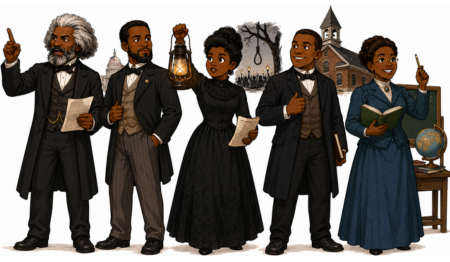
Frederick Douglass kept pushing for full citizenship and equal rights long after emancipation, making it clear that ending slavery was only the starting point. Hiram Revels stepped into history as the first African American U.S. Senator, representing Mississippi during Reconstruction—something that would have been almost unthinkable just years earlier.
Ida B. Wells risked her life to expose the reality of lynching and demand accountability. Booker T. Washington and Charlotte Forten Grimké focused on education, building schools and shaping opportunities that didn’t yet exist.
Carrying the Flame Forward
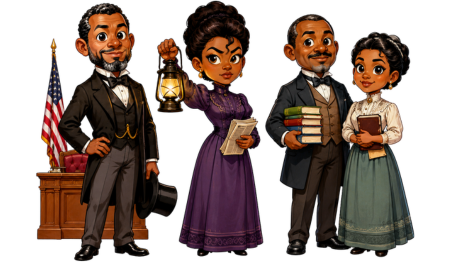
What these figures had in common wasn’t just influence—it was persistence.
They continued the work at a time when progress was being pushed back, often violently. And they did it anyway.
Their efforts kept something alive that could have easily been extinguished. In that sense, they didn’t just respond to their moment—they connected it to what came next.
The Civil Rights Movement didn’t appear out of nowhere. It grew from the groundwork they refused to abandon.
Emancipation Days Across the Americas
Emancipation Didn’t Happen All at Once!
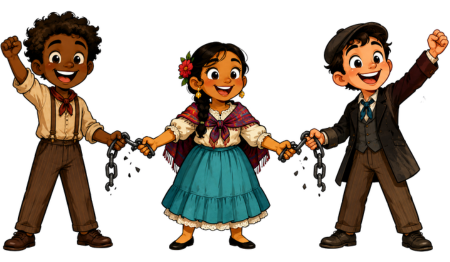
Juneteenth marks the end of slavery in Texas—and, in many ways, the United States. But it wasn’t the only “freedom day” in the Americas.
Across the region, abolition followed different timelines.
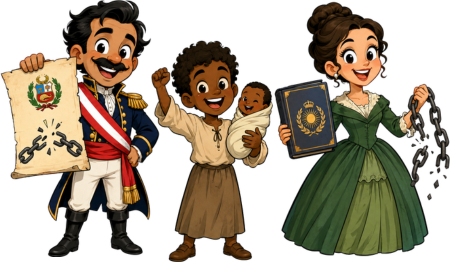
- Peru (1854): President Ramón Castilla signed the law that ended slavery. Simple on paper. Much less simple in reality.
- Argentina (1813 → 1853): First came the “Liberty of Wombs” law, freeing children born to enslaved mothers. Decades later, the 1853 Constitution abolished slavery completely. Not one moment—more like a process that took its time.
Different Dates, Same Story
The details change depending on where you look. The pattern doesn’t.
Freedom wasn’t just handed over. It was delayed, negotiated, resisted—and eventually forced into place.
From Galveston to Lima to Buenos Aires, the timelines don’t match. The struggle does.
What About the Rest of the Americas?
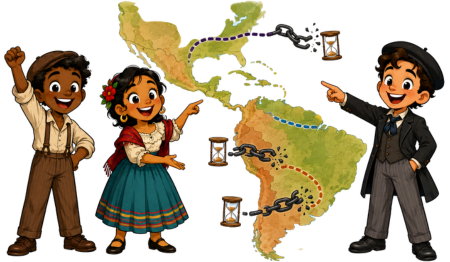
Peru and Argentina are only part of the story. Across the Americas, abolition didn’t follow a single timeline—it happened country by country, often unevenly and sometimes reluctantly.
- Mexico (1829): President Vicente Guerrero abolishes slavery. Enforcement, however, takes its time.
- Chile (1823): Newly independent and already outlawing slavery in its first constitution. Not a bad way to start.
- Uruguay (1842): Slavery had been restricted earlier, but this is when abolition is formally locked in.
- Colombia (1851): A national decree finally ends slavery after years of gradual, regional changes.
- Brazil (1888): The “Golden Law” abolishes slavery, making Brazil the last country in the Americas to do so. Late is an understatement.
- Cuba (1886): A Spanish decree ends slavery on the island, closing one of the final chapters of abolition in the region.

Same Pattern, Different Timelines
The dates don’t line up—and that’s the point.
Abolition wasn’t a single wave moving neatly across the map. It was slower, messier, and often resisted until the very end.
Different countries, different moments. Same underlying struggle to end something that should never have lasted that long.
Party Time: Freedom & Equality
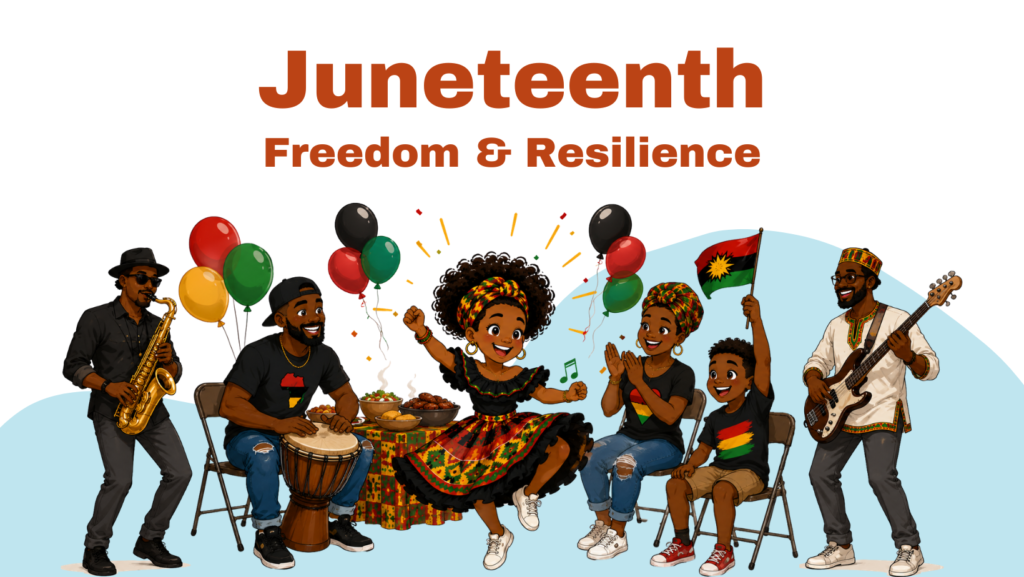
Juneteenth hits different. It’s joy with roots. Soul food, music, dancing in the streets—but also reflection, resistance, and real talk. It’s where celebration meets purpose.
This holiday honors the contributions and sacrifices of those who fought tirelessly for emancipation and civil rights. Through community gatherings, Juneteenth brings people together to celebrate progress and commit to building a more inclusive society.

Honoring a Rich Legacy
Juneteenth isn’t just a day off—it’s a day to look back, honor, and uplift. From the abolitionists who risked everything to the artists, educators, and civil rights legends who shaped American culture, this is a moment to reflect on generations of brilliance.
It’s a salute to Black excellence—to the trailblazers, creators, and change-makers who turned pain into power, and struggle into soul.

Juneteenth at Kasa de Franko
Here at Kasa de Franko, a leading Spanish language school serving the vibrant communities of the San Francisco Bay Area, Silicon Valley, and beyond, we totally get the spirit of Juneteenth.
We’re all about celebrating freedom and resilience. Through engaging educational activities, cultural events, and community outreach initiatives, we honor the significance of Juneteenth and highlight the importance of promoting equality and social justice for all.

KDF: Beyond the Bay Area!
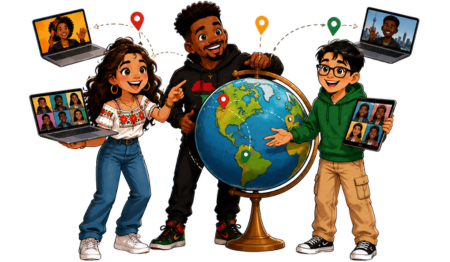
Kasa de Franko’s commitment to celebrating Juneteenth goes beyond the Bay Area. We’re reaching students across the United States and Canada through our online programs and partnerships with educational institutions.
We provide individuals with the opportunity to deepen their understanding of Juneteenth and the African American experience, regardless of where they live.
Getting Involved in Your Community
There are so many ways to celebrate Juneteenth in your community. Whether you’re attending local events, volunteering with organizations dedicated to social justice, or just having meaningful conversations with family and friends, everyone can play a role in honoring the legacy of Juneteenth and advancing the cause of freedom and equality for all.
Whether you’re hitting up a community cookout, joining a local march, or just talking with your people over plates of food and stories—every act counts.

Legacy for Freedom & Equality!
Curious about how freedom, resilience, and cultural pride show up across American holidays? Head over to our “Homeland” blog section to dive into stories that spotlight American leadership and unsung heroes. Don’t miss “Hispanics Honored on Veteran’s Day”—a tribute to the anonymous heroes of the Hispanic community.
Both the African American and Hispanic communities have marched, fought, and dreamed side by side. So let’s honor that alliance—and celebrate love the Spanish way. Yeah, we mean sexy.

Spice Up Your Spanish with Romance
Want to add a touch of romance to your Spanish vocabulary? Check out our blog sections: “Things Spanish People Say in Bed” and “El Sexi Chupacabras”. You’ll find sensual phrases and learn how to say “I love you” in Spanish, among other romantic expressions.

In the Mood for a Laugh?
If you’re looking for some language-related humor, explore phrases like “¡Feliz Año Nuevo!” or “¡Me Gusta la Chucha de tu Madre!” While these might make you chuckle, remember to approach language learning with respect and cultural sensitivity. Embrace the richness of languages and dive into the vibrant world of Spanish-speaking cultures.
Fascinated by Legends and Folklore?
Delve into our “Legends & Folktales” section, where you’ll discover tales of mythical beings such as la Santa Muerte, la Llorona, la Ciguapa, El Sexi Chupacabras, and more from Hispanic traditions. Let’s now get back to celebrating Juneteenth!

More than Just a Holiday
As discussed, Juneteenth is more than just a holiday; it’s a celebration of resilience, freedom, and the enduring pursuit of equality. As we commemorate this historic day, let’s reflect on the progress we’ve made, acknowledge the challenges ahead, and recommit ourselves to building a future where everyone is treated with dignity, respect, and equality. Together, we can honor the legacy of Juneteenth and create a more just and inclusive society for generations to come.
So, grab your friends, join the festivities, and let’s make this Juneteenth one to remember! And don’t forget to sign up for your free Spanish lesson at Kasa de Franko – let’s celebrate freedom and learning together!

Free Lesson
To commemorate this important date, Kasa de Franko is offering Free Spanish Lessons. Take advantage of the free lessons offered at Kasa de Franko. It’s our way of giving back to the community and celebrating the rich cultural tapestry that Juneteenth represents.
Whether you’re a complete beginner or looking to brush up on your Spanish skills, join us for a fun and educational experience! Take advantage of the free lessons offered at Kasa de Franko. It’s our way of giving back…and always remember…