
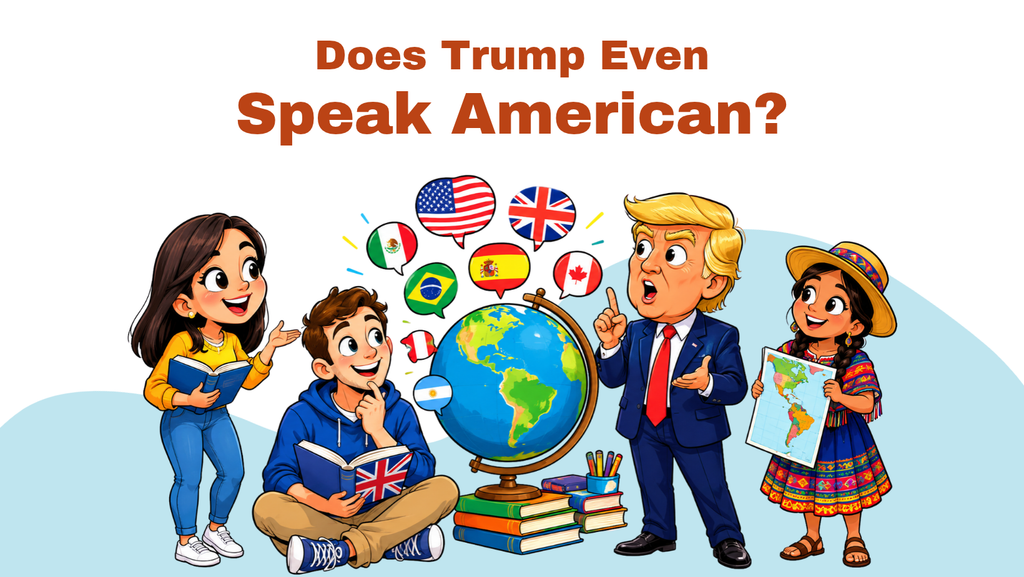
BREAKING NEWS!
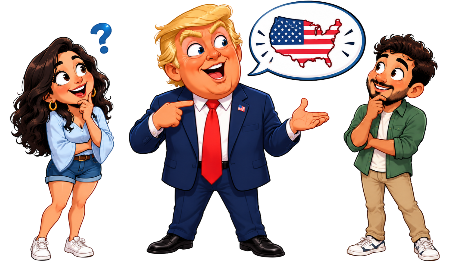
Donald Trump has declared American the official language of the United States of America.
Language experts everywhere are now wondering what the hell that means. Did the president just create a new language? Rename an old one? And, if so, how exactly do you rename a language you don’t even speak?
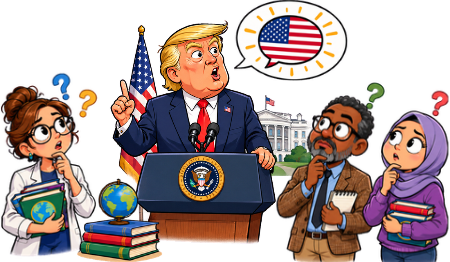
Wait! Can He Even Speak English Tho?
Because apparently the president, who can barely get through a sentence without rambling, repeating himself, exaggerating something, or—back in the old days—tweeting things like “covfefe” and inventing adverbs like “bigly,” has now decided that English needs a new name.
But, wait a minute. Seriously? Well… Let’s just ask it the way Kenan from Kenan & Kel would scream it:
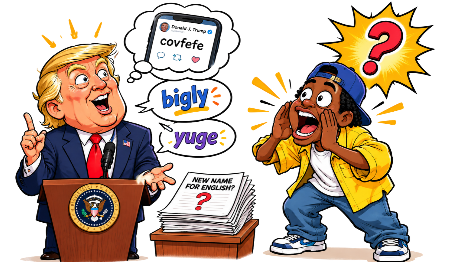
“Is it true? Is it TRUUUUE?”
Mhmmh…. But this time it’s not orange soda. It’s about an Orange hombre.
Soo… How real is this story? And what would it actually mean for the millions of people who live in the United States?
Actually… As Maury Povich would put it:
“The lie detector determined… that was a lie.”
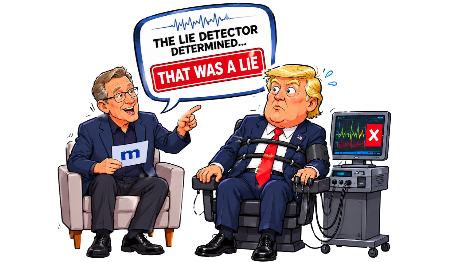
Is It a Lie Then?
And it’s actually more than a lie. It’s a recycled KDF satire story from last year, when Trump, apparently, went ahead and declared American the U.S. official language.
M.A.L.O. = Make American Language Official.
Shit. That’s right! We’ve already done this one. Talk about a rehash.
For real?
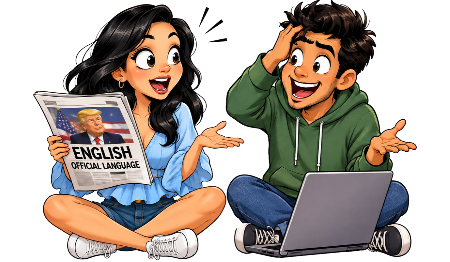
Yeah! Faker than a $3 bill!
The truth is, this story is about as fake as Trump’s victory in 2020—or the infamous birther myth.
Well… for now.
What actually happened is that, on March 1, 2025, Trump signed an executive order designating English as the official language of the United States.
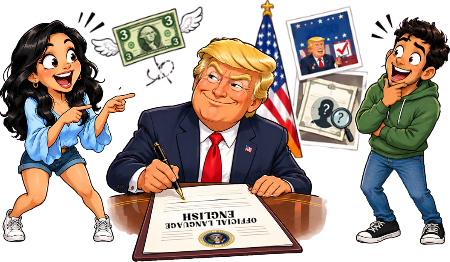
Then, No American Language Yet?
So no, he didn’t rename English American.
But that gives us an excellent excuse to ask a much more interesting question:
What would actually have to happen for American English to stop being English and become a different language?
Because changing the name of a body of water is one thing.
But changing the name of a language? That’s where things get messy — to say the least.
And yes, we’ve already been there.
Yeah! It’s One Thing to Rename a Gulf
But messing with people’s identity is something else!
In January 2025, another executive order established Gulf of America as the official name used within the U.S. federal government for the body of water previously known as the Gulf of Mexico.
Then, in August 2026, another piece of the collection arrived: an executive order aimed at changing the federal geographic name of Lake Ontario to Lake America.
Yes. Lake Ontario.
The lake shared by the United States and Canada.
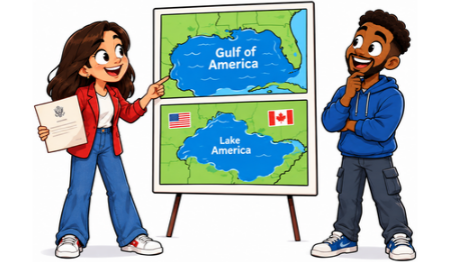
When You Can Make American Not Only a Lake
And if that wasn’t enough material for us, Trump has also pushed the idea of renaming New Mexico New America.
So while our original breaking-news story is fictional, reality has been providing us with some pretty good material.
Which brings us to a question that sounds simple until you actually try to answer it:
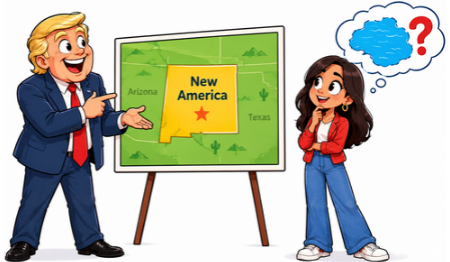
What Does “American” Actually Mean?
We are getting into the situation room to understand a problem that starts with American English and ends with a word that has a surprisingly complicated identity.
If you say American in English, almost everyone knows what you mean: something or someone from the United States.
An American person.
American food.
American politics.
American English.
Simple enough. Except…
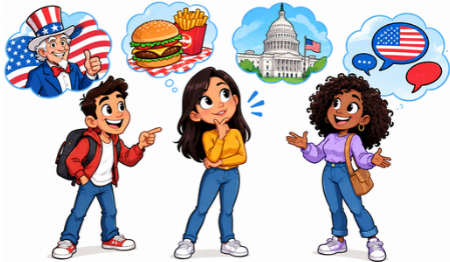
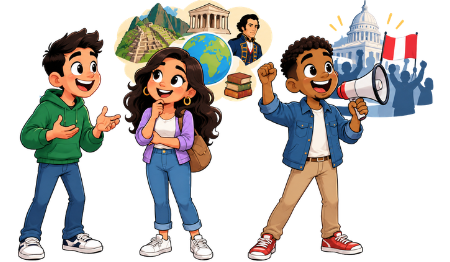
America Isn’t Just the United States
Geographically, the Americas stretch from Alaska to Patagonia.
So why does American usually mean from the United States?
And if that’s what American means, what do we call everyone else from the Americas?
Canadian? Mexican? Peruvian? Brazilian?
Of course. As Bad Bunny reminded us at the Super Tazón 2026: “God Bless America!”
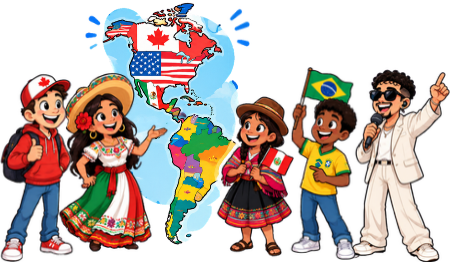
“Together We Are America!”
And yeah! They’re all American too—at least in the geographical sense.
Which brings us to the problem: American is doing two different jobs.
It can describe something related to the United States, while at the same time referring to something related to an entire part of the world.
And that gets even more interesting when we cross the language border.
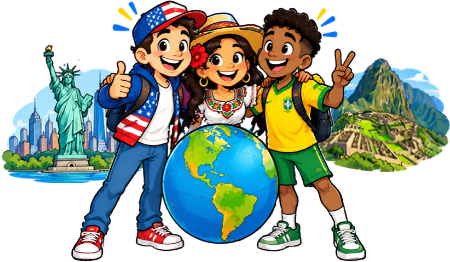
One America or Two?
Here’s where English and Spanish don’t quite see the same map.
In much of the English-speaking world, North America and South America are treated as separate continents, with Central America generally considered part of North America.
In much of the Spanish-speaking world, however, America is taught as a single continent stretching from Alaska to Tierra del Fuego, with North America, Central America, and South America as regions within it.
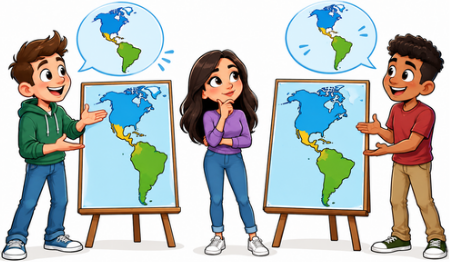
Same Planet, Different Map
And maps, like languages, are not always as innocent as they look.
After all, geography—and not only history—is written by the winner.
So when an English speaker hears American, the default meaning is usually from the United States.
When a Spanish speaker hears americano, the word can have a much broader geographical meaning.
And that’s where our little language problem gets interesting.
Because if American is already being used for the United States, while America can refer to a much larger part of the world, what exactly are we supposed to call this new language? And if American can mean all of those things, we have finally arrived at the question that brought us here:
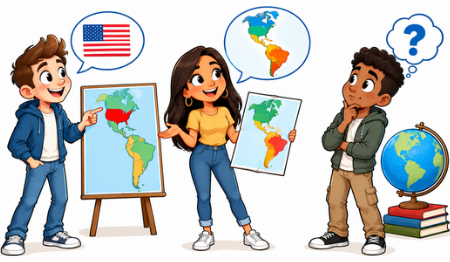
Does “American language” Actually Exist?
No. It doesn’t.
At least not in the sense that Trump—or our imaginary breaking-news report—would have us believe.
But Trump has given us a pretty damn good excuse to explore a linguistic question that has been floating around for more than two centuries.
And, as tends to happen when you start asking questions about language, we are about to fall down a much deeper rabbit hole than we originally intended.
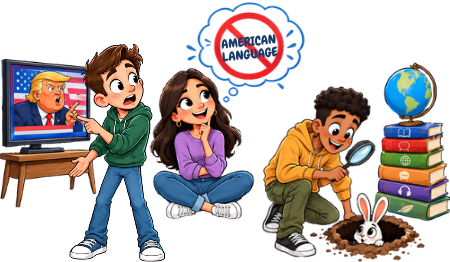
Did You Know America Is Actually Italian?
And, also, maybe, just maybe, Spanish! A rabbit hole that eventually takes us all the way back to Italy.
But we’ll save that part for another article and meetup.
Because when it comes to Mr. Trump, his idea of American identity sometimes smells more like pasta and pizza than American apple pie.
And yes, before anyone gets offended: Pizza and pasta aren’t American either.
You knew that!
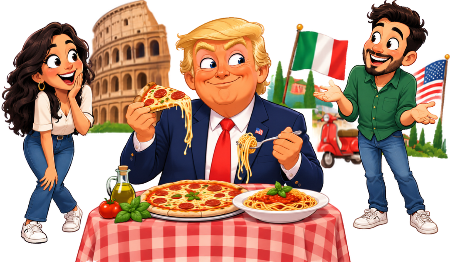
Does Trump Even Speak American?
The title of this meetup is a joke. The question isn’t. If someone says:
“I speak American.”
We probably understand what they mean.
They’re talking about American English—or some variety of English spoken in the United States.
But there’s a little linguistic problem hiding inside that sentence.
American English Is Still English
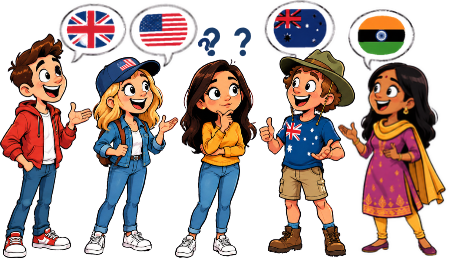
Nobody normally hears American English and thinks we’re talking about a completely different language.
British English. American English. Australian English. Indian English.
Different varieties. Same language.
But then we say:
American language.
And suddenly we’re asking a very different question.
Is American the name of a language?
Or is it the name of a variety of English?
When Does a Variety Become a Language?
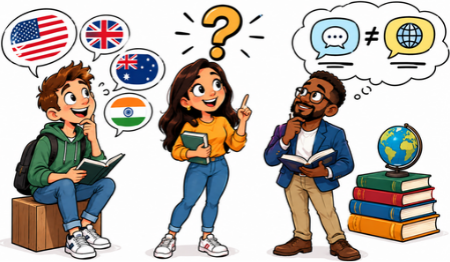
And if it’s only a variety of English, what would have to happen for it to become a language of its own?
Now we’re getting somewhere.
Because this isn’t just a question about Trump, English, or the United States.
It’s a question that linguists have been wrestling with for a very long time:
When does a dialect—or a variety of a language—become a language?
When a Language Wanted Independence Too
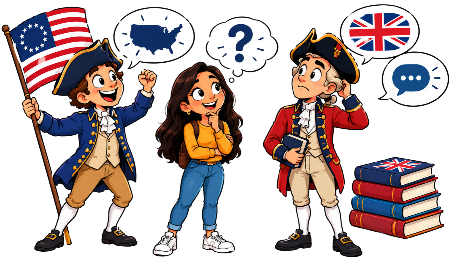
After American independence, something else was bound to happen.
If you’ve just separated politically from another country, sooner or later you start asking what makes you different from that country.
And language inevitably enters the conversation. The United States had become politically independent from Britain.
But it was still speaking English. The political revolution was over. Apparently, the linguistic revolution never got the memo.
First Independence, Then What?
Once you’re no longer somebody else’s colony, you have a slightly uncomfortable question to answer:
Who are we now?
Independence is one thing. Building a national identity afterward is another.
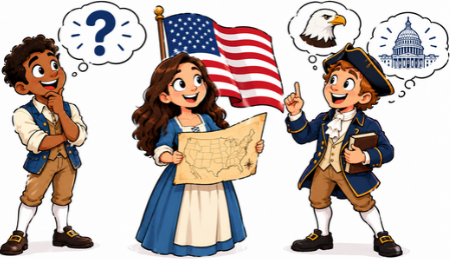
The Americans of the early republic began doing exactly that.
And Then Came the Language Question
As often happens when a new nation wants to distinguish itself from the country it just broke away from, language became part of the conversation.
Did Americans have to keep speaking exactly like the British?
Or should the new country develop its own way of speaking and writing?
Some American intellectuals thought the latter made sense.
And that’s where things get interesting.
The Language Revolutionaries
One of the most important figures in this movement was Noah Webster.
And no, his plan wasn’t simply to sit down one afternoon and announce:
“We’re America now, dammit! Let’s change some spelling!”
Well… not exactly.
Language Is Identity! Hell Yeah!
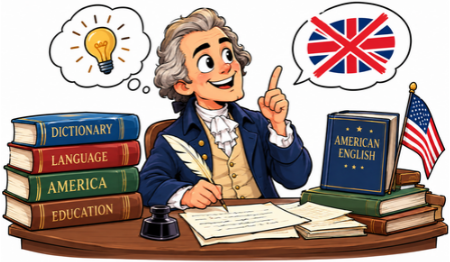
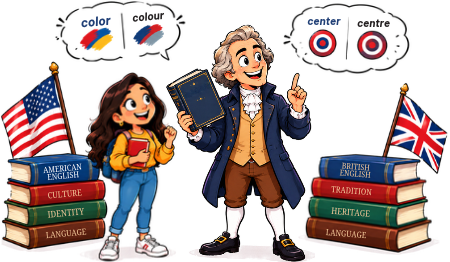
Webster believed language could help create a distinct American cultural identity.
His dictionaries and the spelling differences he helped popularize between American and British English became part of that process.
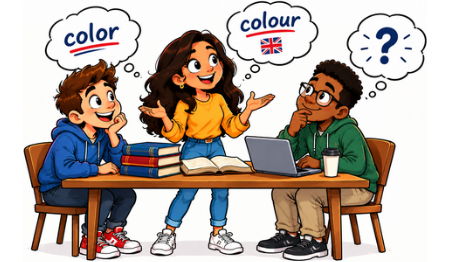
Color instead of colour.
Center instead of centre.
And plenty of other differences that would eventually make British and American dictionaries look like they had been arguing with each other for generations.
But Webster wasn’t working in isolation.
What About the Founding Fathers?
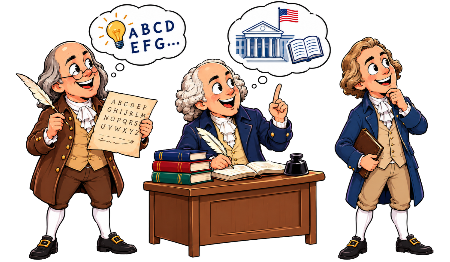
Benjamin Franklin had his own ideas about reforming English, too. In 1768, he proposed a reform of the English alphabet.
John Adams went even further. In 1780, he proposed the creation of an American academy of language.
Thomas Jefferson was also thinking about how American English might develop over time.
So these weren’t simply people inventing weird spellings for fun.
Well…
Let’s Just Say…
Some of them probably had their moments.
But more broadly, they were living through the first decades of a new country that was still trying to figure out what it wanted to be.
And if you’re building a new national identity, why not make language part of it?
First came independence. Then came identity.
And naturally, someone eventually wondered whether that identity needed its own language.
So, Did They Actually Create One?
Not quite.
Changing the way you spell color doesn’t magically turn English into a new language.
So what actually does?
And that’s where things get much more interesting.
So What Makes a Language a Language?
Now we get to the really interesting part.
The question sounds simple, but the answer isn’t. There is no universal formula that tells us exactly when a variety stops being a dialect and becomes a language.
We can compare vocabulary, pronunciation, grammar, mutual intelligibility, history, and standardization. All of those things matter, but none of them completely solves the problem.
So where does that leave us?
When Does a Dialect Become a Language?
Well, here’s where things get messy.
Languages don’t live only in dictionaries and grammar books. They live in communities, and communities don’t just speak languages. They name them.
And that’s when the question stops being purely linguistic. It becomes historical, cultural, social—and sometimes political.
Suddenly, deciding whether something is a language isn’t just about what people say. It’s also about who gets to decide what that language is called.
There Is No Map for Languages
Nobody can draw a line on a map and say:
“Dialect ends here. Congratulations. You’re a language now.”
If only it were that easy.
We’d save ourselves an enormous number of arguments.
Sometimes two varieties can be quite different and still be considered part of the same language. Other times, varieties that are remarkably similar end up being treated as separate languages.
So Who Decides?
And here’s the uncomfortable part:
Sometimes, it’s not the linguists.
A community can decide it speaks a language. A government can decide to recognize it. Schools can teach it. Writers can write in it. Dictionaries can give it a fancy name and make everything look official.
And sometimes, two groups can speak varieties that are close enough to understand each other perfectly well—and still insist they’re speaking different languages.
Because apparently, language classification isn’t just about what comes out of your mouth. It’s also about who gets to call it what.
When Institutions Get Involved
And this is where things get even messier.
A government can recognize one variety and ignore another. A school system can decide what children are taught. A dictionary can help standardize one form while leaving another outside the official picture.
And suddenly, the question isn’t only:
“How different are these varieties?”
It’s also:
“Who has the authority to decide?”
And Then Politics Walks Into the Room
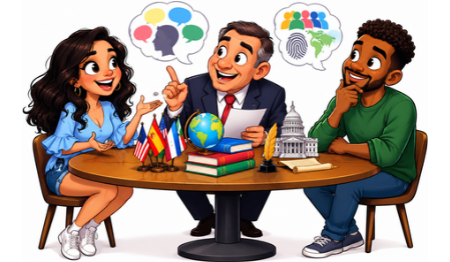
That’s when language stops being just a linguistic question and starts becoming a question of history, identity, and power.
Because governments don’t just govern people.
Sometimes they help decide what those people call the language they speak.
And politics, naturally, has a seat at the table.
Spanish Gives Us a Perfect Example
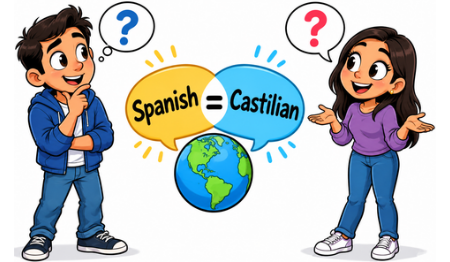
Take Spanish. Or is it Castilian?
Good question. Two names, same language? How is that? Doesn’t it look similar to the issue we’re confronting in this article? But we’re not going down that rabbit hole today.
A person from Spain, Mexico, Argentina, or Peru can speak Spanish with noticeable differences in pronunciation, vocabulary, intonation, and even some grammatical structures.
Really?
What Are These Differences?
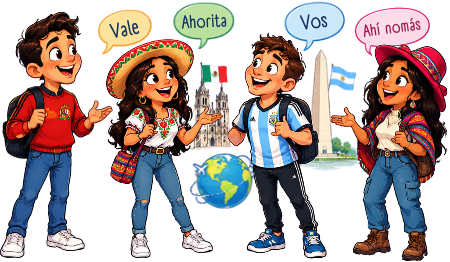
A person from Spain, Mexico, Argentina, or Peru can speak Spanish with noticeable differences in pronunciation, vocabulary, intonation, and even some grammatical structures. In Mexico, you might hear ahorita. In Argentina, vos. In Spain, vale and coche. And in Peru, of course, we have our own words, expressions, accents, and ways of saying things.
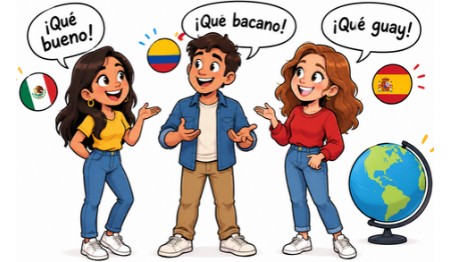
Cross enough borders and Spanish can start sounding surprisingly different. Yet nobody has to declare a new language every time somebody crosses a border.
Different Spanish, Same Language
That’s the point.
Spanish can sound quite different from one country to another and still be called Spanish. Speaking differently isn’t automatically the same thing as speaking a different language.
And that brings us right back to American English.
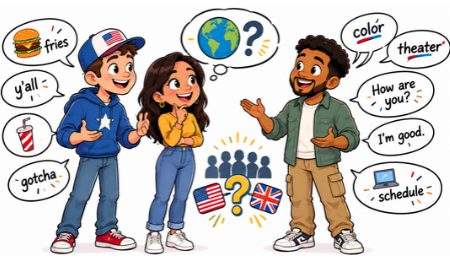
Can American Language Be a Thing?
If Americans develop their own vocabulary, pronunciation, spelling, expressions, and even some grammatical differences, does that automatically make American English a new language?
Not really.
Because if linguistic differences alone aren’t enough, then what actually pushes a variety across that invisible line?
More importantly, who gets to name it?
When the Map Gets Even Messier
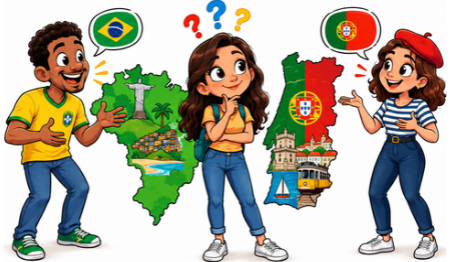
Something similar happens with Brazilian and European Portuguese.
The differences can be pretty obvious, even to a learner. But we still generally use the same broad label:
Portuguese.
And then the map gets considerably messier.
The Line Gets Blurry
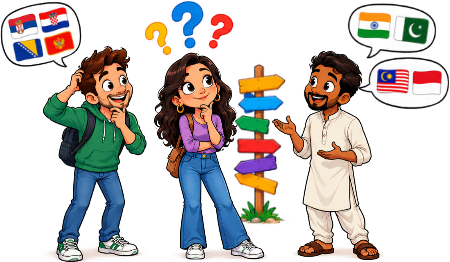
Consider Serbian, Croatian, Bosnian and Montenegrin. Then Hindi and Urdu. Or Malay and Indonesian.
Are these different languages? Varieties of the same language? Closely related languages that developed along different historical, cultural and political paths?
Depending on the case, the answer can get surprisingly complicated.
At some point, you start suspecting that somebody forgot to include the instructions.
Because the more examples we examine, the harder it becomes to find one clean line between language and dialect.
When Speaking Becomes Identity
So far, we’ve been looking at the question from a linguistic perspective: pronunciation, vocabulary, grammar, intelligibility, history.
But language doesn’t live only in grammar books. It also lives in people.
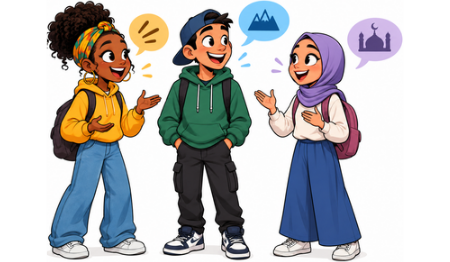
A way of speaking can become part of a group’s identity. Certain words, expressions, sounds, or grammatical patterns can become markers of where people come from, who they identify with, and the community they belong to.
Sometimes, a way of speaking says something more than the words themselves.
“This is how we speak.”
When Speakers Start Naming Things
And speakers matter.
They’re the ones who live the language, transmit it, change it—and sometimes decide that their way of speaking deserves a name of its own.
That’s when things get even more interesting.
The question is no longer simply:
Are these varieties different enough to be called separate languages?
We can also ask:
Who gets to decide when a way of speaking becomes a language?
So Who Gets to Name It?
A community may consider its way of speaking distinct.
That doesn’t automatically mean the rest of the world will recognize it as a separate language.
And this is where power enters the picture.
Governments, institutions, schools, academies, and other authorities can influence which variety is taught, which one is considered standard, and which name eventually appears in official documents and textbooks.
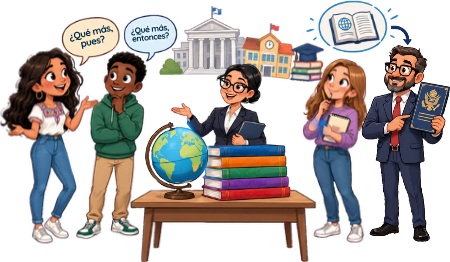
When Naming Becomes Power
Suddenly, the question isn’t purely linguistic or cultural anymore.
It becomes political, institutional, and sometimes deeply personal.
Because once a variety has a name, that name can carry recognition, legitimacy, and even a sense of identity.
And that brings us to a different question:
Who has the power to name it?
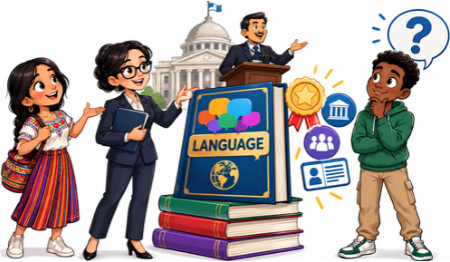
A Language Is a Dialect With an Army & Navy
This famous expression captures the idea rather beautifully.
It has been attributed to several different people, so we’re not going to slap a definitive name underneath it.
Figuring out what makes a language a language is complicated enough without starting another argument about who said the damn thing first.
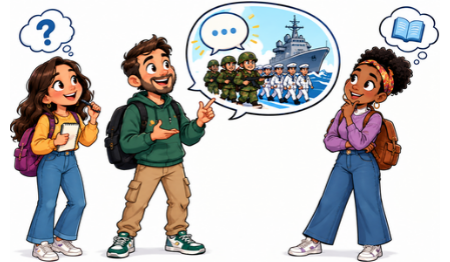
What the Quote Really Means
But the idea behind the quote is useful.
A variety doesn’t become a language simply because somebody discovers a few impressive grammatical differences.
Sometimes history, identity, and politics get involved.
And when enough people—and enough power—get behind a way of speaking, things can start to change.
When America Started Sounding American
Which brings us right back to the United States.
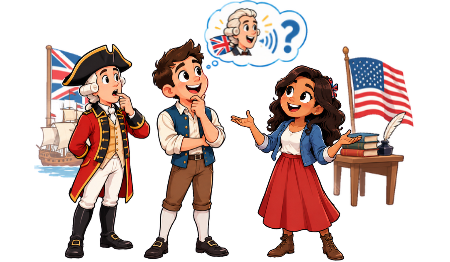
After gaining independence from Britain, Americans didn’t wake up the next morning speaking a completely different language.
But they did start asking a fascinating question:
If we’re no longer British, do we still have to sound British?
And This Is Only the Beginning
And to think all of this started with a piece of breaking news we completely made up.
Except that behind the apparently silly idea of an “American language” is a much bigger story.
So we’re not done with American yet.
Far from it.
We still have to ask what American really means, where America came from, and how a word that originally referred to a much larger geographic idea became so deeply associated with the identity of one particular country.
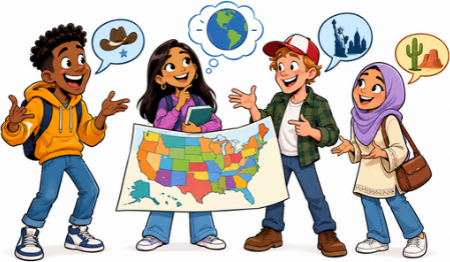
We’ll also discover that American English doesn’t mean that everyone in the United States speaks exactly the same way.
Because, surprise:
The United States has accents, dialects, regional varieties, communities, identities, and enough linguistic arguments to keep us busy for quite a while.
And Then There’s Rob
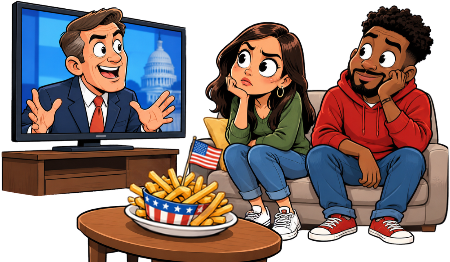
And if all of this still sounds a little too ridiculous, we can always ask Rob Lockwood, the gentleman who appeared on Fox News arguing that perhaps we should stop calling the language English and simply call it “American.”
Because apparently, after more than a thousand years of English-language history, what we really needed was a more patriotic name.
Freedom Fries, anyone?
And Maybe We Didn’t Need a New Language
Well, apparently, Americans didn’t need to invent an entirely new language. They could start by changing a few things.
As we saw earlier, Noah Webster believed language could help create a distinctly American identity. And some of the spelling changes he promoted eventually became closely associated with American English.
So let’s see what that actually looks like.
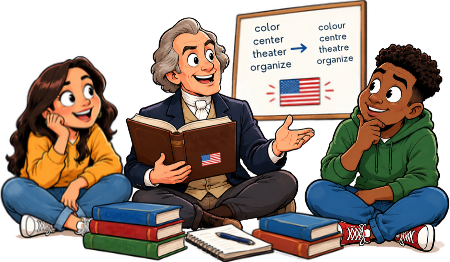
🇬🇧 British English vs. 🇺🇸 American English
| 🇬🇧 British English | 🇺🇸 American English | 🇪🇸 Spanish |
|---|---|---|
| colour | color | color |
| centre | center | centro |
| theatre | theater | teatro |
| metre | meter | metro |
| kilometre | kilometer | kilómetro |
| favourite | favorite | favorito/a |
| honour | honor | honor |
| humour | humor | humor |
| neighbour | neighbor | vecino/a |
| behaviour | behavior | comportamiento |
| labour | labor | trabajo |
| travelling | traveling | viajando |
| cancelled | canceled | cancelado/a |
| programme | program | programa |
| catalogue | catalog | catálogo |
Pretty Different-Looking English, Right?
At first glance, it looks pretty different.
But here’s the funny part: you can probably read both English columns without even thinking about it.
A British speaker writes colour. An American writes color. Nobody has to pull out a dictionary and ask, “Wait… what language is this?”
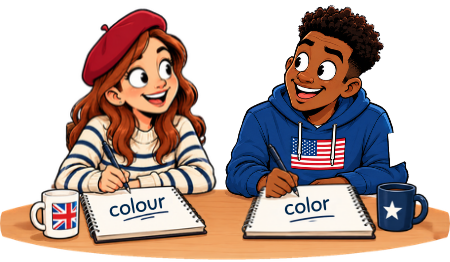
Does Changing Spelling Make a New Language?
And that’s because spelling alone doesn’t create a new language.
It can make a variety look different. It can become part of its identity. But that doesn’t mean you suddenly crossed some invisible linguistic border and entered a whole new language.
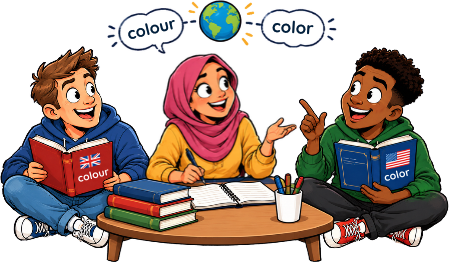
American English Is Still English
American English is different from British English. No argument there.
But different doesn’t necessarily mean separate.
If someone tells you, “I speak American,” you probably know what they mean. They’re talking about English as it developed in the United States.
And that brings us back to our original question.
Can American English Become Just American?
Could people eventually decide that American English is no longer just English?
Sure. Languages have been renamed, divided, combined, standardized, and reinvented throughout history. Sometimes the people speaking them have a lot to do with it. Sometimes governments and institutions get involved. And sometimes politics gets its big fat nose into the conversation.
So maybe the better question isn’t simply:
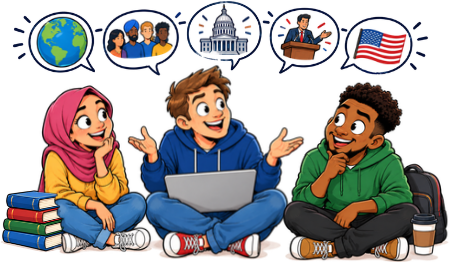
“Is American a Language?”
Maybe it’s:
“What would have to happen for us to start calling it one?”
Now that is a much more interesting question.
And naturally, that opens up a whole new collection of rabbit holes.
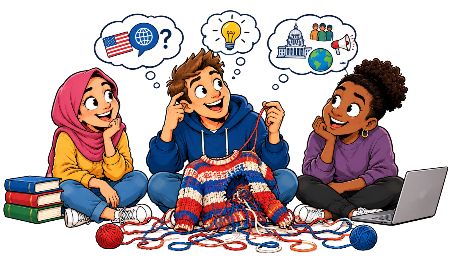
Once you start pulling on one little thread…
you usually end up unraveling the whole damn sweater.
There Is a Lot More to Unpack
And we’ve still got plenty of bread left to slice.
In future meetups, we’ll dig into some of the questions we’ve opened up here.
For starters, when does a dialect actually become a language? What really separates the two? And how much do political, military, or economic power have to do with it?
We’ll also dig deeper into what it really means to speak American. Does the president speak American—or does he at least speak English?
Then There’s the American Rabbit Hole
And that’s where things get even more interesting.
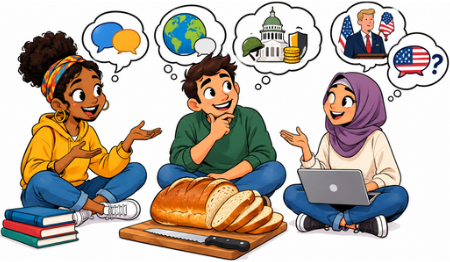
What does it actually mean to be American? Where did the word America come from? How “American” is the word America itself?
Is it really true that the name came from Italy? Does English have another demonym besides American? Who gets to be American? And just how many American languages are there?
And, while we’re at it…
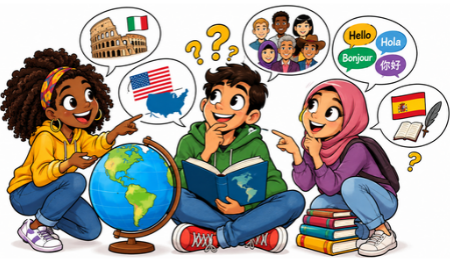
Is it Spanish or Castilian?
And We’re Just Getting Started
And perhaps the biggest question of all:
Does calling everything “American” actually strengthen a sense of American identity—or does it simply create another controversy with the millions of other people who also consider themselves American?
We’ll get into these questions and more in the next meetups.
Because apparently, one little question about a language wasn’t enough.
Once you start pulling on one little thread…
you usually end up unraveling the whole damn sweater.
