Honoring Marriage in June?
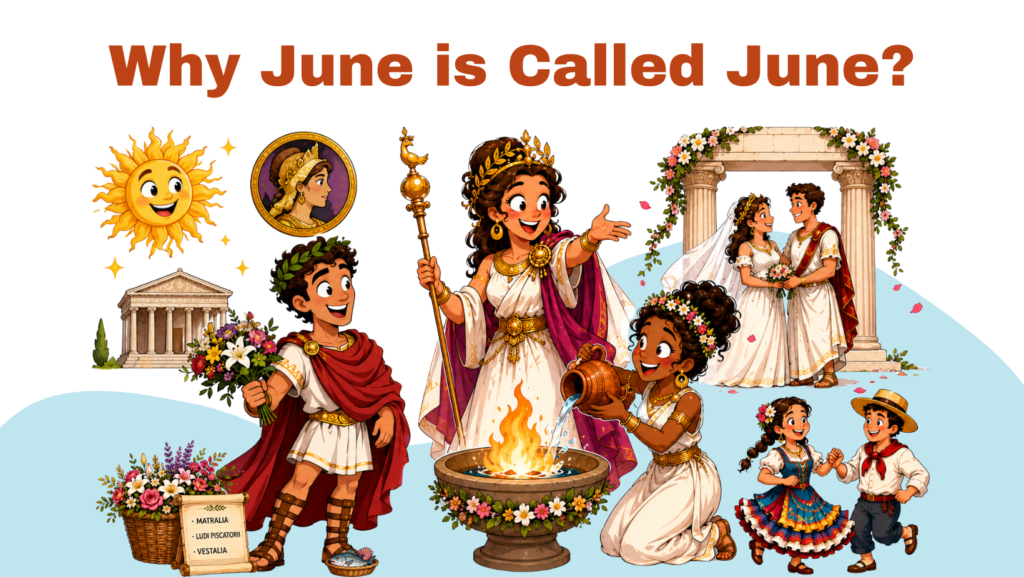
Hold onto your Roman mythology hats — we’re diving into how June got its name. You’ve probably heard that June is named after Juno, the Roman goddess of marriage and childbirth. But what does that actually mean?
Juno was a big deal in ancient Rome — and that’s putting it mildly. She was called on during marriage ceremonies to bless unions and boost fertility. So, next time you think of June, don’t just picture sunshine and school’s out — picture a divine matchmaker with serious influence.
Ready to go mythological? Because this isn’t just a name — it’s a 2,000-year-old idea.

But She Was So Much More
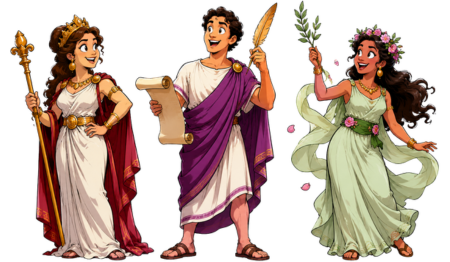
Juno wasn’t just into weddings — she was the queen of the gods. As part of the Capitoline Triad — the Roman power trio (Jupiter, Minerva, and Juno) — she helped run the entire spiritual and political show.
Think marriage + military strategy + matriarch energy.
She protected the Roman state, watched over women through every stage of life, and stood at the very top of the Roman religious hierarchy. Basically, she wasn’t sending love letters — she was issuing divine decrees… and people listened.

Juno’s Ongoing Influence
The Romans didn’t just name a month after Juno for fun — they celebrated her with actual festivals, prayers, and offerings throughout June. She symbolized protection, marriage, and new beginnings — not exactly a casual combination. That’s why June became the traditional season for weddings — and still is in many cultures today.
And because Romans never did anything halfway, honoring Juno meant festivals, rituals, and a whole calendar of attention.

Roman Festivals in June
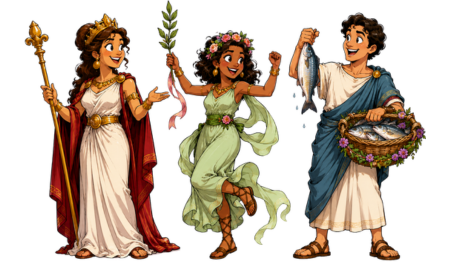
The Romans didn’t just name June after their main goddess, Juno—they made it a party month. Forget just admiring her in theory—they showed up with rituals, festivals, and offerings to keep the goddesses happy and the vibes divine.
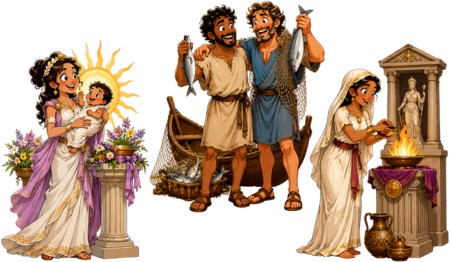
- Matralia (June 11): A festival for married women, honoring Mater Matuta, goddess of dawn and childbirth. Think of it as a sacred shoutout to motherhood.
- Ludi Piscatorii (June 7): A more niche celebration… for fishermen. Yes, even the ancient Roman fish bros got a day.
- Vestalia (June 7–15): Dedicated to Vesta, goddess of the hearth. Women entered her sacred temple barefoot to offer prayers for the home and family.
So yeah, June wasn’t just about sunshine—it was full of fires, fish, and fertility rituals.
A Goddess’s Month
Imagine this: you’re in ancient Rome. June wasn’t just another month — it was a time to celebrate Juno’s blessings.
The days grew longer, the sun shone brighter, and Romans believed her presence made this month especially lucky for marriage and new beginnings.
It’s like having a goddess personally invested in your life choices.

Why “Marriage” Matters in June?
June and weddings kind of go hand in hand — and yeah, you can thank Juno for that. Her connection to marriage made this month the obvious pick for couples tying the knot.
Think of Juno as the ultimate wedding planner — not worrying about flowers or seating charts, but making sure your marriage starts off with a little extra divine backup.

Visualizing Juno’s Blessings
Picture this: you’re in ancient Rome in June. Flowers are blooming, the air feels fresh, and the city is buzzing with weddings and celebrations.
It’s almost like Juno herself is walking through the streets — giving every event her personal stamp of approval.

Greek Connections
Juno wasn’t just a big deal to the Romans. The Greeks knew her as Hera, the wife of Zeus — and she covered the same territory: marriage, women, and family life.
Different name, same powerful role. Across both cultures, she was basically the go-to goddess for anything tied to love, marriage, and keeping things together.

Ovid’s Poetic Tribute
The Roman poet Ovid, in his work Fasti, explored multiple theories about June’s origin. He mentioned both Juno, the goddess of marriage, and Juventas, the goddess of youth—as well as a political theory involving young senators (iuniores).
But even while offering different possibilities, Ovid leaned poetic. He painted June as a month of beauty, vitality, and celebration—capturing the essence of life’s milestones, whether weddings or coming-of-age ceremonies.
In other words, he didn’t pick sides. He embraced the full Roman flair for options.
June Wasn’t Always the Sixth Month
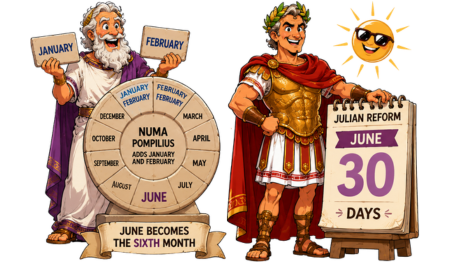
Here’s a fun twist: in the early Roman calendar, June was actually the fourth month. The calendar back then started in March, which made way more sense agriculturally.
But then came Numa Pompilius, Rome’s second king, who added January and February to the front of the year. That bumped June down to sixth place, even though it kept its vibe of weddings, transitions, and sunshine.
Later on, Julius Caesar gave the calendar a major glow-up with the Julian reform, locking June in at 30 days—right where it is now.
So yeah, June’s been through some timeline drama.
So… Why Is June Called June?
Whether you side with Juno, the goddess of marriage and state power, or Juventas, the symbol of youth and new beginnings—or you’re just here for the fish festivals—June is layered with meaning.
It’s not just a name on your calendar. It’s a reflection of Roman mythology, politics, poetry, and tradition—all baked into 30 sunny days.
So next time someone says “June,” you can casually ask, “You mean the goddess, the youth movement, or the ancient Roman social calendar?”
A Global Celebration
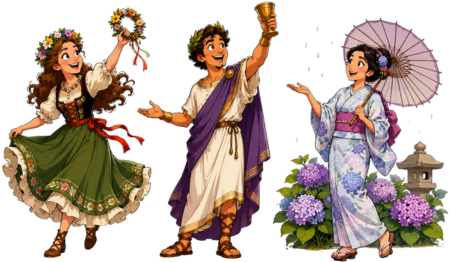
June’s significance isn’t confined to Rome. Around the world, different cultures celebrate this month in their own way. In Europe, Midsummer festivals light up the night with bonfires, dancing, and the kind of energy that suggests sleep is optional.
In Japan, June marks the beginning of the rainy season—less bonfire, more umbrella—but still welcomed for the nourishment it brings.
Embracing June’s Spirit
June invites us to embrace life with open arms. It’s a month of growth, celebration, and connection with the world around us—basically, nature showing off a little. Let the spirit of Juno inspire you to start something new or celebrate a major milestone.
Whether it’s planting a garden, getting married, or simply enjoying the warmth of summer, June is a time for vibrant beginnings… or at least a very convincing excuse to act like it is.

Latin America
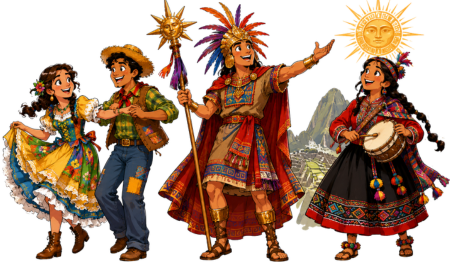
In Brazil, June comes alive with Festas Juninas (June Festivals), deeply rooted in rural traditions. Think folk dances, traditional foods, bonfires, and enough games to make the whole month feel like a countryside party that got slightly out of hand.
In Peru, June marks the beginning of winter—but also one of the most important cultural moments of the year: Inti Raymi, the ancient Inca Festival of the Sun.
The celebration brings together traditional dances, music, and rituals honoring Inti (sun in Quechua), blending history, identity, and a very serious appreciation for sunlight… especially when winter just started.
Wondering how to say June in other languages? Coming next…
🌍 How Do You Say “June” Around the World?
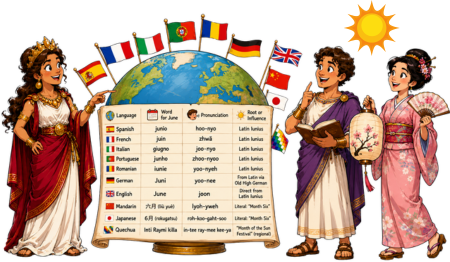
Juno may be Roman royalty, but her name made it onto calendars everywhere. Most modern languages inherited their word for “June” from the Latin Iunius — a subtle tribute to the goddess of marriage and new beginnings.
Whether you’re planning a wedding, booking a summer trip, or just flexing your language skills, here’s how June sounds across the globe:
| 🌐 Language | 📆 Word for June | 🔤 Pronunciation | 🌟 Root or Influence |
|---|---|---|---|
| Spanish | junio | hoo-nyo | Latin Iunius |
| French | juin | zhwã | Latin Iunius |
| Italian | giugno | joo-nyo | Latin Iunius |
| Portuguese | junho | zhoo-nyoo | Latin Iunius |
| Romanian | iunie | yoo-nyeh | Latin Iunius |
| German | Juni | yoo-nee | From Latin via Old High German |
| English | June | joon | Direct from Latin Iunius |
| Mandarin | 六月 (liù yuè) | lyoh-yweh | Literal: “Month Six” |
| Japanese | 6月 (rokugatsu) | roh-koo-gaht-soo | Literal: “Month Six” |
| Quechua | Inti Raymi killa | in-tee ray-mee kee-ya | “Month of the Sun Festival” (regional) |
🌞 Fun fact: While Latin left its mark on most European languages, others like Chinese and Japanese just call it “month six.” And in the Andes, Inti Raymi brings a whole new meaning to June — it’s a time for honoring the sun.
So the next time you write “June” in your planner, remember: you’re echoing ancient Latin — and giving a little nod to Juno herself.
The Origins of Month Names
Curious about where month names actually come from? Dive into our blog, “Months & Days”, for a deeper look at the stories behind them—because, as you’ve probably noticed by now, they’re not exactly random.
Explore the other sections too if you want more myths, history, and cultural details that somehow survived thousands of years just to end up on your calendar.
Romance in Spanish?
Ready to spice up your Spanish skills? Check out our blog, “Things Spanish People Say in Bed”, for a playful selection of romantic phrases.
For even bolder expressions and sensual vocabulary, explore “El Sexi Chupacabras”, where you’ll learn how to say “I love you” and more.

Explore Legendary Tales
Curious about myths and folklore? Visit our “Legends & Folktales” section for stories featuring figures like la Santa Muerte, la Llorona, la Ciguapa, Sarita Colonia —plus The Oirigins of el Sexi Chupacabras,” because clearly mythology also has a sense of humor.
And if you’re in the mood for something more intense, check out “Faith, Fire, & Flagellation: Extreme Easter Rituals.”—a reminder that tradition can get… surprisingly dramatic.

Laugh and Learn
If you’re in the mood for humor, we’ve got you covered! While phrases like ‘¡Feliz Año Nuevo!’ or ‘¡Me Gusta la Chucha de tu Madre!’ can be amusing, we always promote respectful language learning.
Explore our ‘About’ section to discover our passion for teaching, and don’t miss out on our free lessons at Kasa de Franko.

Discover Kasa De Franko
Curious about Kasa De Franko? At KDF, we offer flexible, enjoyable, and affordable Spanish lessons suitable for all ages.
Our polyglot instructor and founder, Franko, is deeply knowledgeable about both language and culture, ensuring a comprehensive learning experience.

Free Spanish Classes!
Ready to Start Your Spanish Journey Today? Visit Kasa de Franko, your cultural and linguistic oasis. Sign up for a free class today and embark on a journey through history, language, and culture. Just hit that red button to get started! And always remember….