
“Unapologetically Peruvian…”
“…because that’s where I emerged as an artist,” declared La Libertad. And although she was born in Lambayeque, her name radiates La Libertad wherever she goes.
Yes, Tania. That Tania—the one who tells us that she was born in Zaña by sheer chance and that, for that very reason, she carries its people in her heart—is talking about her undeniable Peruvian identity.
And that’s after more than four decades living in Mexico! Apparently, one thing doesn’t cancel out the other. And thank goodness for that!
Well, she certainly said it…
With All Due Liberty
Tania Libertad’s statements—that despite sharing Mexican nationality, she would never give up her Peruvian identity—once again lead us to question the differences between identity, nationality, and belonging, which we explored in our previous article, “You Aren’t Born Peruvian. You Become One.” There, among other things, we explained the real origin of the little phrase behind this article’s title:
A Peruvian is born wherever the hell they damn well please…
…because identity isn’t a photograph. It’s a full-color, 4D movie. We’ll get to that in a minute.
Well, How About That, mi Cuate!
¡Dale! ¡Toma mientras! Let the party roll! Tania, the woman from Chiclayo, gives it to them with gusto, too! Long live the North, folks! Tania is from wherever she wants to be from! At this point, who in their right mind would dare slap just one label on her?
After more than four decades living in Mexico, where she built much of her career and eventually obtained Mexican citizenship, La Libertad continues to insist: “I’ve always said I’m Peruvian. I never denied my nationality, and I never lost my accent.”
And this kind of harmony and dissonance had already led us to pontificate on the Peruvian-ness of the latest pontiff: Leo XIV.
As Mexican as Machu Picchu!
Tania loves Mexico, but that doesn’t mean she has to stop being Peruvian. She doesn’t need permission, file a formal renunciation, or take a number at the government counter to get her national-identity passport stamped.
And it’s not as if she’s forgotten where she comes from. On another occasion, she said that her home in Mexico was practically “the Peruvian embassy.” Just imagine! Ceviche, papa a la huancaína, arroz con pato, and ají de gallina. Now that’s a consulate worth visiting if you’re looking for culinary salvation!
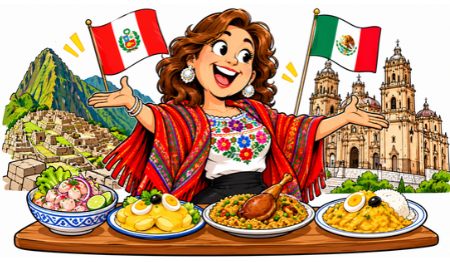
The North Is Where the Glory Is!
But here’s the interesting part: what makes someone continue to feel part of a country after spending so many years living somewhere else? Is it where they were born? Their family? Their memories? Their culture? Or is it something that simply won’t fit into a nationality application form?
In our quest to figure out what it means to be Peruvian, we need to keep digging into the lives of two people with very different stories, yet so many things in common when it comes to national identity that they’re worth examining. Because, as we’ve already argued, defining its essence is a whole lot more complicated than it might seem.
And who better to help us explore this than two Northerners—one by birth, the other by adoption—but Northerners all the same?
Peruvian Through and Through!
And unapologetically so. We’re talking about Tania Libertad de Souza Zúñiga and “Roberto” Prevost Martínez—Pope Leo XIV. Two Peruvians through and through.
Tania’s story gives us another opportunity to revisit the issue we’ve been exploring in our identity-versus-nationality saga. Because if her experience demonstrates anything, it’s that political borders and the borders of our identity don’t always coincide.
And the Pope knows it! And so does the papa—the potato! It knows, and it tastes good, too. Better yet, it knows how to keep itself nice and snug!
And so…
Is a Peruvian born wherever they damn well please, or not? Well, let’s see, as José Feliciano would say:
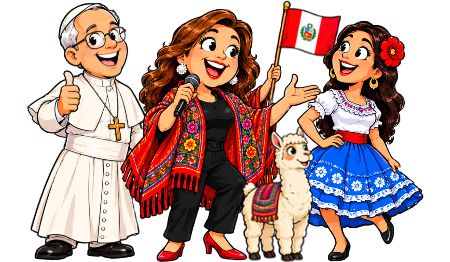
Identity Isn’t a Photograph. It’s a Movie.
Enter Stuart Hall, one of the most interesting thinkers in cultural studies.
Hall challenges the idea that our identity is some fixed essence, something we’re handed at birth and that remains untouched throughout our lives.
His approach distinguishes between who we are and who we are becoming. Identity has as much to do with our history and origins as it does with our experiences, transformations, and circumstances.
In other words, essence is just the starting point, because who we are has more to do with existence.

Better to Be a Movie Than a Photograph
It’s not simply about who we are, but also about who we’re becoming and what we may eventually turn into. Identity isn’t some finished product rolling off a factory line stamped Made in Peru.
It’s much more like a process under constant construction, shaped by our history, experiences, and the circumstances in which we find ourselves.

We’re No Pebble-Polaroids from Bedrock
In other words, we’re not a Polaroid someone snapped the day we were born, which we’re then expected to preserve, unchanged, until the end of our days—as if we didn’t change in response to the circumstances life throws our way. Because we’re more about existence than essence.
And existence means experience!
“Todo cambia,” as Chilean musician and songwriter Julio Numhauser would say. Everything changes. Why? Because…
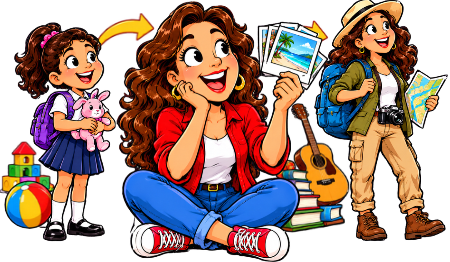
We’re a Movie
In full color and 5D! We change languages—and even accents, why not? That’s a possibility, too, isn’t it? Then we pick up new customs, discover other cultures, build relationships, abandon some beliefs, and adopt others.
Some experiences strengthen our connection to the place we come from; others lead us to discover ties we could never have imagined.
And this becomes especially clear when we talk about migration.
Someone might leave Peru at the age of five and spend the rest of their life in another country. They might speak English, Italian, or Japanese better than Spanish, have friends from all over the world, and develop a cultural identity shaped by a mix of influences.
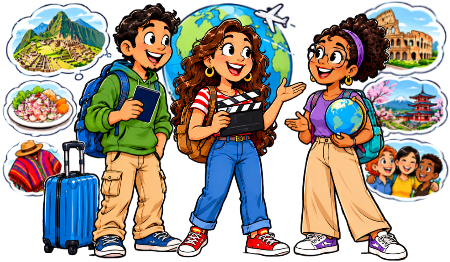
Does That Mean La Libertad Is No Longer Peruvian?
Not necessarily. And, in her own words: “…affection isn’t measured by the number of fans, but by the quality of the affection you receive. I feel very loved by my fellow countrymen. I never stopped sharing our music.”
Nor does it mean she should have to keep proving her Peruvian-ness to satisfy the expectations of those who stayed behind.
The reverse is also true. Someone born in another country can develop a deep connection with Peru.
They can learn its languages, get to know its customs, build family and social ties, and eventually come to consider this land their home.
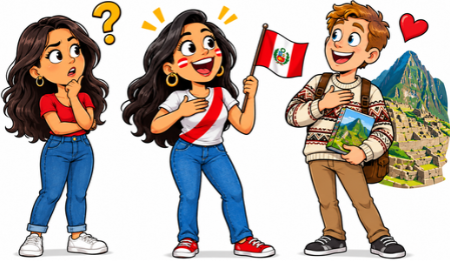
Identity and Nationality Are Not Mutually Exclusive
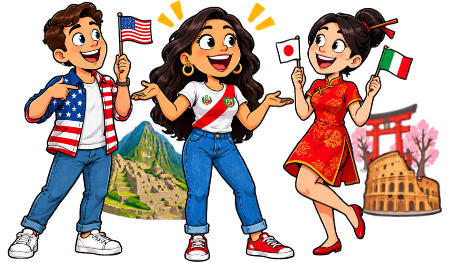
Cultural identity doesn’t have to be an either-or proposition. As we say in Peru, el que no tiene de inga tiene de mandinga—there’s a little bit of everything in all of us.
We don’t have to choose between being Peruvian, American, Italian, Japanese, or anything else. We can be several things at once. This isn’t an elimination contest where there can only be one winner.
We’re no less one thing simply because we’re also something else. However…
Feeling You Belong Doesn’t Mean You’re Accepted
And it certainly doesn’t mean others will let you belong.
Now, there’s a distinction here that deserves special attention: feeling part of a community is one thing; having that community recognize you as one of its own is another.
Sociologist Nira Yuval-Davis has explored precisely this distinction in her work on belonging and the politics of belonging.
Belonging has an emotional dimension: where we feel at home, whom we share our bonds with, and which communities form part of our identity. And let’s not forget…
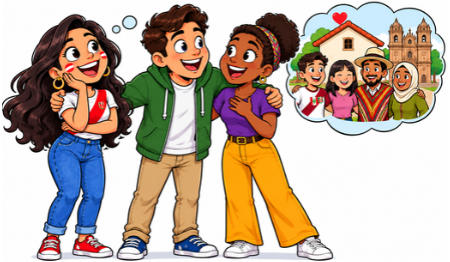
The Sociopolitical Dimension
There’s also a political and social dimension: who draws the boundaries of a community, who decides who gets in and who gets left out, and under what conditions.
And this is where the fun begins. Or, rather, where the trouble starts.
Because there’s always some “enthusiast” eager to hand out certificates of national authenticity.
Or that someone who wouldn’t hesitate to rub your differences in your face, automatically turning you into “the other”—someone who no longer belongs to “us.” That very Peruvian stupidity known as GCU (gente como uno—people like us).
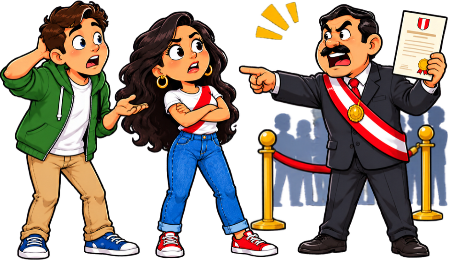
You’re Not as Peruvian as You Think You Are
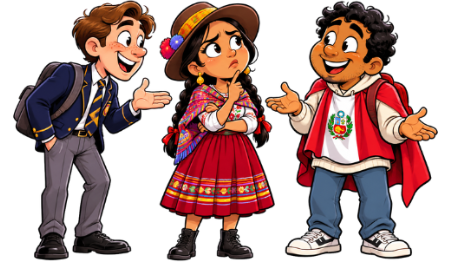
If you were born abroad, you’re not Peruvian enough. If you don’t speak Quechua, you don’t know your roots. If you don’t eat a particular dish, you don’t appreciate Peruvian cuisine. What? You don’t like ceviche? You don’t eat ají? What kind of Peruvian are you?
If you have a foreign-sounding last name, someone will ask where you’re really from. Because if your name is Quispe or Pairazamán, nobody would ever question your Peruvian credentials.
And if you were born in Peru but don’t fit someone else’s idea of what being Peruvian means, get ready for a lecture.
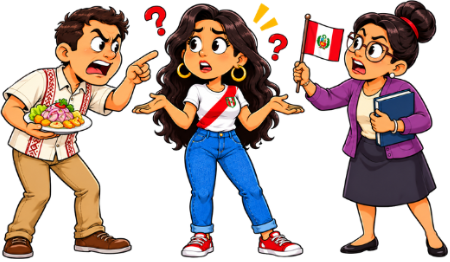
Identity Isn’t Built from the Inside Out Alone
Do we really need someone else’s permission to feel that we belong to a country?
Apparently so! But why?
The thing is, identity isn’t built exclusively from within. It’s also negotiated with our surroundings, our institutions, and the people around us.
We can feel a deep connection to a community and still experience rejection because we don’t meet its expectations.
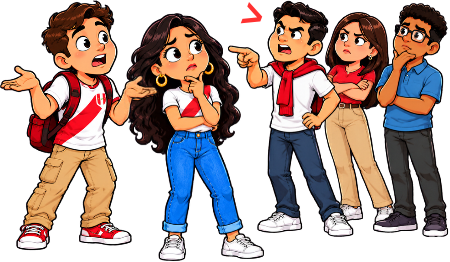
This Isn’t Unique to Peru
It happens in societies all over the world, particularly those shaped by migration, ethnic differences, social hierarchies, and colonial histories. But in our case, there’s a particular twist: Peru is an extraordinarily diverse country that, paradoxically, still carries plenty of baggage when it comes to recognizing that diversity.
A country born, for many, out of the trauma of the Conquest and, for others, out of the grandeur of the Inca Empire is still searching for the Holy Grail: its identity as a nation.
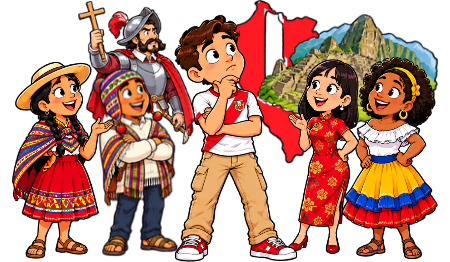
Are All Peruvians Equal? Not Even Close!
Anthropologist and philosopher Ernest Gellner helps us understand how modern national identities are constructed.
In Nations and Nationalism (1983), he argues that nationalism isn’t simply the spontaneous expression of ancient communities that have always existed as nations.
Modern institutions, education, standardized culture, and political systems played a fundamental role in the formation of nations.
The Historical and Political Dimension of Identity
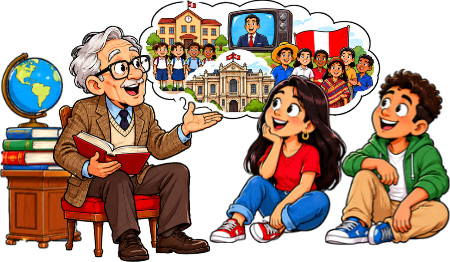
This matters because it reminds us that national identity is also constructed through historical and political processes.
Schools teach particular versions of history. Governments select national symbols. Institutions establish official languages. The media reproduce certain images of what a country represents.
And although all of this can help create a sense of unity, it can also leave out experiences that don’t fit the dominant narrative.
For Proof, Just Look at the Batán
As Grandma Norma Lita would say. And in Peru, we have a pretty obvious example.
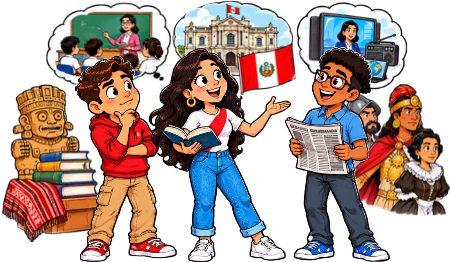
We’re a country with enormous linguistic and cultural diversity. Yet for a long time, certain ways of speaking, dressing, thinking, and relating to the world have received more social recognition than others.
Spanish has occupied a dominant position, while Indigenous languages have had to fight for recognition. In other words, we’re dealing with the oxymoronic paradox of Peruvian—or, perhaps more accurately, Lima-centric—Creole nationalism, which keeps rubbing our faces in the fact that…
“Incas, Yes. Indians, No.”
As Cecilia Méndez put it.
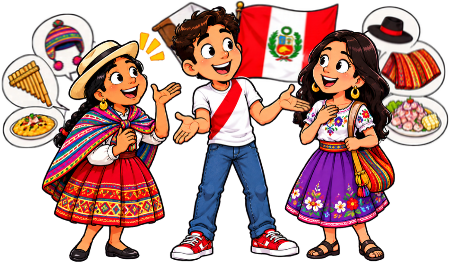
Indigenous cultures have been celebrated as historical heritage, but their people haven’t always received the same respect in everyday life.
We love showing off our roots when they attract tourists, but we aren’t always as enthusiastic when those same roots demand equality, opportunities, and recognition.
How convenient to celebrate the past while ignoring the people who are still living with its consequences!
All the Bloodlines, All of Them!
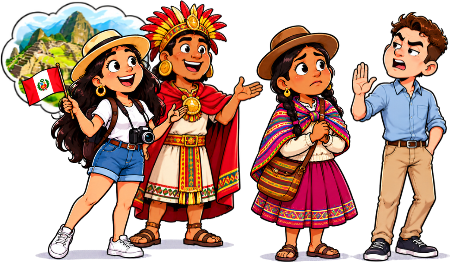
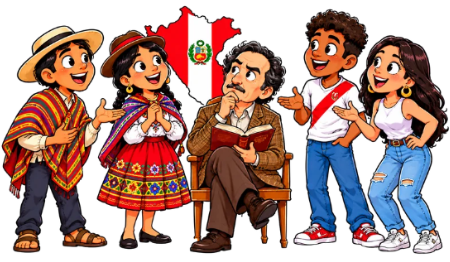
All bloodlines, yes—but not all with the same opportunities. In other words, together, but not mixed up. Good grief! And here we simply have to stop and talk about José María Arguedas.
His work is essential to understanding not only our cultural diversity but also the fractures running through the country.
Because Todas las sangres (All the Bloods) is far from a romantic celebration of mestizaje, or racial and cultural mixing. It’s a raw portrayal of the social, cultural, and economic conflicts that remain unresolved to this day.
Looking Beyond a Single Mirror
Arguedas allows us to see a Peru that cannot be reduced to a single culture, a single language, or one way of understanding the world.
And this is fundamental to our argument.
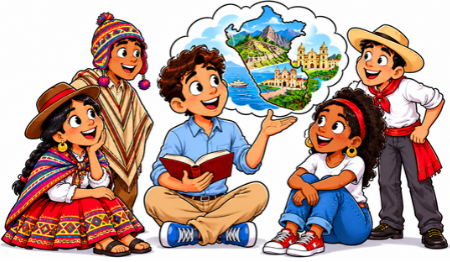
Because when we talk about national identity, we can’t simply list the different cultures that exist within a country’s borders.
We also need to ask how they relate to one another, what place they occupy in society, and whether they all receive the same recognition.
When Being a Multicultural Country Isn’t Enough
It’s not enough to say Peru is a multicultural country if we continue treating some cultures as superior to others.
Nor is it enough to celebrate mestizaje as though all those mixtures took place under conditions of equality.
Enough already with the romanticism of Hispanism and the laments of Indigenism. When both become irreconcilable trenches, they end up being an obstacle to building a national identity that represents us all.
Because Colonial Rule Came to an End
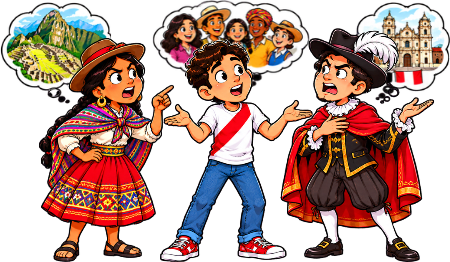
Colonial rule may have ended, but our colonial mindset kept the flame of the caste system burning. Three centuries later, we’re still living in a viceroyalty.
And deep down, we’re still a stratified society. We love putting people in their place.
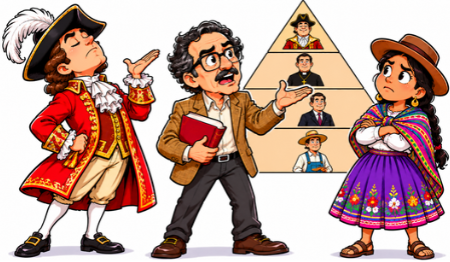
Peruvian sociologist Aníbal Quijano offers us another essential perspective through his concept of the coloniality of power.
From Political Colonialism to Colonial Thinking
His analysis shows how the social and racial hierarchies established during colonialism continued to shape Latin American societies long after political independence.
In other words, ceasing to be a colony didn’t necessarily mean abandoning all the ways of thinking and classifying people inherited from that era.
Because the flame is still alive in that familiar question:
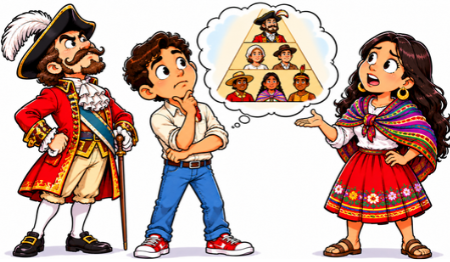
“So, Which School Did You Go To?”
In Peru, we can still see how certain physical features, surnames, accents, places of origin, ways of speaking, and even the school someone attended influence how people are valued socially.
And that affects our national identity, too.
Because saying that we’re all Peruvians is one thing; building a society in which everyone can feel recognized as such is quite another.
Perhaps the problem isn’t that we lack a national identity. Perhaps the problem is that we still haven’t agreed on what sharing one actually means.
The Homeland Doesn’t Always Match the Place Where We Were Born
And here we can return to a much more personal story: that of Tania and Roberto.
Pope Leo XIV’s return to Peru offers us an interesting opportunity to reflect on the relationship between birth, identity, and belonging.
Robert Francis Prevost was born in Chicago, United States. However, he spent a significant part of his religious life in Peru, particularly in Chiclayo, where he served as bishop and established ties with a community that knew him long before he became Pope.
There, by his own account, he “learned to be a shepherd,” and he also found inspiration in the life of Saint Turibius of Mogrovejo, who died in Zaña.
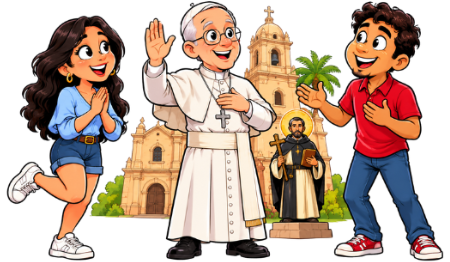
“Because This Is My Homeland, Too!”
When Leo XIV expressed his desire to return to his “beloved Diocese of Chiclayo” and spoke of coming back to his homeland, his words took on a meaning that went beyond religion.
We don’t have to share his beliefs to understand the feeling behind them.
The same feeling that might have moved Tania Libertad when she returned to Zaña, her birthplace, to sing the Ave Maria to Pope Leo XIV. One town, two paths.
And here’s something I find particularly interesting.
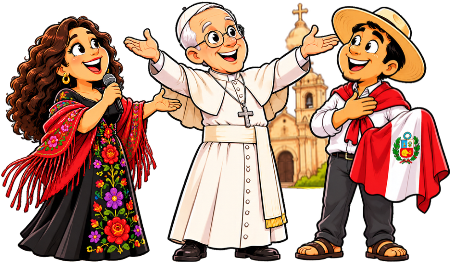
I’m No Saint When It Comes to Processions
I’m hardly the ideal candidate to lead a religious procession. My relationship with religion has gone through several stages: from atheism to agnosticism and, finally, to a position of nonbelief. It’s been ages since I’ve attended Mass—ever since I was a child.
Still, the possibility of accompanying my family and taking part in the celebration surrounding the Pope’s visit to Zaña stirred a genuine emotion in me.
Why? Well…
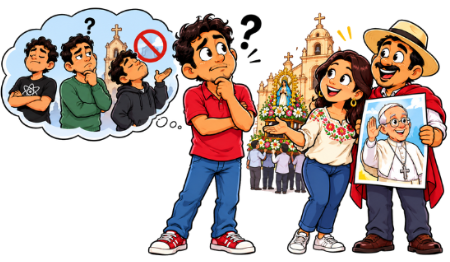
Because It’s One Thing with a Cajón and Quite Another with a Guitar
Because religion is one thing, and culture is another.
Sharing someone’s beliefs is one thing; recognizing what a celebration means to a community is quite another.
I don’t need to believe what everyone else believes to feel connected to them.
And perhaps that explains what belonging means better than any academic definition ever could.
There are places that make us feel at home. There are people who connect us to a story. There are experiences that remind us of who we are and where we come from.
My Only Religion Is Peru
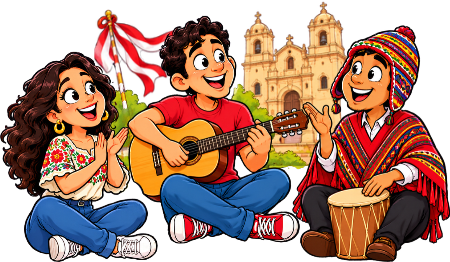
My statement may sound a little over the top, but there’s some truth to it: My only religion is Peru.
This isn’t about turning Peru into a religion or replacing one faith with another.
It’s about recognizing that our relationship with a homeland can have an emotional depth that doesn’t necessarily depend on a doctrine, an institution, or a birth certificate.
The homeland can also be a shared experience. You live it, you experience it; you can’t explain it.
So, Are You Born Peruvian or Do You Become One?
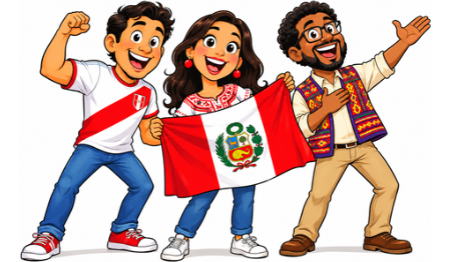
After everything we’ve explored, perhaps the answer is that both can be true, but they don’t mean the same thing.
We can be born with a nationality, inherit a family history, and grow up surrounded by certain traditions. But our identity isn’t fully defined the moment we enter the world.
It’s built over time. It changes with our experiences. It grows richer through encounters and contradictions alike.
How Do We Discover Our Peruvian-ness?
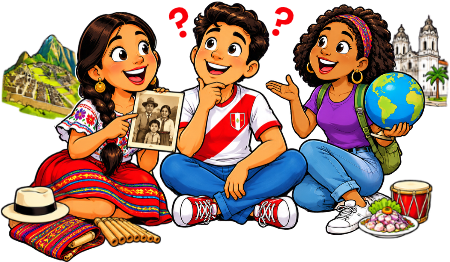
We can feel Peruvian from the other side of the planet. We can discover our connection to Peru after living abroad for many years. We can arrive in a country where we weren’t born and find a home there.
And we can question aspects of our own culture without that meaning we’ve given up our identity.
Because belonging doesn’t mean agreeing with everything. Loving a country doesn’t mean justifying its mistakes, ignoring its inequalities, or accepting its official versions of history without question.
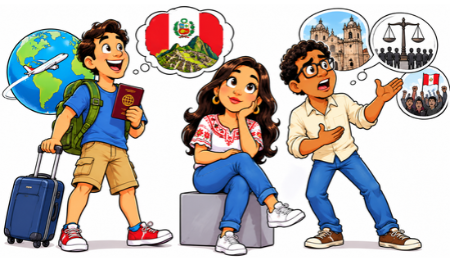
Questioning Is Also an Act of Love
In fact, perhaps one of the most genuine ways of belonging is precisely having the freedom to question.
We don’t need to idealize Peru to feel Peruvian. Nor do we need to turn our identity into a competition to prove who has more right to call themselves a fellow countryman.
Nationality may come with a birth certificate. Identity is built. Belonging is felt. And recognition, unfortunately, isn’t always included in the package.
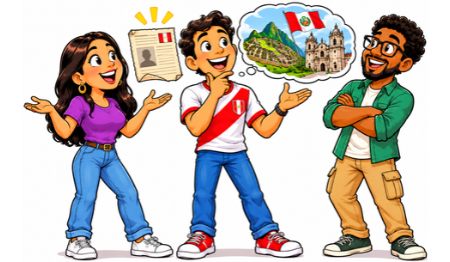
We Can’t Choose Where We’re Born
But we can choose where to put down roots and, above all, where to die. Because, as the Niche song goes: “Oh, if only I could choose the place where I’d like to die, it would be Peru, it would be Peru…”
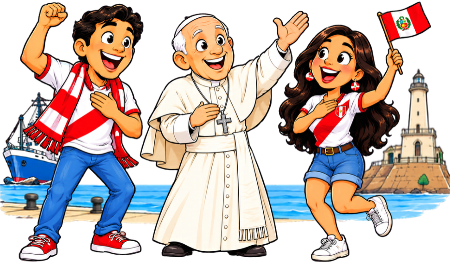
¡Chimpún Callao!
That’s right! ¡Chimpún Callao! Those were the words of the Peruvian Pope, spoken from the port city of Callao on the final day of his visit to our beloved Peru.
And that gives us evidence of his undeniable, non-negotiable Peruvian-ness—just like mine or Tania’s.
Not a Chance in Hell Would I Stop Being Peruvian
And that’s exactly what the Peruvian consul in San Francisco told me just days before I took the oath of U.S. citizenship:
“As far as Peru is concerned, you never stop being Peruvian unless you explicitly renounce it in writing.”
“Well, I’ll be damned if I give up being Peruvian,” I replied. Because, after all…
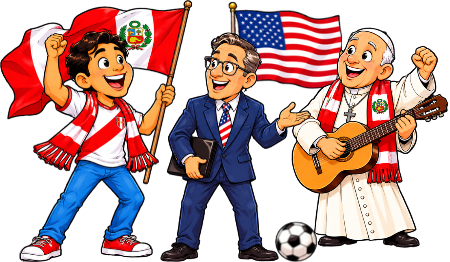
“¡Contigo Perú!”
All this came from my concern that, by taking the oath before the United States government, I might be voluntarily renouncing my previous nationalities.
And as the Pope might say, if the United States ever faces Peru in a soccer match, you can bet your bottom dollar I’d be shouting:
¡Arriba Perú, carajo! ¡Viva la patria, CSM! And, as Zambo Cavero would sing, “…I’ll give you my life, and when I die, I’ll join you in the earth, ¡Contigo Perú!”
Because Peru is both the cause and the consequence…
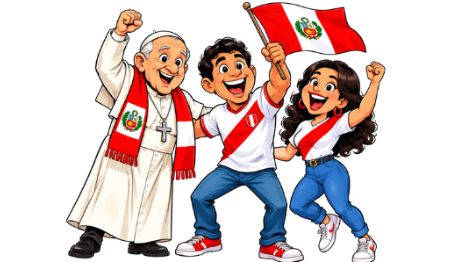
¡Habla, Causa! You In?
Because that’s part of the Pope’s vocabulary, too. Nothing says Peruvian quite like ¡Habla, causa! And I say that with good reason.
So the next time someone wonders whether a person is Peruvian enough, perhaps the right response is to turn the question around:
And who appointed you Inspector of Peruvian-ness?
Because, in the end, a Peruvian can be born in Lima, Chiclayo, Zaña, New York, Tokyo, or wherever the hell they damn well please.
You aren’t born Peruvian. You become one. And, well, a Peruvian is born wherever the hell they damn well please.
