
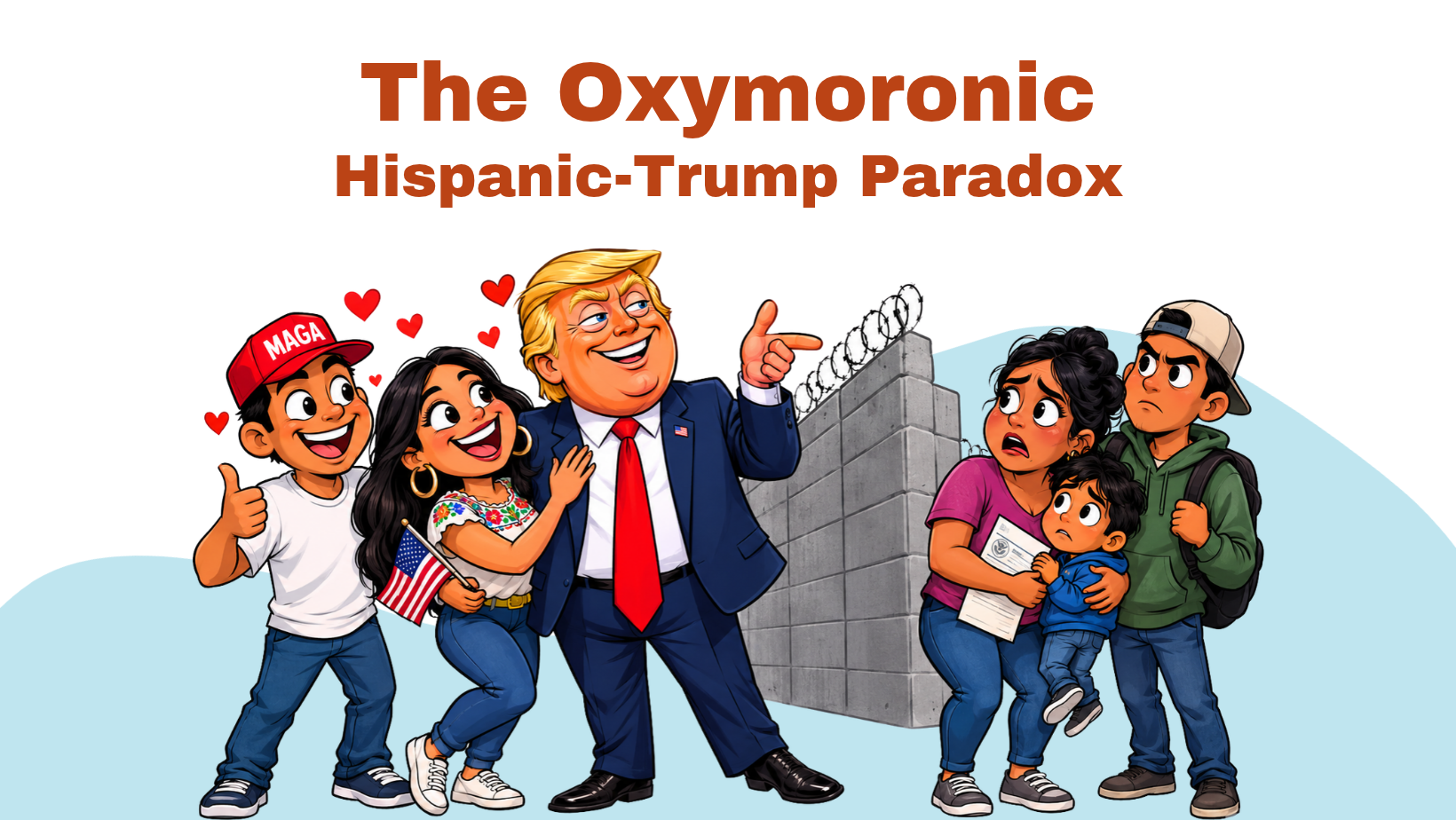
The More You Hit Me, the More I Love You?
As the Spanish saying goes, “Más me pegas, más te quiero.”
Can you love someone who punches you in the face? What if that person also tells you he loves you while building a wall to keep your people out?
Donald Trump insists he has loved Hispanics from the very beginning. Some applaud him, support him, and even vote for him. Others wonder how those declarations of affection square with his immigration policies and his rhetoric about who belongs and who doesn’t.
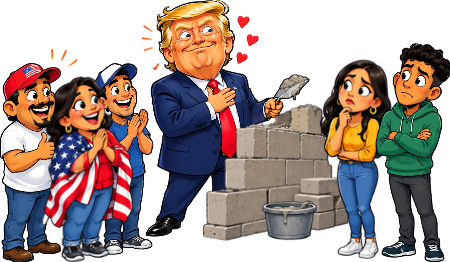
Is Anything Fair Game in Love & Politics?
Well, it seems that in politics, as in war, love comes with its own rules. Or at least its own set of excuses.
A contradiction? Shared interests? Political loyalty? Or does everyone simply hear what they want to hear?
Supporting a politician doesn’t necessarily mean agreeing with everything he does. But neither can we explain away every contradiction and then declare the matter settled.
And this is where things get interesting.
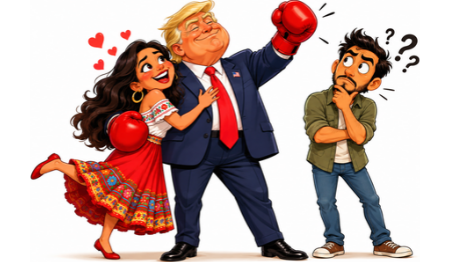
If You Enjoy the Itch, Don’t Mind the Scratch!
As we say in Spanish, “sarna con gusto no pica, y si pica no mortifica.” When you enjoy something, you don’t mind the discomfort that comes with it—or at least that’s the idea.
But in politics, who’s enjoying the itch, and who’s left scratching?
Why do some people continue supporting a politician even when his decisions may hurt them or people close to them? What weighs more heavily: ideology, self-interest, identity, or loyalty?
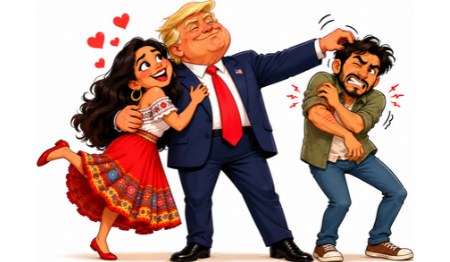
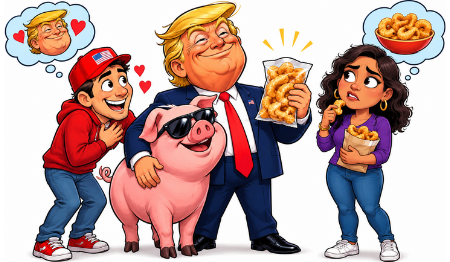
No es tanto el amor al chancho, sino a los chicharrones
That’s how the saying goes in Spanish. Why?
Because loving the pig is one thing; loving the pork rinds is quite another.
And in politics, as in certain complicated relationships, it’s worth asking who takes the punch, who gets the pork rinds, and who ends up convinced that the whole thing was done for their own good.
When Politics Isn’t Love, but Loyalty
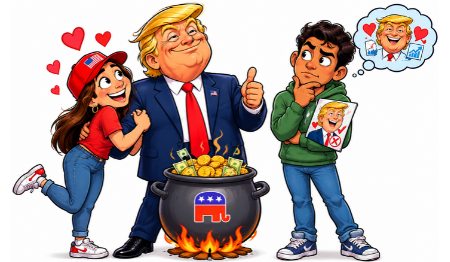
I’ll stick with you through thick and thin—as long as the pot doesn’t run dry.
As we say in Spanish, “Contigo, pan y cebolla, hasta que nos dure la olla.”
Politics isn’t exactly a romantic relationship, but some candidates seem to demand the same kind of fidelity.
Loyalty or Willful Blindness?
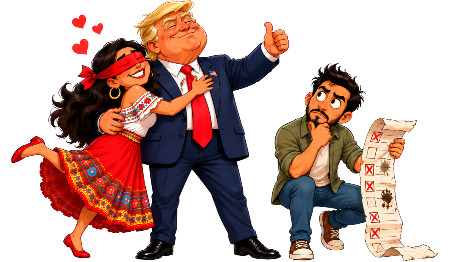
When you support someone, you can acknowledge that they make mistakes, criticize them, and even change your mind.
Or you can start looking for excuses for everything they do, especially when admitting a contradiction would force you to reconsider a decision you’ve been bragging about for months—or years.
The Comfort of Never Being Wrong
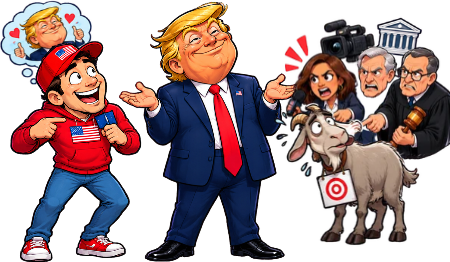
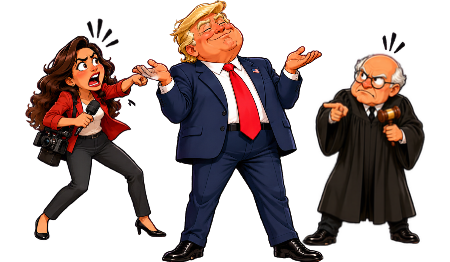
You can also decide that, actually, your candidate did nothing wrong and that the real problem is the press, the opposition, the judges, or anyone else who had the bad manners to point it out.
That last option is awfully convenient. You don’t have to change your mind; you just have to find a new culprit. Ah, the classic scapegoat! Someone else takes the blame, and the real problem gets to walk away untouched.
Blame Everybody Else!
And why stop there? If the press is lying, the opposition is corrupt, and the judges are out to get your candidate, then there’s no need to question the candidate at all.
What a relief! The whole world is wrong, but at least you don’t have to be.
When Politics Becomes Personal
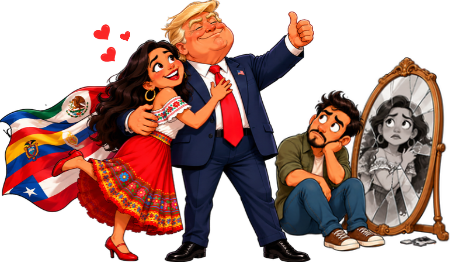
When identity enters the picture, things get even trickier. Criticizing a candidate can feel like betraying your party, your family, your community, or even the image you have of yourself. Suddenly, the argument isn’t just about policies anymore. It’s personal.
And once admitting a mistake feels like admitting you were the mistake, defending your candidate can become a way of defending yourself.
What’s in It for Them?
But loyalty, identity, and the need to justify our decisions don’t explain everything. We should also ask what supporters expect to get out of the deal.
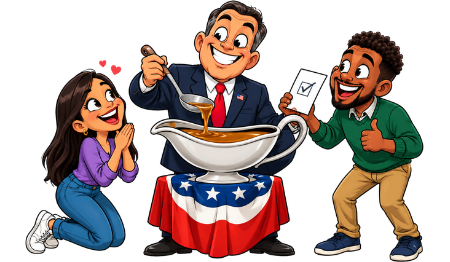
And the Blottos had a motto: “Kiss up, cast your vote, and keep the gravy boat afloat!”
What Does Mr. Trump-ass Offer?
More sucker punches? That’s probably it—and nothing more! Oh, you poor, deluded fools!
But let’s make one thing clear: understanding why someone supports a politician doesn’t mean excusing everything that politician does. And belonging to a community doesn’t obligate you to defend every decision made in its name.
It would be tempting to dismiss Hispanics who support Trump as fools or villains. But that would tell us very little about what draws them to him—or what they think they’re getting in return.
Why Do Some Hispanics Support Trump?
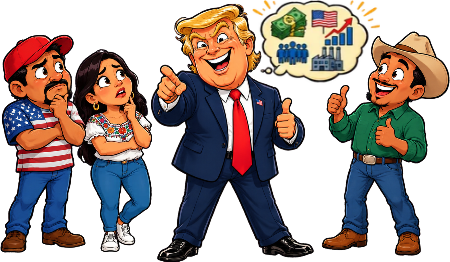
The million-dollar question isn’t what Trump offers them so much as what worries them most—and what they’re willing to accept in exchange. Or what’s he obtaining from them? ¿El chancho o el chicharrón?
There’s no single answer.
For starters, immigration isn’t the only thing that matters when people vote.
It sounds obvious, but apparently it needs repeating every time someone talks about Hispanics as though they were a political party with millions of members, one opinion, and a weekly meeting to decide how to vote.
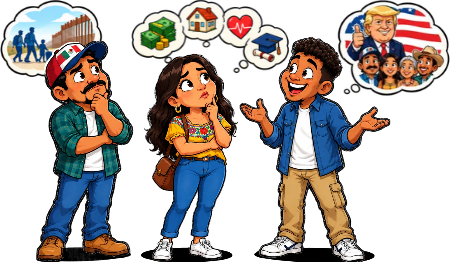
Socialism & the Pocketbook
For some, it starts with their wallets. They trust Trump’s promises to cut taxes, favor businesses, or control public spending. Because ideology is one thing, and making it to the end of the month is quite another.
Others put security, border control, or a tougher stance toward left-wing governments in Latin America first.
For people whose families have roots in Cuba, Venezuela, or Nicaragua, their countries’ experiences may weigh heavily when they reject proposals they associate with socialism. Some familia histories aren’t so easily forgotten—much less forgiven.
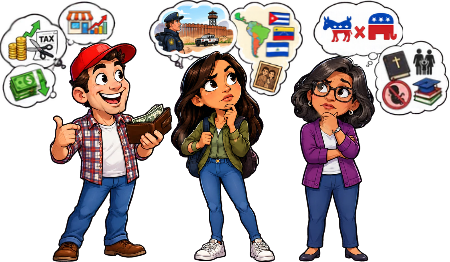
When the Democrats Don’t Deliver
Then there are those who distrust the Democratic Party, feel ignored by it, or believe its policies haven’t delivered what they promised. Others see Republicans as better representatives of their views on religion, family, abortion, or education.
And sometimes, voting isn’t so much about falling in love with one candidate as deciding that the other side has given you too many reasons to walk away.

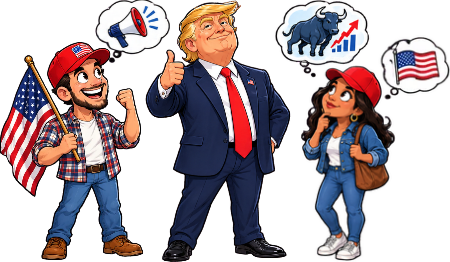
Some Just Like Trump
And then there are those who simply prefer Trump. They like his style, believe he says what others don’t dare to say, or interpret his attacks as a sign of strength. They don’t need to agree with every statement or every policy to give him their vote.
All these motivations can coexist. They can also vary from one person to another, one family to another, and one election to the next.
Now comes the less comfortable part: having reasons to vote for someone doesn’t make the consequences of that vote disappear. Why?
Because when you get to mix…
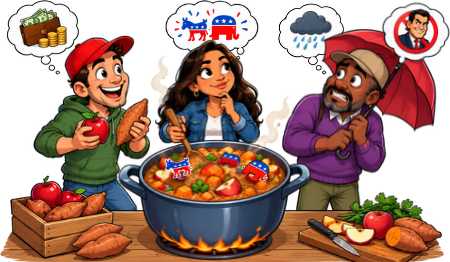
Apples with Oranges, to Later Add Sweet Potatoes…
What you get is a nasty Political Stew.
We don’t have to imagine that every voter has a perfectly calculated strategy, either. Sometimes people vote out of self-interest. Sometimes out of conviction. Sometimes out of fear. Sometimes because they hate the other candidate even more.
And sometimes because they’ve spent so long hearing that their team is right that they can no longer tell the difference between a reason and a slogan.
Your Roots Don’t Choose Your Party
The point isn’t that Hispanics should vote for one party simply because they’re Hispanic. Heaven forbid! As if sharing roots meant you had to subscribe to the same ideas! What utter nonsense! It’s not as though your DNA comes with a political party membership card.
The real question is whether voters are examining the consequences of the policies they support—or whether they’ve decided that, as long as the punch doesn’t land directly on them, the problem can wait.
But….
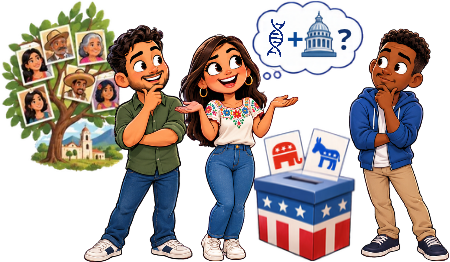
Who Exactly Are “The Hispanics”?
Here we should pause for a moment over the word at the heart of Hispanic Heritage Month.
Hispanic is not a race. It’s a category associated with Spanish language and cultural heritage, although its use varies by country, institution, and individual.
In the United States, Hispanic and Latino are frequently used to refer to populations that share certain histories and experiences but don’t necessarily share the same identity, interests, or political views.

Not All Latinos Are Mexican
A Mexican American in California, a Puerto Rican woman in New York, a Cuban American in Florida, and a Peruvian family that has just arrived in the United States don’t automatically become one uniform community just because a poll puts them in the same box.
And yet Trump knows that this category carries electoral weight. During his September 30 speech, he talked about having used the term Hispanics and having won elections, so he would keep using it.
He also boasted about winning historic Hispanic support for a Republican candidate.
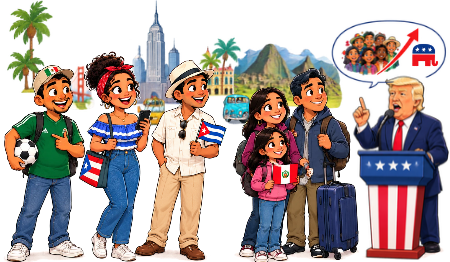
He Wasn’t Teaching Linguistics
He was talking about votes.
Why does he insist on Hispanic when Latino is also available? What’s the history behind these words, and what vision of America does each one evoke?
Well, as the saying goes, not everything is as alike as it looks. Hispanic and Latino aren’t entirely interchangeable categories. They aren’t absolute synonyms.
That conversation deserves a space of its own.
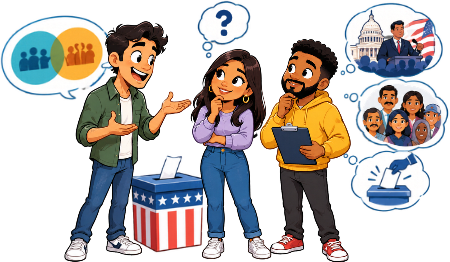
When LatinX Doesn´t Mean Republican
Much less Democrat!
For now, it’s enough to remember that a label can be useful for analyzing electoral trends, but it can’t explain by itself why millions of people make different choices.
Sharing a label doesn’t mean sharing a vote.
And just because a politician claims to speak for a community doesn’t mean that community has handed him a blank check.

Affection Is Measured by Actions
Let’s return to the White House.
Trump didn’t simply say he appreciated Hispanics. He described them as hardworking, intelligent, and energetic; insisted he had loved them from the beginning; and presented the wall as a way to keep bad people out. According to him, they wanted that protection more than anyone else.
The reasoning went something like this: You’re terrific—perhaps stupid, but I love you, my wall protects you, and just in case there was any doubt, many of you voted for me.
What more do you want? Pisco? Mariachis? A serenade?
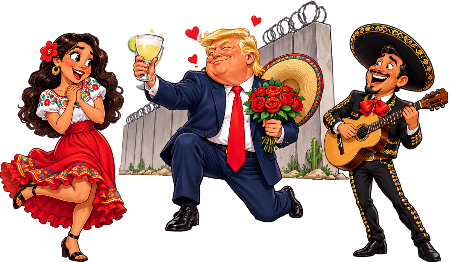
Political Compliments Come Cheap
A few pretty words, some cameras, and a speech that circulates on social media the next day. The hard part comes afterward, when we have to see whether the actions live up to all those declarations of love.
Although, in this case, the height of the matter was quite literal.
At least, that’s what President Sucker Punch told the guests at his little Hispanic shindig when he invited them to visit the construction site of the new White House ballroom he’s building:

“Don’t Fall Off the Edge, …
…because it’s a long way down. And only a Hispanic could survive that fall. So I’m not overly worried.”
There he goes again, invoking the stereotype of Hispanics as manual laborers—and, above all, as people capable of taking a beating, surviving it, and even applauding their executioner… then voting for him.
But the real question is: how much can you insult someone before they stop applauding you?
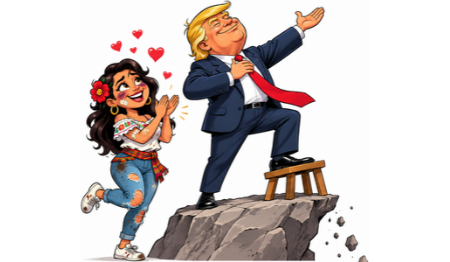
Call Me Names—I’ll Still Vote for You!
After all, Trump himself admitted it without batting an eye just days ago at a rally in Tennessee: “I could say the stupidest things, and you would applaud.”
And boy, was he right. The crowd applauded and laughed, and a woman standing behind him nodded along and repeated:
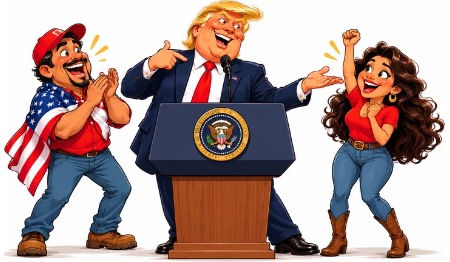
“That’s True!”
Because being invited to the party is one thing; being assured that you won’t be thrown out of the house is quite another. But is it true?
Yes, it’s true! It’s the raw, unvarnished reality we’ve been handed. That’s just the way it is!
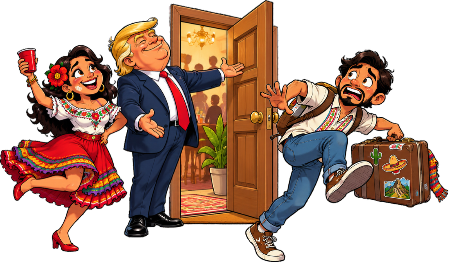
From Speech to Reality
A declaration of love looks wonderful in the White House ballroom. But what happens when a family fears deportation? Or when someone who has lived in the country for years suddenly wonders whether, in the government’s eyes, they belong in the category of good people or bad people?
That’s when the speech starts being measured by a different yardstick.
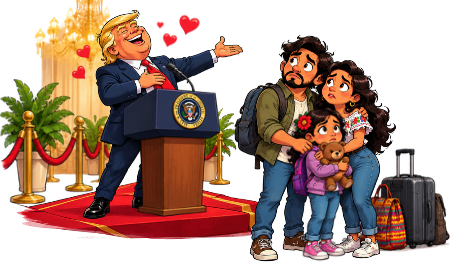
Real Life Doesn’t Fit in a Box
And we shouldn’t lump everyone together, either. Not all immigrants have the same legal status; not all Hispanics are immigrants, and not all immigrants are Hispanic.
Labels help us talk about groups, but real life has an annoying habit of complicating our generalizations.
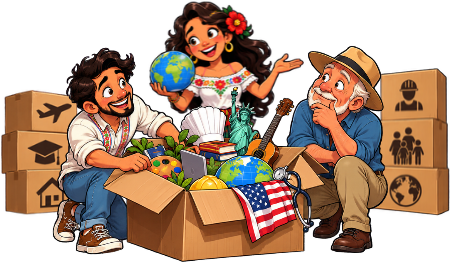
And sometimes, if we’re lucky, that’s when we realize that democracy also comes with responsibilities.
Your Vote, Your Responsibility
But you have to own your choice when the heat is on, too. Better safe than sorry—and perhaps it’s time to start thinking about what could happen next.
You don’t have to support a more open immigration policy to insist that the rules be clear, that procedures be fair, and that people’s rights be respected. You can want a controlled border without giving anyone carte blanche to do whatever the hell they please.
When Love Translates into Power
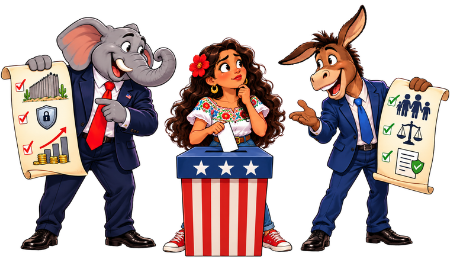
And yes, you can vote Republican, Democrat, or for neither party. Your ballot is yours. The important thing is to know what you’re backing when you cast it.
If there’s only a fine line between love and hate, what happens when that love translates into power?
What Do You Do With Power?
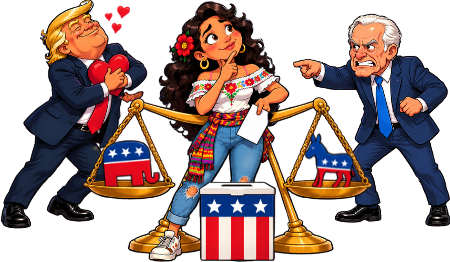
Calling someone hardworking, intelligent, religious, or patriotic sounds wonderful. Shaking their hand, inviting them to the White House, and dedicating an entire speech to them sounds wonderful, too. Lovely stuff.
But compliments aren’t public policy. And applause doesn’t prove that a policy is working.
Beyond the Compliments
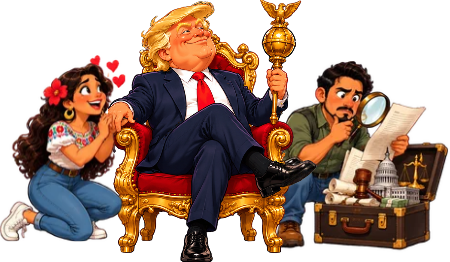
Ultimately, we have to look at what a politician does with the power you’ve helped him obtain. Not just what he says from a podium, or how good he makes you feel when he assures you he loves you.
And this isn’t just about Trump. No politician should be allowed to substitute compliments for facts and expect that to be enough.
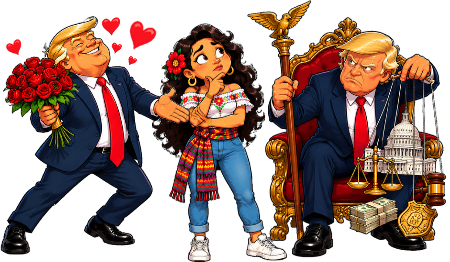
First the Sucker Punch, Then the Sweet Talk
A politician can praise a community while simultaneously promoting measures that affect some of its members. His supporters can endorse certain policies, reject others, or convince themselves that the negative consequences will fall on somebody else. And those of us watching from the outside can try to understand their decisions without reducing millions of people to a caricature.
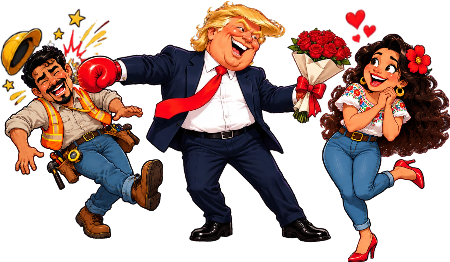
When Sweet Talk Meets Reality
Understanding why someone accepts a punch doesn’t turn that punch into a caress.
“I’ve loved you from the beginning” is an easy thing to say. The question is what that love means when it’s time to govern.
Because in politics, it’s not enough to listen to someone tell you they love you.
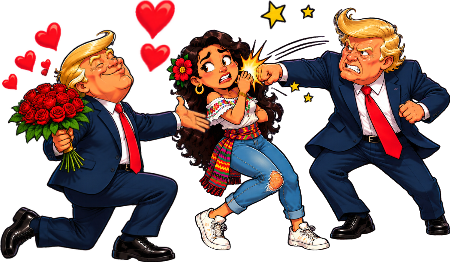
Love Isn’t Governing!
It’s also worth looking at who’s actually taking the punch—and whether they’ve come to believe they deserve it.
Because by this point, that old saying sounds less like wisdom than a warning:
“He who loves you will make you cry.”
