
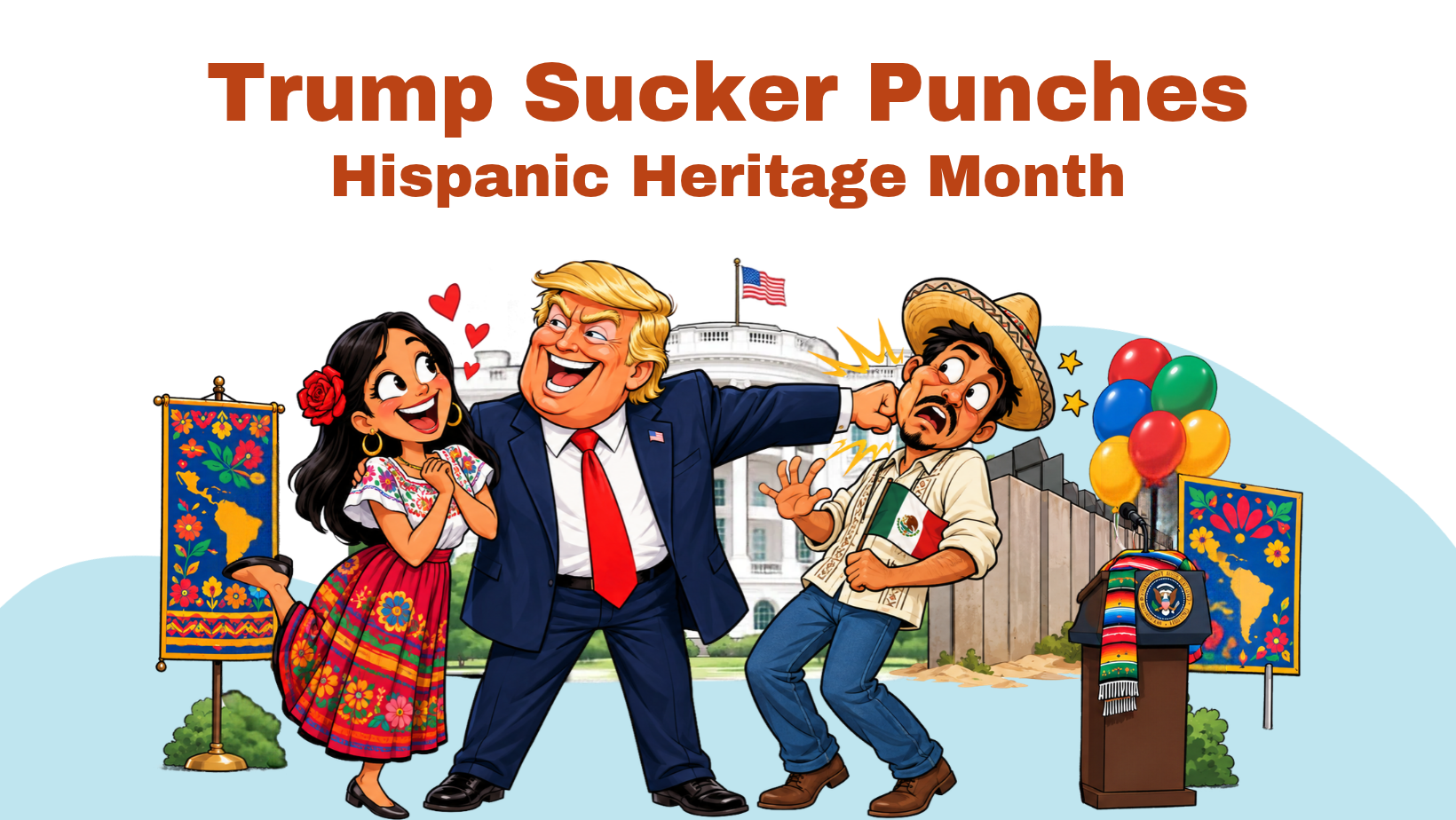
“I’ve Loved You Right from the Beginning”
On September 30, 2026, President Donald Trump welcomed a group of people to the White House to celebrate Hispanic Heritage Month.
Yes. That Donald Trump.
A.k.a. Donald, the Mogul. The Commander-in-Chief. The man, the myth, the orange, the Non, Plus, Ultra, Uber… well, you get the picture.
Although, some people just call him Tiny Hands. But shhh… Nobody knows about it.
And no, this isn’t a fake KDF post, a meme cooked up by someone with way too much time on their hands, or a headline from The Onion.
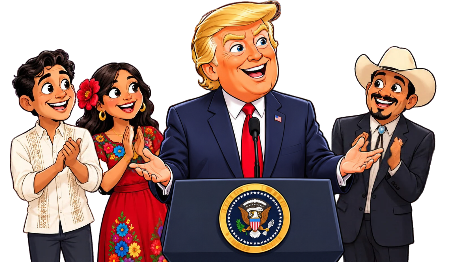
No Way, Jose!
Yes Way, Mamey!
There’s video. There’s a speech and everything. And he actually went out of his way to praise Hispanics—we assume he meant the ones in the room and the millions who weren’t.
Although with Trump, you never know. One minute he’s singing your praises, the next he’s explaining why people like you are the problem.
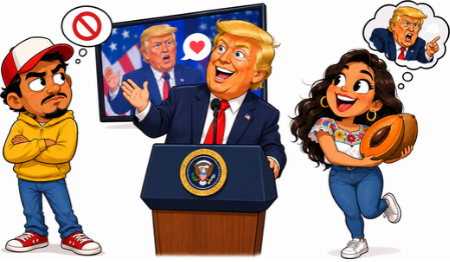
Not Even Homer Would Do It!
And no! We are NOT talking about the Greek poet.
Trump’s logic sometimes makes Homer Simpson look like a professor of political science.
The man’s political positions seem to change depending on which way the political wind is blowing. And sometimes, it’s just Gone with the Wind.
But let’s get to the good stuff.
Because, honestly, I wouldn’t have been all that surprised if he’d suddenly declared:
“I’m Hispanic Too!”
¡Habla, causa! (What’s up, dude?) I’m Peruvian! And my name is Donaldo.
Okay, he didn’t actually say that. But give him some time, please!
Trump started talking about Hispanics, and after a few minutes of the usual Trump show, he delivered the sort of declaration that could make you wonder whether you’d accidentally wandered into a romantic comedy—or a hostage negotiation.
“You’re hard-working people. You’re smart as hell. You’re energetic, sometimes too energetic.”
So far, so good.
And then came the kind of line that, depending on who’s saying it, can sound either like a declaration of love or a threat delivered with a smile:
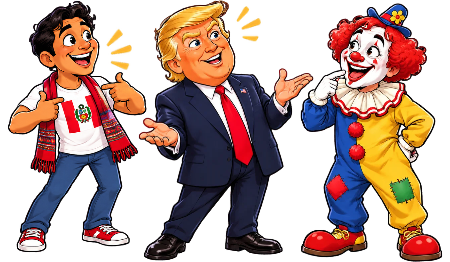
“Bésame el poto”? (Kiss my Ass)
Wait. Wrong show.
That was John Wayne Gacy’s department, the infamous killer who performed as a clown.
Not exactly the comparison you want coming to mind during a presidential celebration of Hispanic heritage.
But let’s not get ahead of ourselves. We still have our orange Clown-in-Chief to deal with.
And then came…
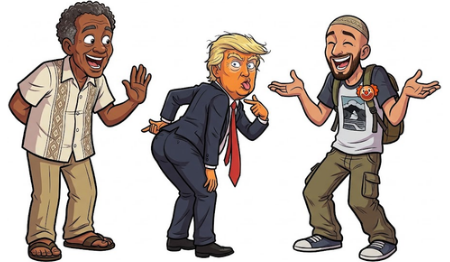
The Line Nobody Was Surprised to Hear
Well, maybe nobody was surprised. But the line was still something else.
Trump declared:
“But you’re incredible people, and I’ve loved you right from the beginning.”
Okay… 😂
From the beginning of what? The beginning of time? The beginning of his political career? Or the moment someone explained that Hispanics vote, too?
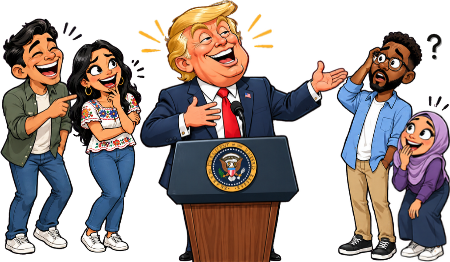
Because Donald Wasn’t Done!
He also reminded the audience of another little detail in his relationship with the Hispanic community:
“You also know when I build a wall, I’m building a wall to keep bad people out, and you want those bad people kept out more than anybody.”
Ah, yes. The wall.
Now I get it! He’s doing it out of love. It’s practically a Valentine’s Day card, except the card is made of concrete and comes with border enforcement.
How romantic!
But not even…
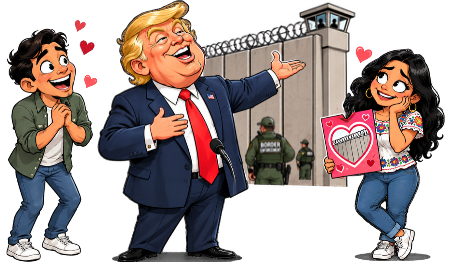
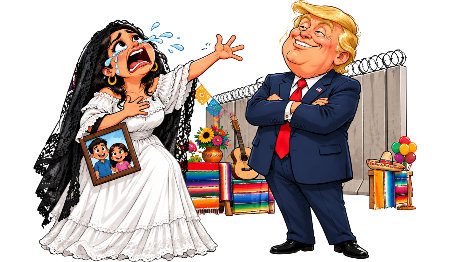
La Llorona Wouldn’t Have Gone That Far
Talk about drama!
“Mis hijos, ¿dónde están mis hijos?” (“My kids, where are my kids?”)
Seriously, though. The wall? At a Hispanic Heritage Month celebration?
O sea… What about that wall? Where exactly does it fit into this love story?
Yeah, yeah, yeah… Come on, bro! We’ve heard that story before.
Can I Raise My Tiny Hand?
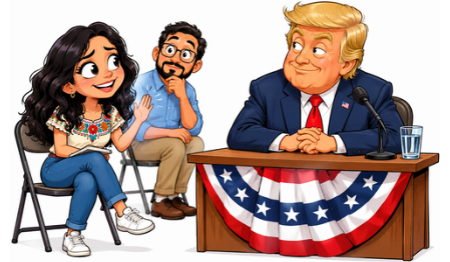
You almost expect someone in the room to raise a hand and ask, very politely, while making sure not to look him in the eyes long enough to turn to stone:
“Excuse me, Mr. President. Just checking: we’re celebrating Hispanics today, right?”
Of course, you’d want to ask before he turned you into a campaign ad.
The Scene Practically Writes Itself
Imagine inviting someone to dinner, telling them how much you love them, and then spending the rest of the evening explaining why you’re reinforcing the front door to keep people like them out.
“Don’t take it personally, sweetheart. It’s for your protection.”
And there it is. The political equivalent of I hurt you because I love you.
But hey, who said politics had to make sense?

Immigration: His Favorite Political Hobbyhorse
For years, Trump has made the fight against immigration one of the central pillars of his political message. And yet, he can stand before a Hispanic audience and assure everyone that he’s loved them from the beginning.
You’ve got to hand it to him: the man doesn’t seem to suffer from an excess of embarrassment.
Or perhaps embarrassment simply isn’t invited to these events.
Love & Hate Can Fit in the Same Room
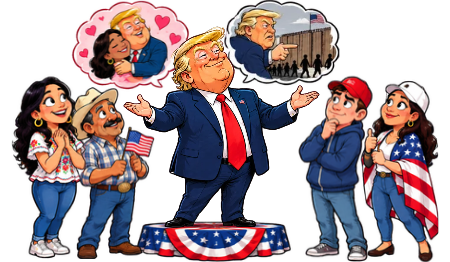
Because apparently, he sees no problem with putting two very different messages in the same room: I love you and I’m building a wall to keep people like you out.
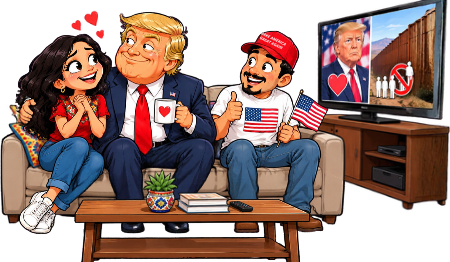
And some Hispanics support him. They vote for him. They defend his policies. They believe his priorities align with their own.
So What’s Going On?
Do some people actually enjoy taking a political punch? Is this a case of love making people blind? Or do we need a little psychoanalysis to figure out what’s happening inside the mind of a Trump supporter?
Before we start handing out diagnoses, though, let’s ask a more useful question.
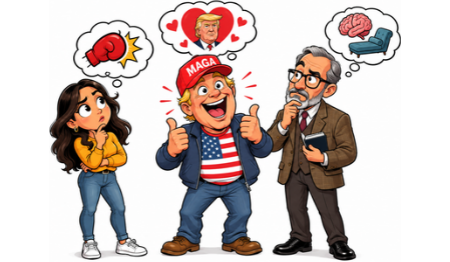
What’s Going on Inside a Trump Lover’s Head?
Why does anyone support a politician?
What makes someone trust a public figure and keep defending that person even when everyone around them seems to be asking, “Are we watching the same movie?”
Is it ideology? Personal experience? Loyalty? Self-interest? Or something that goes beyond a candidate’s actual policies?

Politics Doesn’t Happen in a Vacuum
Every Trump supporter has their reasons. Some care about the economy. Others care about immigration, religion, or issues they believe the Democrats have got wrong. Some like Trump himself. Others may not like the man at all, but they’ll vote for him anyway.
Politics isn’t always about loving your candidate. Sometimes it’s about disliking the alternative even more.
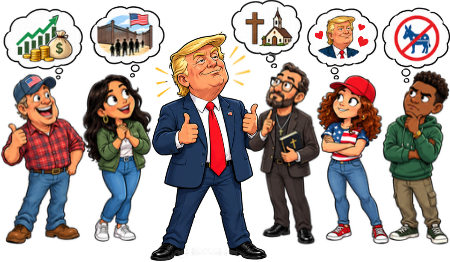
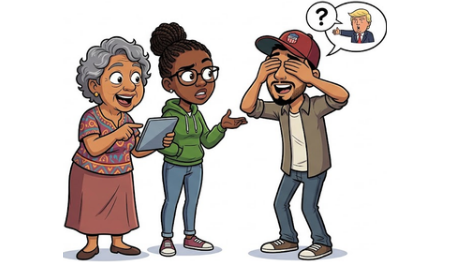
When Hispanics Turn a Blind Eye
And when we try to understand why someone supports a politician like Trump, the question isn’t just what they see in him.
It’s also what they’re willing to overlook—and, perhaps more importantly, what they’re willing to accept in his name.
Because there’s a difference between understanding someone’s reasons and pretending those reasons make every consequence disappear.
Politics of Ceviche with Mango
Politics isn’t a restaurant menu where you pick the tax cuts, public safety measures, and campaign promises you like, then send the immigration policies you don’t like back to the kitchen.
“Excuse me, I’d like the lower taxes and the tough-on-crime package. Hold the deportations, please. And absolutely no mango in my ceviche. I’ll have black-shellfish ceviche, extra spicy, and a nice cold beer.”
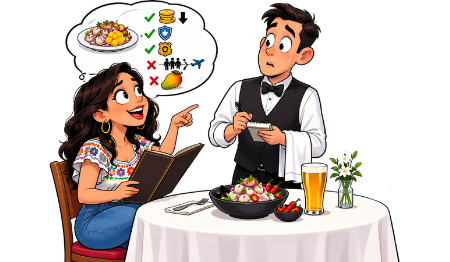
Sorry, We Don’t Roll That Way!
Sorry, folks. That’s not how it works.
Although, for the record, mango in ceviche is a culinary controversy we can discuss another day.
When you vote for a candidate, you’re helping put that person in a position to implement an entire political agenda—not just the three items you circled on the menu.
You don’t get to order the combo and then act surprised when the rest of it arrives at your table.

Not Guilty, but Still Responsible
Does that make every voter directly responsible for every decision a government makes?
Absolutely not.
Nor does it mean that every voter knows exactly what a candidate will do once in power. Politics is complicated, promises change, and governments make decisions that voters may never have anticipated.
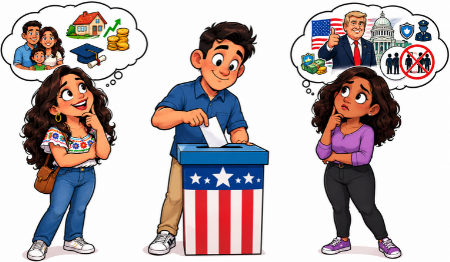
The One Million Question
But voting for someone because they promise to solve your problems means accepting that they’ll govern according to a broader agenda than your personal wish list.
And that brings us to the question that really matters:
What do some Hispanic voters consider more important than the consequences of Trump’s immigration policies?
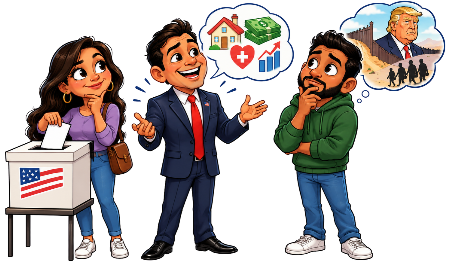
Well, Every Mind Is Its Own World
And every mind in its own head! Speaking of heads, have you ever looked at Trump’s hair? Just look at Trump’s hair. It sometimes seems as if he’s got a cat sitting on his head. The thing doesn’t merely look like it might meow; it seems more likely to bark—or, on a bad day, howl.
But back to the subject.
For some voters, the answer is the economy. For others, it’s public safety, religion, opposition to the Democrats, or the conviction that immigration rules should be enforced more strictly.
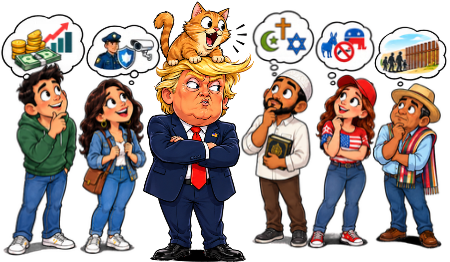
We All Got Our Priorities!
Some may believe the policies won’t affect them directly. Others may understand that people around them could suffer but still believe that other priorities outweigh those consequences.
We can debate those priorities. We can ask whether the promises are being kept, whether the policies work, and who’s paying the price.
What we can’t do is pretend the contradiction disappears simply because we’ve found an explanation for it.
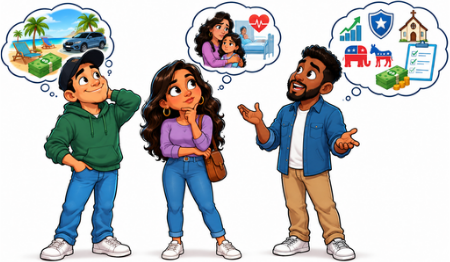
Vallejo Talking About Blows
As the Peruvian poet César Vallejo wrote in his famous poem The Black Heralds, there are blows in life that are so powerful…
“Hay golpes en la vida, tan fuertes… ¡Yo no sé!
Golpes como del odio de Dios… “diría Cesar Vallejo.
And some political blows, apparently, come with a complimentary hug.

Golpe con Golpe, Yo Pego
TuBlow for Blow, I Hit Back…
That’s the spirit of a famous cumbia song.
But what happens when someone feels that a politician punches them with one hand and offers affection with the other?
How do they end up interpreting the punch as something aimed at other people? As a necessary price for keeping society safe? Or even as proof that the politician is protecting them?

“I Hurt You Because I Love You”
In Spanish, there’s a familiar expression for relationships in which affection becomes an excuse for aggression:
Porque te quiero, te pego.
“Because I love you, I hit you.”
The political version is especially convenient. After the punch, there’s always time to explain that it was for your own good.
And that’s where things get interesting.
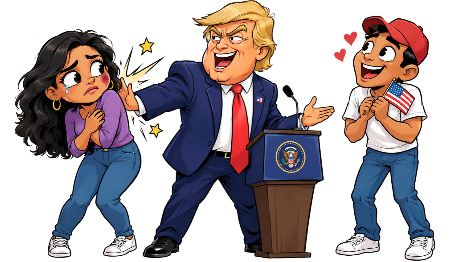
The Punch Comes with Instructions
There’s one part of Trump’s speech that deserves more attention than his declarations of love.
After assuring his audience that he had loved them from the beginning, Trump explained that when he builds a wall, it’s to keep “bad people” out.
He also claimed that Hispanics themselves want those people kept out more than anyone else.
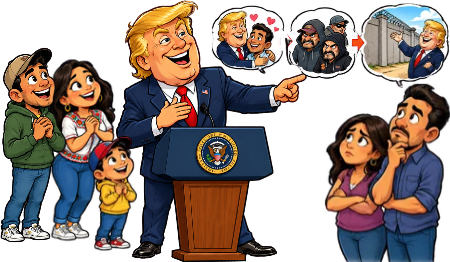
I’m Protecting You, You Know?
Now, that’s a neat little rhetorical trick.
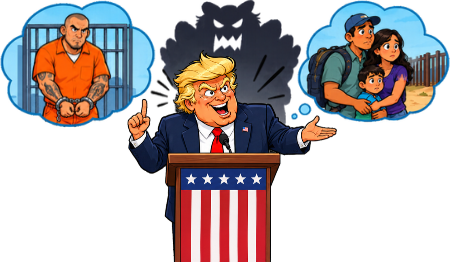
First, flatter your audience. Then point to a threat. Finally, explain that the very measure that could hurt people in their community is actually designed to protect them.
And just like that, the wall isn’t the problem anymore.
The problem is whoever you’ve been told is standing on the other side of it.
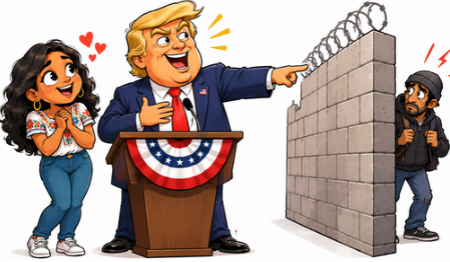
The Problem Is the Bad Guys
Or maybe it’s you, if you just can’t seem to understand what Daddy Donny is telling you.
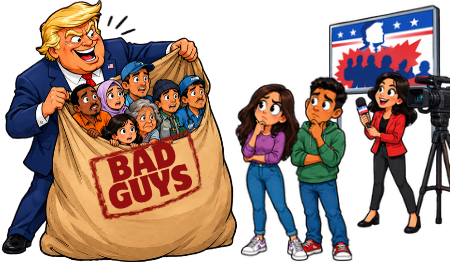
But who exactly are these bad guys?
Convicted violent criminals? People who crossed the border without authorization? Families who have lived in the United States for years? Someone who works, pays their bills, and has children who consider America home?
Or does everyone end up in the same bag the moment someone says immigration with enough dramatic flair?
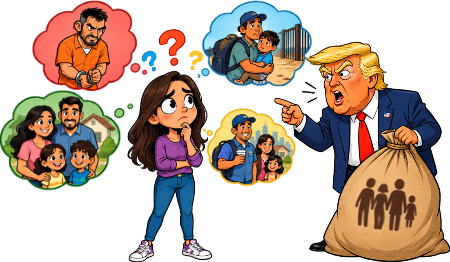
No Exchanges Accepted!
These are not interchangeable situations. But political campaigns have a remarkable talent for stuffing different people and circumstances into one big bag, slapping a scary label on it, and shaking it in front of the cameras.
Nuance doesn’t fit on a campaign bumper sticker.
Fear, on the other hand, travels beautifully.
When MALO Doesn’t Mean Good
The word bad does a lot of heavy lifting.
It doesn’t have to distinguish between a violent criminal and someone whose immigration status is irregular. It doesn’t have to explain which policy would address which problem. It doesn’t even have to establish that everyone being targeted poses the same kind of threat.
All it takes is for the audience to accept that there’s a danger and that the person speaking is the one who can keep it under control.
It’s Not About YOU
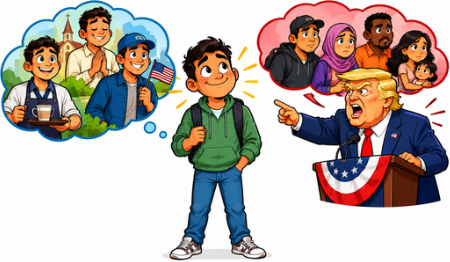
And if you consider yourself hard-working, law-abiding, religious, conservative, or simply someone who wants to live in peace, you can tell yourself that the speech isn’t about you.
It’s about the others.
You’re different. You’re one of the good ones. You deserve to be here.
Phew! Dodged that Bullet
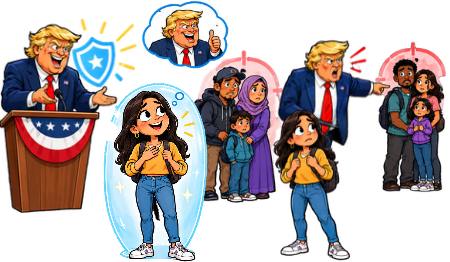
That’s one of the most effective tricks of identity politics: convincing people that even though they belong to a group being singled out, they’re somehow the exception.
You’re not one of them.
You’re one of the people the politician claims to be protecting.
And that distinction can feel awfully reassuring—right up until somebody else decides it no longer applies.
Until Someone Decides You’re Not
Because when they come for you, it may already be too late. And there may be no one left to speak on your behalf.
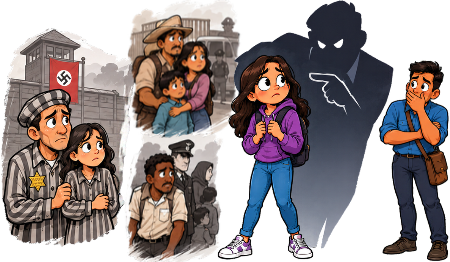
Martin Niemöller’s famous warning about the consequences of remaining silent as the Nazis persecuted one group after another still resonates today. The historical circumstances are not identical, and we shouldn’t pretend they are.
Funny How That Works, Huh?
But the underlying question remains uncomfortable: what happens when people assume that a threat will never reach them because, for now, it’s directed at someone else?
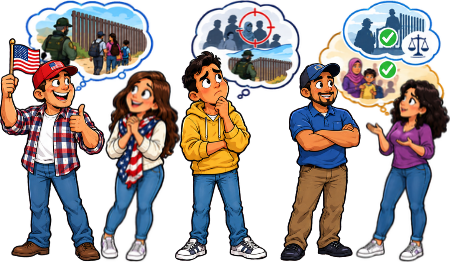
Of course, not everyone who supports tough immigration policies is fooling themselves.
Some people knowingly support those policies, even when they understand that other members of their community may be hurt. Others believe border control is necessary and that enforcing immigration law doesn’t have to mean abuse, indiscriminate punishment, or sweeping generalizations.
Those Are Different Positions
We can debate them without pretending they’re all the same.
But one uncomfortable question remains: What happens when a policy presented as protection for some ends up hurting others who share their language, history, family ties, or place of origin?
And why do some people accept that contradiction?
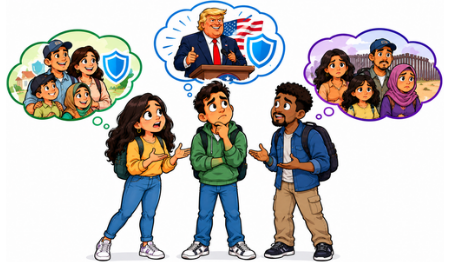
Is it possible to become so convinced that a politician is protecting you that you stop recognizing the ways that politician might also put you at risk?
Political Stockholm Syndrome?
Now we’re getting into uncomfortable territory.
Enter Stockholm syndrome.
The term became popular to describe situations in which a person held captive or threatened develops feelings of sympathy or identification with the person holding them captive. Its psychological interpretation is disputed, and it isn’t a diagnosis we can hand out in an opinion column like raffle tickets.

Not Necessarily an Assessment
So, let’s not pretend we’re conducting a clinical assessment of millions of voters.
What interests us here is the image: someone gets hit but ends up defending the person delivering the blow because they believe that same person can also protect them.
The person causing the harm becomes, in their eyes, the person who will save them from something worse.
And that brings us to the question we’ve been circling all along.

Is That Why Hispanics Support Trump?
It’s a deliberately provocative question. It doesn’t mean we can diagnose millions of people or claim that every Trump voter is incapable of thinking for themselves.
If that were our conclusion, we could save ourselves the trouble of writing this article and just spend the afternoon throwing insults around online. Apparently, that’s a full-time occupation for some people.
The More Interesting Question Is This:
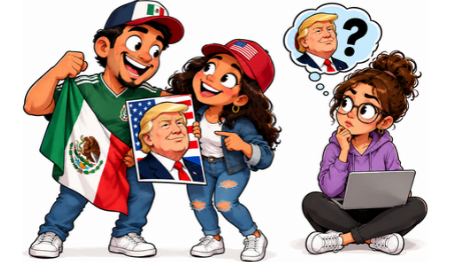
Why might someone see a policy as a threat to other people while assuming it could never reach them, too?
Someone may believe their citizenship, financial situation, last name, religion, or family history puts them beyond harm’s reach. They may think deportations affect people who break the law, not people like them.
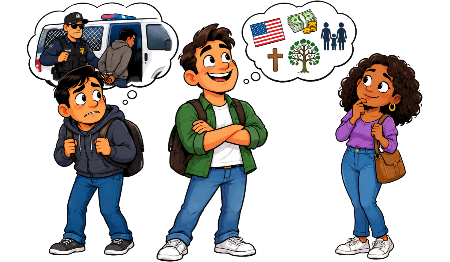
It’d Never Get Me!
They may dismiss warnings about negative consequences as exaggerations by political opponents. Or they may accept that there will be collateral damage because they believe the overall result is worth it.
You have to break a few eggs to make an omelet, right?
And sometimes, there’s a much simpler reason.
They don’t like the alternative.
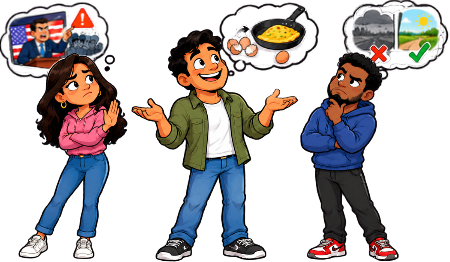
So, Who’s Getting Punched?
Let’s face it. You don’t have to love Trump to vote for him. You don’t even have to like the guy. Sometimes, all it takes is thinking the other option would be worse.
Fair enough. Politics isn’t exactly a fairy tale, and elections don’t always offer us a prince charming. Sometimes, you just pick the lesser evil and hope it doesn’t eat the furniture.
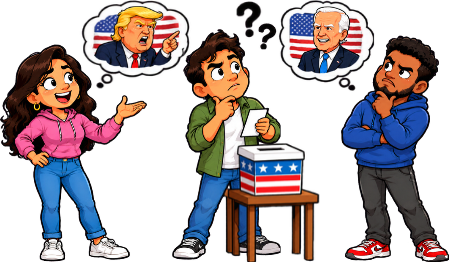
Nobody Gets a Free Pass!
But here’s the catch: just because you don’t like the other guy doesn’t mean your guy gets a free pass. And just because a politician tells you he’s protecting you doesn’t mean you should stop asking questions.
You can want secure borders. You can demand that immigration laws be enforced. You can vote Republican, Democrat, or for the guy promising to drain the swamp while bringing his own alligator.
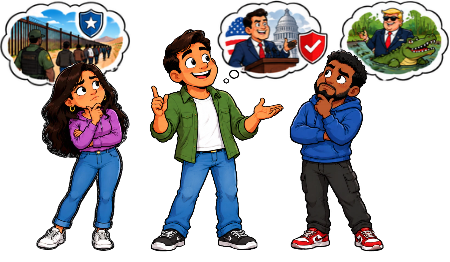
It’s Time to Look Beyond our Noses
But sooner or later, you have to look beyond your own front door.
Because the people getting hit aren’t always strangers. They may speak your language, share your history, worship in your church, or sit across the table at your family gatherings.
Hell, they might even have voted for the same guy you did.
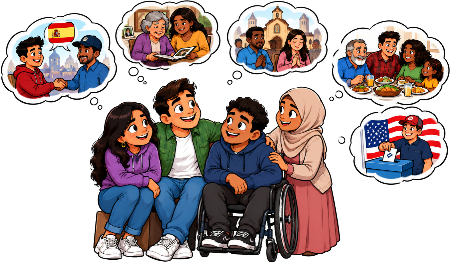
Love Hurts. Politics Does, Too!
Or even better, as Manu Chao would say it: Politik Kills
So, Donald, let’s go back to that little declaration of love.
You’ve loved Hispanics right from the beginning? How sweet!
And the wall? That’s love, too? A little concrete here, a little border enforcement there, and voilà! A Hispanic Heritage Month celebration nobody will forget.
Who needs roses when you’ve got a wall?
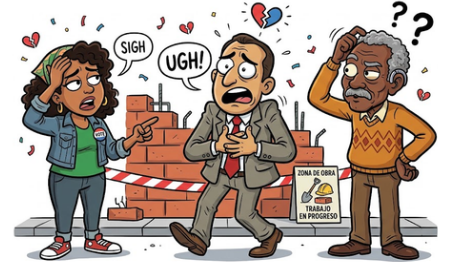
And the Punchline Is…
But jokes aside, here’s the problem: when someone tells you they’re protecting you, it’s worth asking who they’re protecting you from—and who gets hurt in the process.
Because a political punch doesn’t magically become a hug just because the person throwing it says, “I did it for your own good.”
And if some of the people taking that punch happen to be your neighbors, your relatives, or people who look a lot like you, maybe it’s time to take another look at the guy throwing it.
Because calling it love doesn’t make it any less of a sucker punch.
