
On Identity, Belonging, and Nationality
What if I told you Luis Miguel isn’t Mexican? What would you say?
Whaaaat?!
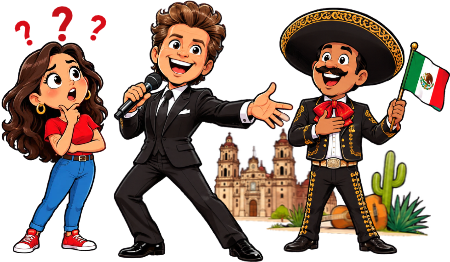
Yep! Luis Miguel, the one and only Sun of Mexico, wasn’t born in Mexico. His father, Luisito Rey, a Spanish entertainer, cooked up that little fiction after recognizing his son’s potential in the land of the Aztecs.
Luis Miguel was born in Puerto Rico, and when he was about a year old, his family moved to Mexico. His father then made sure everyone believed Luismi had been born in Veracruz, making him a bona fide jarocho.
So, basically…
The Sun of Mexico Wasn’t Born Mexican?
You got it!
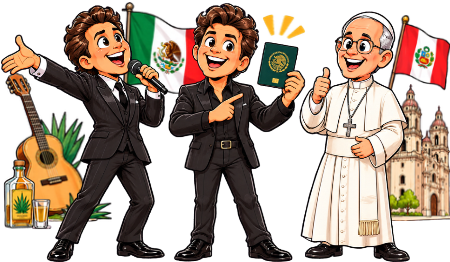
Despite that, I doubt anyone would dare question his Mexican identity. He considers himself as Mexican as tequila, so much so that he voluntarily became a Mexican citizen in 1991.
And Luis Miguel is hardly the only example. We could name plenty of others, not just in Mexico but around the world. Pope Leo XIV in Peru, for instance, brings us to our next question:
National Identity: Are You Born with It or Do You Become It?
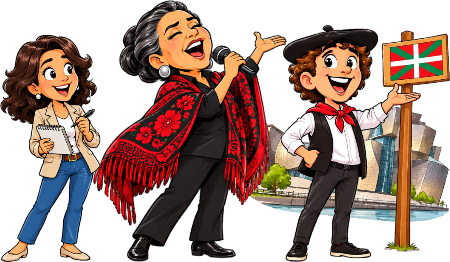
We could keep going with examples. Take Chavela Vargas, the most internationally celebrated ranchera singer, who was born in Costa Rica. She is often credited with the famous line, “Mexicans are born wherever the hell we damn well please!” —which, incidentally, she didn’t come up with.
Nor was that phrase part of the personal repertoire of Doris Gibson, the Arequipa-born journalist who wielded it against Lima’s centralism in the mid-twentieth century.
All right, enough already! But then…
Where the Heck Did That Saying Come From?
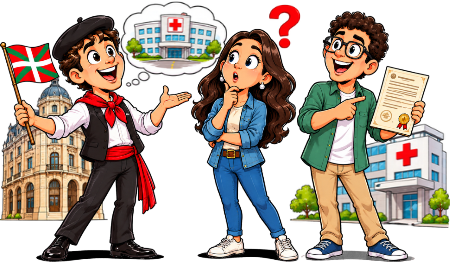
As a matter of fact, the famous saying became popular in Bilbao as a clever way of saving regional pride when the locals had to put their hospital in a neighboring district.
So now you know: even some of our most patriotic battle cries started with a bureaucratic headache.
And there are plenty of other examples like these around the world. Let’s take a look at a few more, as clear as mud:
Isabel Allende Was Never Peruvian
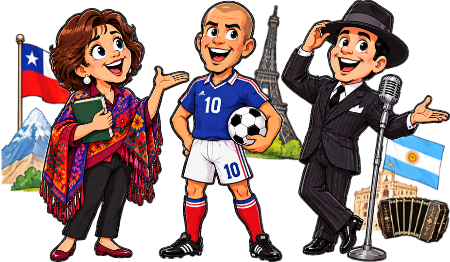
Exactly! Despite being born on Inca soil, she has always proudly considered herself Chilean. And good for her!
We could also mention many of the Founding Fathers of the United States and the legendary Carlos Gardel, an icon of Río de la Plata culture, who is believed to have been born in France.
Could we come up with more examples? Of course! But let’s take it one step at a time, as Jack the Ripper would say…
Examples Galore!
César Acuña style!
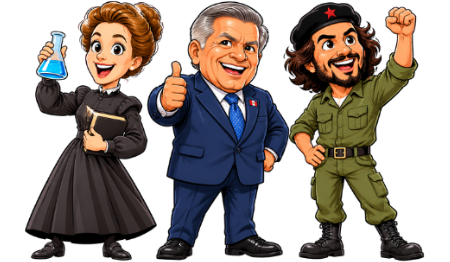
The list seems endless. We could go on in aeternum, naming famous people such as Marie Curie, Zinedine Zidane, Che Guevara, Julio Cortázar, and countless others who, at some point in their lives, identified more closely with the place where they grew up or built their professional lives than with the place where they were born—or perhaps with both. Why not?
And there’s a good reason for that! Everything we’ve discussed so far brings us back to the original thesis of this article:
What Makes Someone Peruvian?
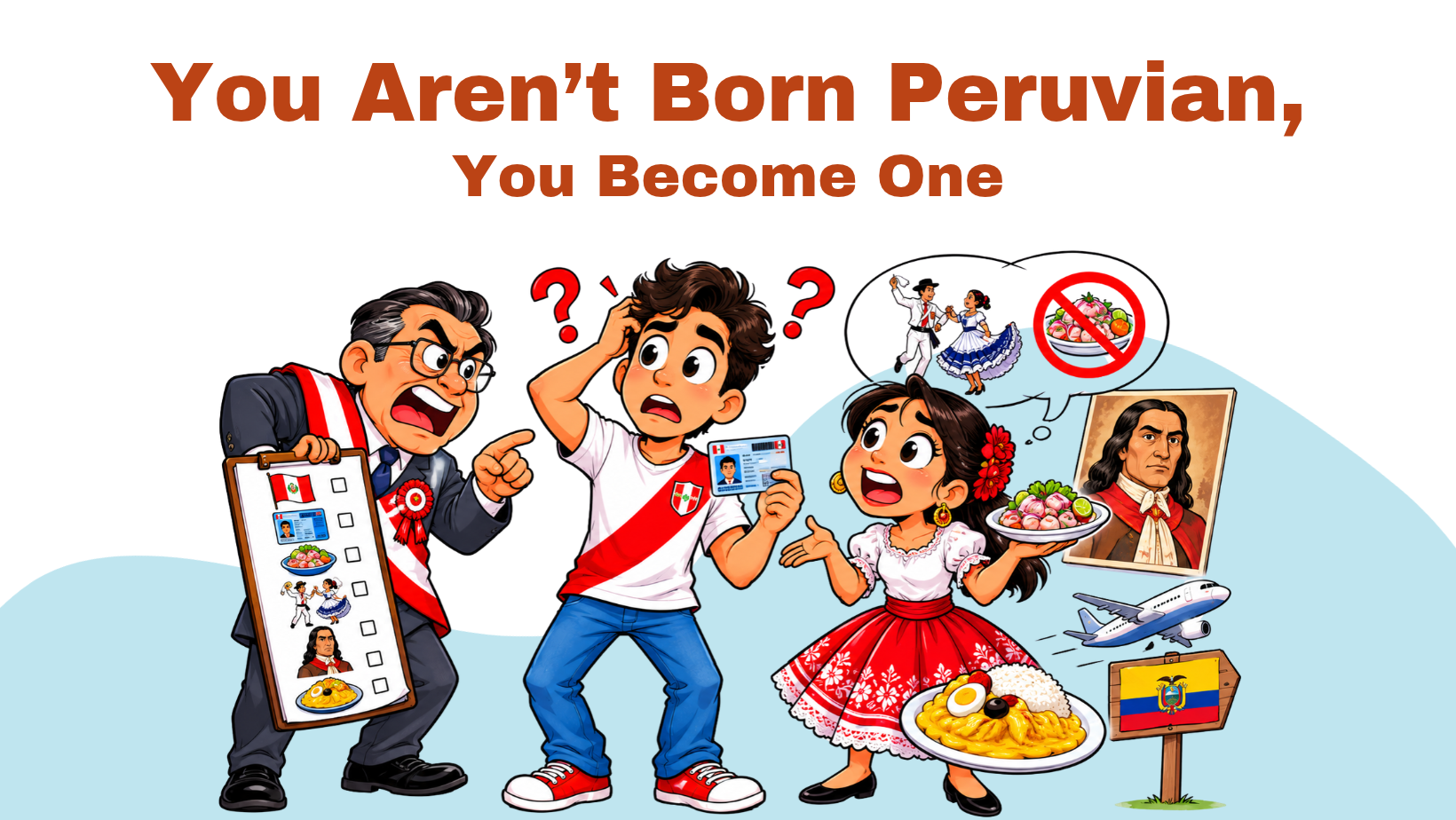
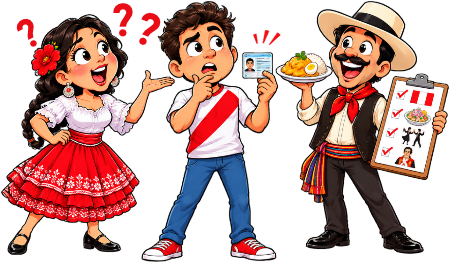
Being born in Peru? Having a Peruvian ID, speaking Spanish, eating ceviche, dancing the marinera, or knowing who Túpac Amaru was? And if you don’t like ceviche, do we revoke your citizenship? If you can’t dance the marinera, do we deport you to Ecuador?
Watch out now!
Apparently, to be Peruvian, you need to pass an entrance exam, submit a certificate of authenticity, and, preferably, bring a witness who can vouch for your ability to prepare a decent ají de gallina.
Maybe we really do need the Oracle of Delphi, or a Pythia, to clear things up with one of those cryptic prophecies…
What Does It Really Mean to Be Peruvian?
Jokes aside, behind these seemingly harmless questions lies something considerably more complicated: national identity.
What does it really mean to be Peruvian? Is it something we inherit at birth, or something we build throughout our lives?
Does it depend on where we come from, how we live, what we feel, or how others perceive us? Does someone else get to decide for us? And if so…
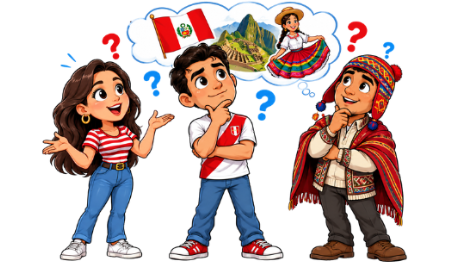
Who Gets to Decide Whether the Pope—or the Potato—is Peruvian?
More importantly, who has the authority to decide who belongs and who doesn’t? And, for the purposes of our little essay, does Pope Leo XIV have every right to call himself Peruvian, as he has repeatedly done in his speeches, or not?
Well, let’s see, as Polyphemus said after Nobody blinded him, and examine the differences and similarities between nationality, identity, and belonging.
Let’s get down to business! And let’s start by establishing that…
Nationality, Identity, and Belonging Are NOT Synonyms
The issue isn’t quite as straightforward as it might seem. We tend to use nationality, identity, and belonging interchangeably, as though they meant the same thing. They don’t. They actually describe different things.
We can hold a nationality without identifying particularly strongly with it, feel deeply connected to a culture without having been born in its territory, and feel emotionally attached to a community that, for one reason or another, isn’t always willing to recognize us as one of its own.
A Stuffed Potato Full of Obvious Truths
So let’s take things one step at a time, because there’s a lot more substance to this discussion than you’d find in a stuffed potato.
Incidentally, the truth is that a stuffed potato doesn’t actually have any crumb to it. And although that’s stating the obvious, I think we all know what I mean, right?
But one thing is absolutely true: Pope Leo is more Peruvian than the potato itself.
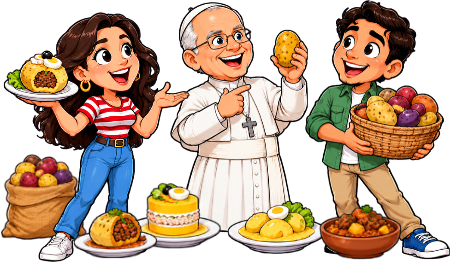
And we’re talking not only about the more than 4,000 varieties of potatoes this blessed country gave the world, but also about papa rellena, papa a la huancaína, causa, carapulcra, and just about anything else involving potatoes—even the man at the Vatican.
Being Born in Peru Doesn’t Automatically Make You Peruvian
What? Have I been living a lie my entire life? Well, let’s just say it’s not enough. And that’s only the beginning.
But why? Quite simply because…
Being born in a country doesn’t necessarily mean you belong to it.
Let’s start with the most obvious distinction: nationality. In legal terms, nationality establishes a person’s legal bond with a State. Depending on each country’s laws, it can be acquired through birth, ancestry, or naturalization.
But there’s quite a leap between that and claiming it automatically makes you Peruvian in every possible sense. After all, human beings aren’t just about essence; we’re also about existence—and, ergo, the latter involves experience. In other words…
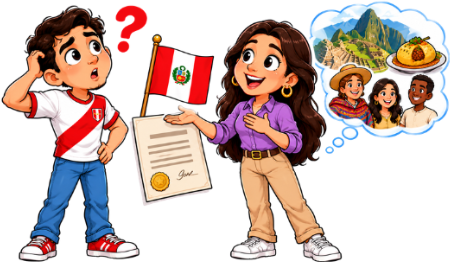
So, Is It Just a Bureaucratic Formality?
Exactly! Well, almost…
It’s a legal status that identifies us before institutions and establishes a set of rights and obligations.
Nothing mysterious so far.
If you were born in Peru under the conditions established by the relevant legislation, you can be Peruvian by birth. If you were born somewhere else, you can also acquire Peruvian nationality through other legal channels.
But…
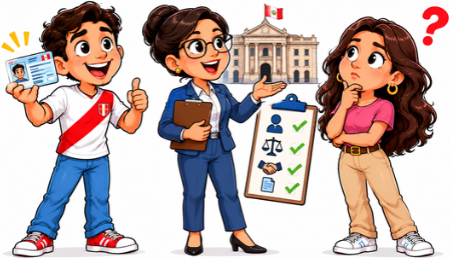
Does That Settle the Question of Identity?
Not necessarily!
Having a Peruvian passport doesn’t automatically mean you identify with Peruvian culture, just as being born in Lima doesn’t guarantee that someone knows, understands, or cares about the country’s cultural diversity.
So, you’re legally Peruvian and that’s it?
Correct!
Nationality can be established through documents. Identity, on the other hand, is a much more complicated matter—and, above all, a far more intimate and personal one.
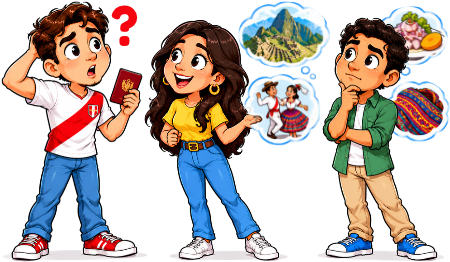
Let’s Play at Being Peruvian
Imagine two people.
The first was born in Peru but emigrated at a very young age. They grew up in another country, studied in another language, and developed their social and cultural relationships far away from their birthplace.
The second was born in Japan, Italy, or the United States but grew up in a Peruvian family, learned its customs, knows its history, and maintains an emotional connection with Peru.
And now comes the million-dollar question…
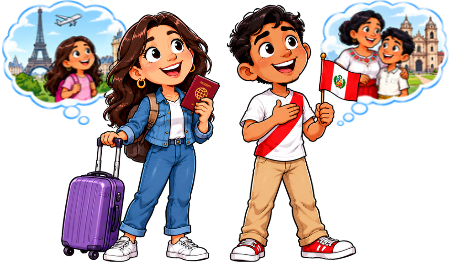
Which One Is More Peruvian?
The question seems simple enough until we actually try to answer it without resorting to prejudice.
Is someone more Peruvian because they have a Peruvian birth certificate? Because they speak Spanish without a foreign accent?
Because they know every region of the country? Because they can eat guinea pig without batting an eyelid? Or because they feel Peru is part of their own story, even though they were born thousands of miles away?
Come on, people! Why? Well, because…
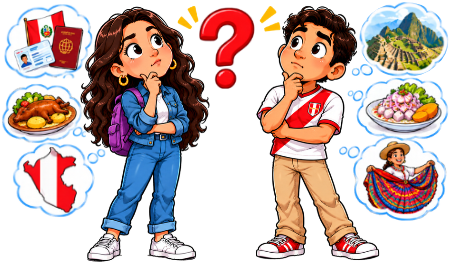
Nationality and Identity Don’t Come as a Package Deal
Perhaps the problem begins when we assume that all these characteristics must coincide in one person before we can consider them Peruvian.
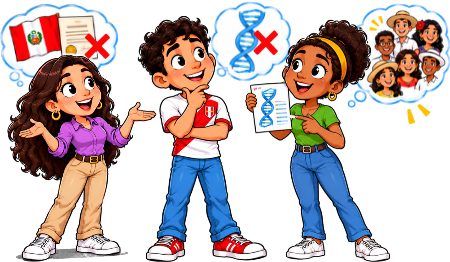
Identity doesn’t necessarily come shrink-wrapped with your birth certificate.
Nor is it some genetic trait we can detect through a DNA test. If that were the case, we’d have to start questioning the results of quite a few fellow Peruvians.
A Nation Is More Than Just a Territory
This is hardly a new idea. French philosopher and historian Ernest Renan asked a similar question back in 1882, when he delivered his famous lecture, What Is a Nation?
Nearly a century and a half later, his reflections remain remarkably relevant because they challenge the idea that a nation can be defined exclusively by race, language, religion, geography, or economic interests—and, boy, does a country have plenty of those.
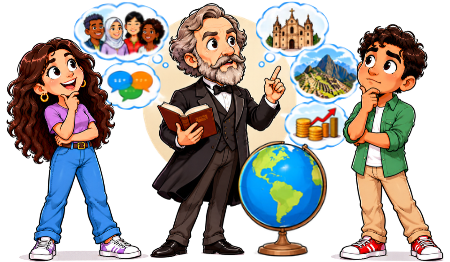
Like Identity, a Nation Is Something We Build
For Renan, a nation is also built upon a shared history, collective memories, and, above all, the willingness to continue being part of a community.
His well-known metaphor of the “daily plebiscite” expresses precisely that idea: a nation is not merely an inheritance from the past; it is also a collective will that is renewed in the present.
And here’s where things get interesting.
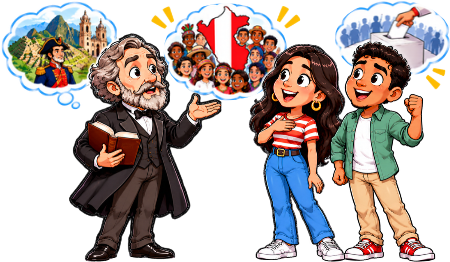
Territory Doesn’t Create Identity!
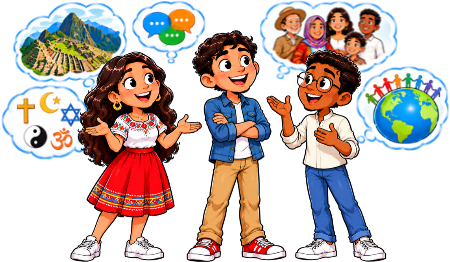
We can share the same territory without sharing the same identity. We can speak the same language and have completely different customs.
We can practice different religions, come from entirely different family backgrounds, and still feel part of the same national community.
A nation doesn’t depend exclusively on what our ancestors did before we were even born.
Well…
The Past Depends on the Present
And vice versa! And both depend on the future.
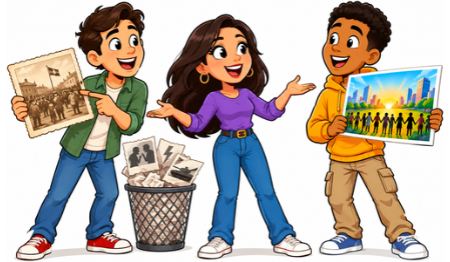
They also depend on what we choose to build together with the people around us. That means we must not only remember, but also learn to forget.
Renan argued that historical memory and forgetting are both part of nation-building. It’s not simply about keeping in mind what brings us together; it’s also about learning to leave certain conflicts behind so we can pursue the common good and live together under a shared identity.
Why? Because…
The Individual Needs the Collective
And vice versa!
That said, we shouldn’t confuse collective will with an individual decision made in isolation.
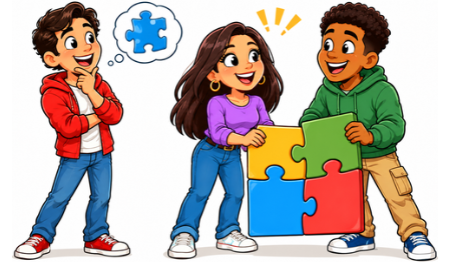
It’s not enough for someone to declare that they want to belong to a community for historical, cultural, or social barriers to magically disappear. Belonging also involves relationships, shared experiences, and recognition.
Why? Because…
What Renan Leaves Us With
Renan leaves us with a rather uncomfortable question: if a nation needs its members to want to remain part of it, what sense does it make to reduce national identity to the place where someone was born?
Isn’t it interesting that the words born and nation share such a close connection? Well, yes! But that’s a discussion for another day. Today, we’ve got something much more important to deal with:
Peru: An Imagined Community, but Not an Imaginary One
Political scientist Benedict Anderson offers us another tool for understanding the issue.
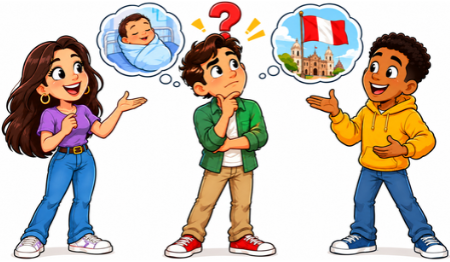
In his book Imagined Communities (1983), he develops the idea that nations are imagined communities. And before anyone starts suspecting we’re claiming that Peru doesn’t exist, let’s clarify something: imagined doesn’t mean made up, false, or fictional.
Anderson uses the term to explain how millions of people can feel part of the same community without ever knowing one another personally.
Let’s think about that for a moment.
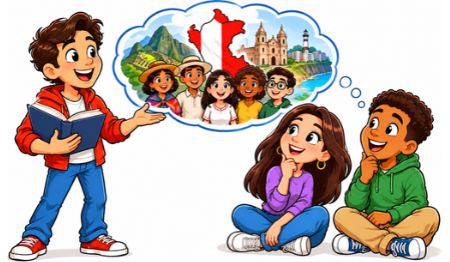
How Many Peruvians Do You Actually Know?
A few hundred? A few thousand? Even if you’re an extraordinarily sociable person, chances are you’ll never meet the overwhelming majority of your fellow citizens. And yet, you can still feel connected to them.
When Peru plays a soccer match, when we celebrate a national holiday, when we hear a song that takes us back to our childhood, or when a tragedy affects the entire country, we experience something resembling a shared community.
We don’t need to know everyone else to feel that they belong to the same we.
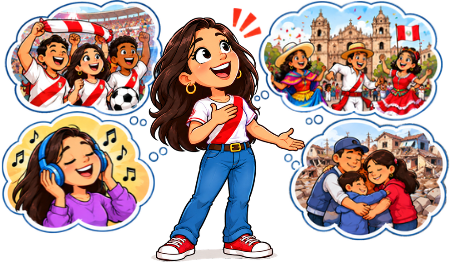
A Community Doesn’t Magically Build Itself
The media, education, national histories, traditions, and cultural expressions all contribute to building that sense of community.
Anderson also pays particular attention to the role of print culture and shared languages in the development of modern national identities.
But here’s another question: who decides which stories, symbols, and customs represent that community?
In other words…
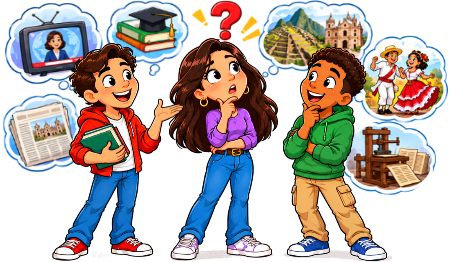
Who Holds the Exclusive Rights to Being Peruvian?
Because Peru is not just Machu Picchu, ceviche, the marinera, and a collection of tourist postcards we can display in a glass case.
Nor is it exclusively the Inca Empire, Lima, or any other image we’ve learned to associate with all things Peruvian.
Does the marinera represent Peru more than the huayno? Is the Peruvian cajón more nationally representative than Andean instruments? Is an Amazonian celebration somehow less Peruvian because it gets less attention in schoolbooks or tourism campaigns?
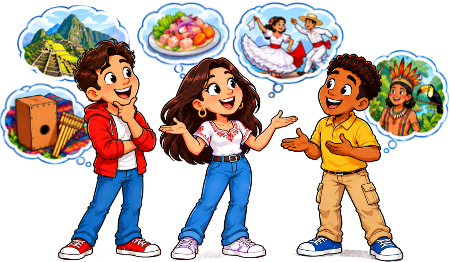
All Talk and No Substance!
And if a Peruvian doesn’t identify with any of these cultural expressions, does that make them any less Peruvian?
A national community can share symbols without requiring all its members to identify with them in exactly the same way.
The problem begins when we confuse a nation’s symbols with mandatory admission requirements for belonging to it.
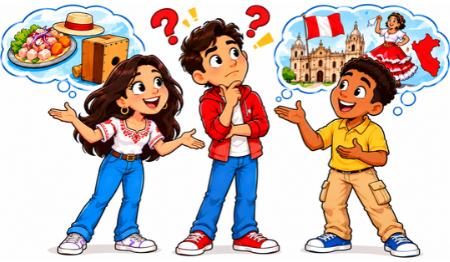
So, Who Hands Out the Peruvian Identity Certificates?
After everything we’ve discussed, one might think that becoming Peruvian requires passing some kind of entrance examination.
You need to know how to dance the marinera, eat ceviche and, especially, chili peppers without making a face, recognize a Chabuca Granda song, and, naturally, have a well-informed opinion about the best place to get a decent ají de gallina.
If you don’t meet these requirements, we’re terribly sorry! The homeland reserves the right of admission. Even the snootiest nightclubs in the capital have their standards.
But…
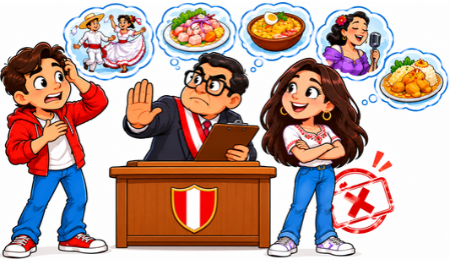
Who Gets to Set These Requirements?
Who decides which customs represent Peru and which are relegated to the category of regional curiosities? Since when does someone have to identify with every national symbol to feel they belong?
Peru is much more than a postcard of Machu Picchu, a plate of ceviche, or a marinera danced with a handkerchief in hand.
And fortunately, its people aren’t all cut from the same cloth either.
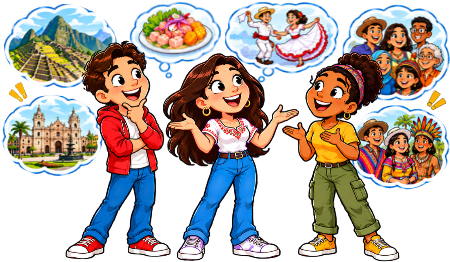
There’s More Than One Way to Be Peruvian
There are different ways of living, speaking, remembering, and relating to the country.
Expecting everyone to share exactly the same cultural references would be as absurd as demanding that everyone put chili peppers on their food.
After all, “A real Peruvian man eats chili without complaining” shouldn’t be our national identity test.
So let’s go back to the original question: what makes us Peruvian?
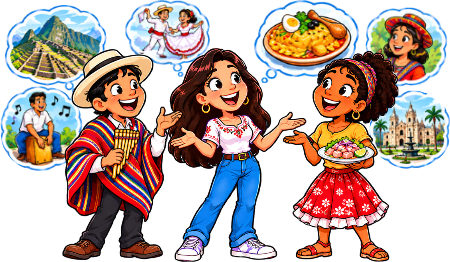
Two Different Paths, One Homeland
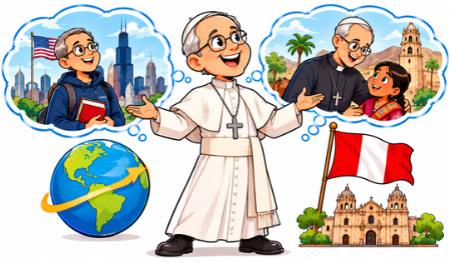
Let’s think about Pope Leo XIV. Robert Francis Prevost was born in Chicago, United States, but spent a significant part of his life in Peru.
Here, he developed personal, professional, and emotional ties that seem to have left a profound mark on him.
Today, he speaks of Peru as his homeland and of Chiclayo as a place he holds particularly dear.
The Story of Another Crazy Guy
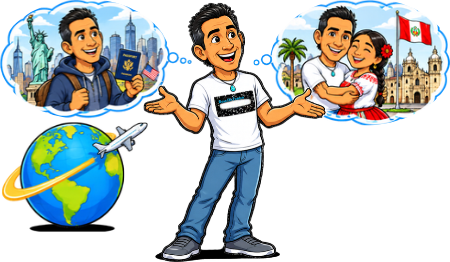
My story takes the opposite route. I was born in Peru but emigrated to the United States, where I lived for many years and eventually became an American citizen as well.
Two rather different journeys, but with something in common: neither of us had to limit our identity to the place where we were born.
In my case, living in the United States wasn’t simply a matter of changing addresses, learning a few new customs, or getting another passport.
What My Identity Absorbed
I also incorporated values that I came to appreciate deeply.
I’ve always admired the strength of American institutions and that attitude of encouraging people to better themselves, make progress, and get ahead. An attitude that, unfortunately, we don’t always find in our own countries.
And I’m not going to get into that whole business about how a Peruvian’s worst enemy is another Peruvian—which, although there’s some truth to it, would take us off track and we’d end up needing another article.
And believe me, I’ve already got plenty of those in the pipeline!
But getting back to the personal baggage I picked up in the United States…
Appreciating Those Things Didn’t Make Me Any Less Peruvian
Quite the opposite!
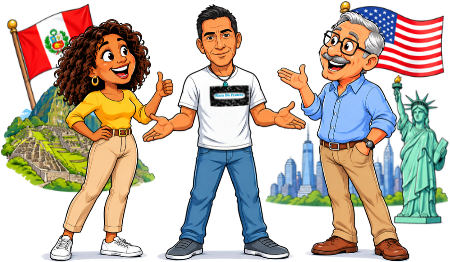
Nor did it automatically turn me into an American through and through. My experience in another country simply broadened the way I see the world and understand certain things I had previously taken for granted.
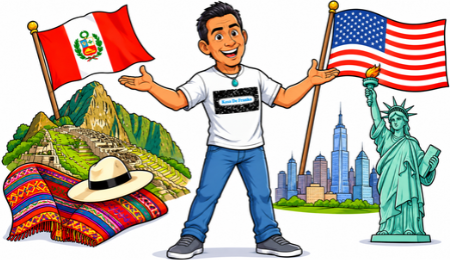
And I think that’s part of the point: we can incorporate different ways of thinking, adopt new customs, and feel part of different societies without having to turn our backs on where we come from.
At least, I never felt I had to choose one over the other.
And now we’re back where we started…
You Aren’t Born Peruvian. You Become One.
So, are you born Peruvian or do you become Peruvian? Well, as is often the case with these questions, the answer doesn’t fit neatly into a yes or no.
Some people are born in Peru and spend much of their lives far away from it. Others are born in some other corner of the world and eventually find a family, a community, or a homeland here.
Some leave and maintain their ties to the country. Others return and discover they’re no longer quite the same people they once were. And then there are those who, like me, end up feeling part of more than one place.
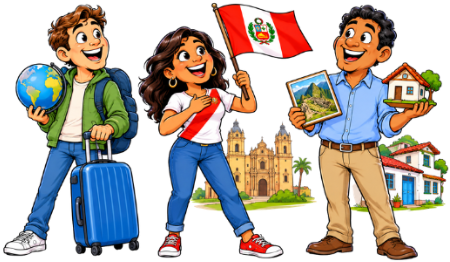
Because It’s One Thing to Dance to a Cajón and Another to Strum a Guitar!
Because legal nationality, the kind printed on a document, is one thing. Identity, which is considerably more complicated, is something we build throughout our lives.
It doesn’t come with an instruction manual, it has no single recipe, and, fortunately, it doesn’t need the approval of a gastronomic jury either.
Perhaps that’s why we shouldn’t be so obsessed with deciding who is more Peruvian than whom. Nor should we turn our customs, symbols, or memories into some kind of cultural border checkpoint.
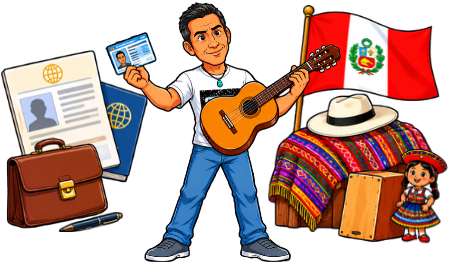
This Isn’t a Competition
Identity isn’t an authenticity contest in which someone has to lose for someone else to win.
But there’s one issue that’s not quite so easy to resolve: feeling part of a community is one thing; having that community recognize you as one of its own is another.
Because even though we can build our own identity, we don’t always have the final say in how others see us.
And that’s where another story begins: the story of how a Peruvian is born wherever the hell they damn well please.
