
The Alleged Crime Against the Dead
Apparently, we’ve reached the point at which even the dead can’t rest in peace without somebody accusing somebody else of cultural appropriation.
The alleged crime? Mexico may have stolen Día de Muertos from Peru.
Yes, you read that correctly. The dead have barely had time to decompose, and already somebody is disputing ownership of their cultural heritage.
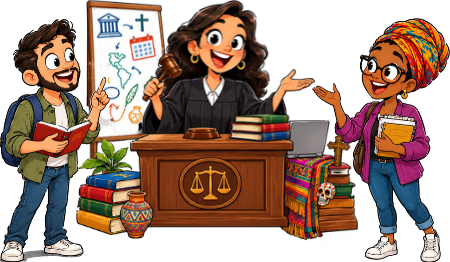
In the International Cultural Appropriation Court:
The Usual Suspects!
We may be dealing with a historical crime of unprecedented proportions. The suspects are two countries with civilizations, traditions, and relationships with the dead that long predate the internet—and, for that matter, the modern nation-states now arguing over them.
The crime scene spans centuries. The witnesses are archaeologists, chroniclers, historians, and people who may or may not have read past the caption of a Facebook post. The evidence includes ancient rituals, Catholic calendars, colonial history, and competing claims about who got there first.
Will Mexico Have to Return the Dead to Peru?
At this point, we don’t even know whether to call the police, an archaeologist, or an intellectual-property lawyer. Perhaps all three. The archaeologist can examine the remains, the police can look for suspects, and the lawyer can explain how to sue somebody on behalf of a corpse.
One question remains: if Peru wins the case, will Mexico have to return the dead?
Before we start issuing extradition orders for deceased ancestors, however, we should probably establish what the accusation actually is. What does it mean to say that Mexico stole Día de Muertos from Peru? Are we talking about a particular date, an ancient ritual, a religious belief, a collection of customs, or the modern Mexican celebration recognized around the world?
Does It Matter to Death?
Of course, it does! Those are not interchangeable things.
But distinguishing between them would require a little historical patience, and patience has never been the internet’s most marketable product.
So let’s open the case file. The dead have been around for thousands of years, but the intellectual-property dispute is a very modern invention.
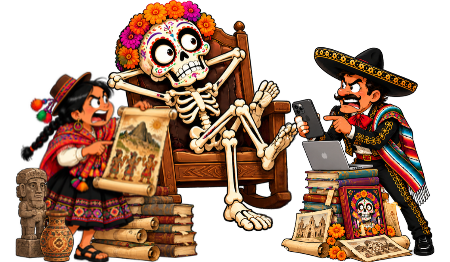
Does Death Belong Exclusively to Peru?
Or would it be willing to negotiate a settlement with Mexico? Only time will tell!
Because one thing is certain:
“…in this world nothing can be said to be certain, except death and taxes,” as one of the Founding Fathers famously put it.
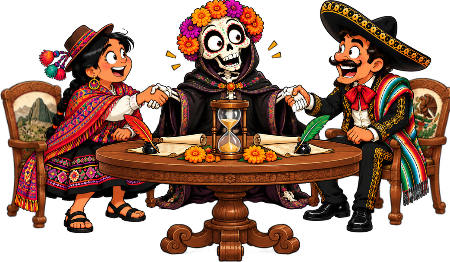
A Viral Claim Looking for a Crime Scene
In October 2026, reports brought renewed attention to social-media claims that Día de Muertos did not belong to Mexico but originated in Peru.
One reported statement complained that Mexicans were unaware of the supposed true history of the celebration and suggested that they had liked Peruvian culture so much that they adopted Peruvian customs.
The Mexican outlet El Informador covered the controversy on October 18, 2026, discussing the competing traditions and the historical confusion surrounding them.
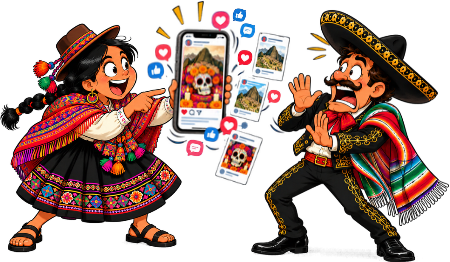
Who Is the Mastermind Behind this Crime?
But before we identify the mastermind behind this alleged cultural heist, a small procedural detail: the original authorship and complete context of the particular viral claim have not been independently established here.
An image credit, a repost, or an article describing a social-media controversy does not automatically identify the person who started it.
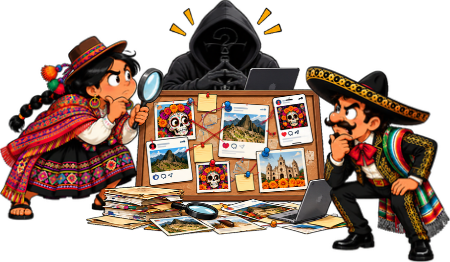
It Wasn’t the First Time!
Of course, we knew it!
We also know that this was not the first time Peru and Mexico had been dragged into an online argument over cultural ownership. In September 2025, a Peruvian TikTok account called @peru.no.es.clave circulated a video claiming that Mexico had borrowed everything from Peru, including tequila, tacos, tamales, and Día de Muertos. The Mexican sports publication RÉCORD reported on the dispute.
Whether that earlier account was responsible for the specific claim circulating in October 2026 is another question. We shouldn’t merge two controversies into one tidy origin story just because they fit the same plot.
But, regardless…
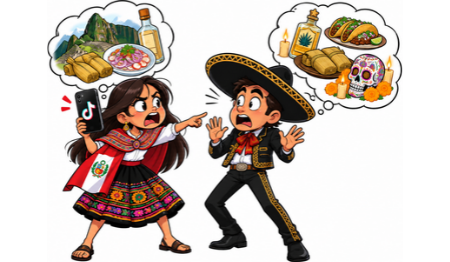
Cultural Appropriation Seems to Be the Major Crime Here
Still, the recurring theme is unmistakable: somebody claims that another country has stolen something, and the internet gets to work.
And what a convenient accusation it is. Cultural theft sounds serious. It suggests a victim, a culprit, and a debt that must be repaid. It transforms complicated history into a morality play with national flags.
The problem is that history rarely cooperates with a good courtroom drama. Traditions travel, change, overlap, disappear, survive underground, and reappear in forms their original practitioners might not recognize.
We can suspect anyone at this point; nevertheless, we can only conclude one thing:
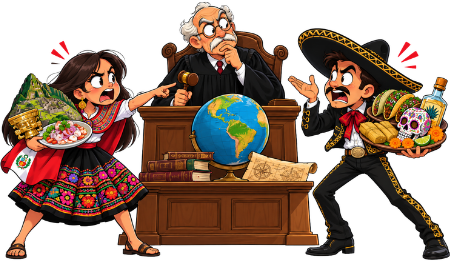
Death Has Never Respected Borders!
What a shame!
Nevertheless,…
Sometimes there is clear evidence of borrowing. Sometimes there is a complicated history of cultural exchange. Sometimes two societies develop similar practices independently because human beings, regardless of their passports, eventually have to deal with the same universal inconveniences: birth, hunger, love, taxes, and death.
And death, unlike a national trademark, has never respected a border.
So let’s examine the evidence. Not to crown Peru the winner or hand Mexico a certificate of innocence, but to find out what the historical record actually tells us.
The Ancestors Were Here First
Before we start handing out medals for being the first civilization to remember the dead, let’s get one thing straight: the ancestors were around long before Peru and Mexico became modern countries. They weren’t checking passports at the cemetery gates!
Finding evidence of ancient rituals involving the dead is one thing. Proving that an entire modern celebration was stolen from one country by another is quite another.
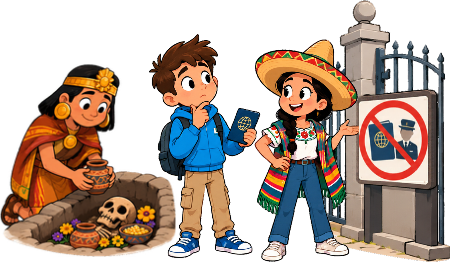
Only if They Could Testify
If the ancestors could testify, they might have a few things to say about our modern obsession with borders, ownership, and who gets to claim the dead.
But even their testimony wouldn’t automatically settle the question of who invented Día de Muertos as we know it today.
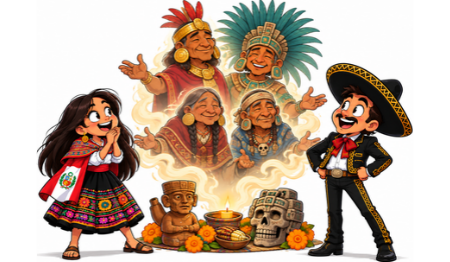
Siempre hubo Muertos
True that! People have always dropped like flies. Death is inherent to life.
And documenting an ancient tradition first does not, by itself, establish that another culture borrowed it.
What it does establish is that the history of remembering the dead is considerably older—and more complicated—than an argument on social media can accommodate.
So let’s begin with what an Indigenous chronicler actually recorded, long before anyone could drag Peru and Mexico into court over the dead.
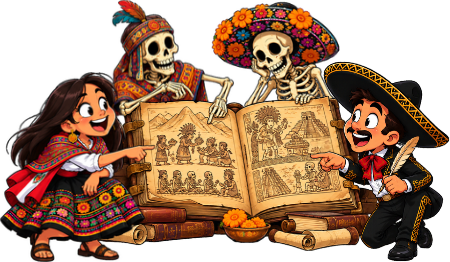
Before Peru Had a Passport
Let’s fire up the time machine and head back several centuries, way before the modern republic of Peru existed, before passports and national anthems, before anyone could post an angry video accusing another country of stealing a tradition.
Our guide is Felipe Guamán Poma de Ayala, an Indigenous chronicler writing in the early seventeenth century under Spanish colonial rule. His manuscript, El primer nueva corónica y buen gobierno, places the Inca month Aya Marcay Quilla, associated with bringing out the dead, alongside November in the European calendar.
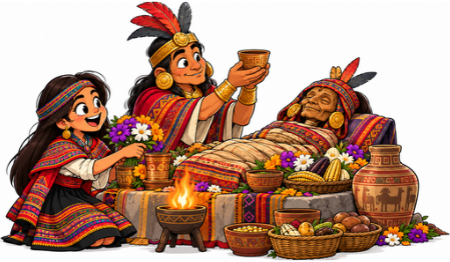
Not a Modern Tourist Brochure
Guamán Poma’s account is not a modern tourist brochure. His manuscript preserves a written description and an illustration of the practice.
But documenting an ancient tradition is one thing; proving that another country stole its modern celebration is quite another.
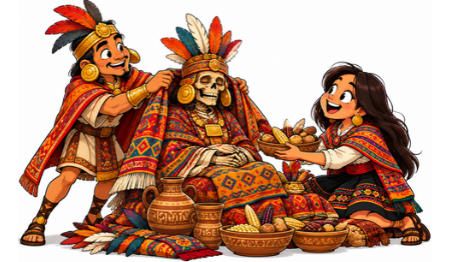
Bringing the Dead Back Into the Community
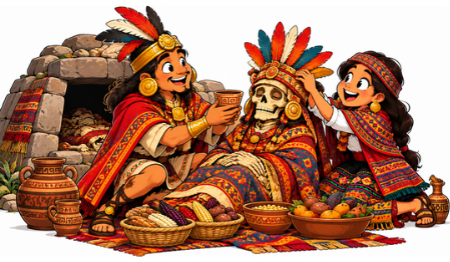
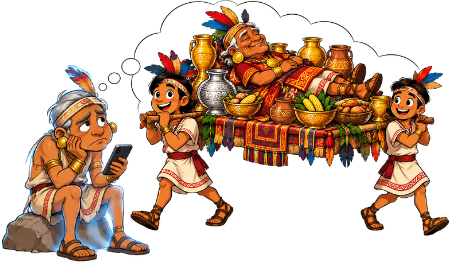
You approach a pucullo, a burial place described by chronicler Guamán Poma. The dead are brought out, given food and drink, and dressed in fine clothing, with feathers placed on their heads.
These aren’t ancestors being remembered from a safe distance. They’re being brought back into the community of the living.
When the Dead Take to the Streets
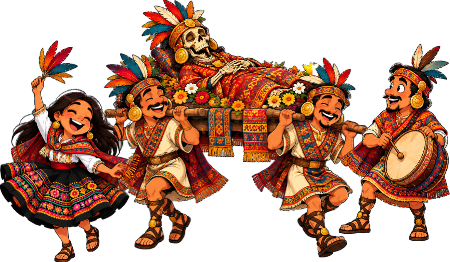
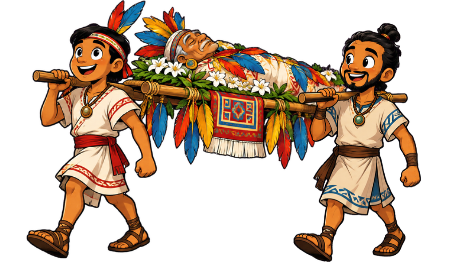
The deceased are placed on andas—carrying platforms—and the procession sets off. You follow as the dead are carried from house to house, through the streets and into the plaza. People sing and dance with them. No need to settle for a family story about Great-Grandpa: he’s making the rounds.
Eventually, the procession returns to the pucullos. The dead are put back in their resting places, accompanied by food and vessels. The living have brought their ancestors into the community and then accompanied them home.
And centuries later, we’re arguing over which modern country owns a tradition involving the dead. Too bad the ancestors didn’t leave us their lawyers’ contact information.
What the Chronicler Actually Tells Us
We should be careful not to invent sounds, conversations, or private emotions the chronicler did not record. But the actions he does describe are vivid enough. Imagine the physical work of carrying the deceased, the garments and feathers visible along the route, the food prepared for the occasion, and people gathering as the procession passes through familiar surroundings.
The ancestors are not a distant abstraction. In this account, they are brought into the community’s shared space.
The Dead Were Not All Equal
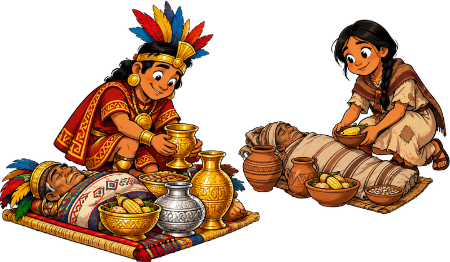
Guamán Poma’s description includes another detail that is easy to overlook: the deceased were returned to their burial places with food and vessels. He distinguishes between vessels of gold or silver associated with important people and clay vessels associated with the poor.
Even in the afterlife, apparently, social inequality wasn’t taking the day off.
Death Also Reflected the Living World
That detail tells us something important: honoring the dead wasn’t just about affection for the ancestors. The ritual also reflected the world of the living, where status and wealth mattered—even when it came to how the dead were treated.
For an ancestor accustomed to being remembered only through an annual social-media post, this arrangement might seem like a considerable upgrade. But the historical significance goes well beyond the joke.
Death Has No Trademark
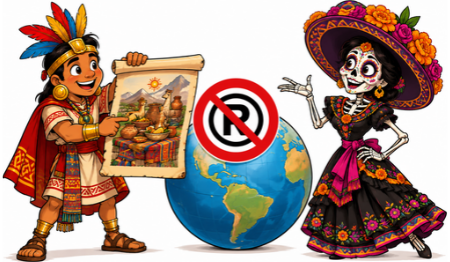
The account documents an Inca practice of honoring the dead in November. It does not demonstrate that the modern Mexican Día de Muertos originated in Peru, nor does it establish a direct historical line connecting this particular Inca observance to the modern Mexican celebration.
That distinction matters.
An ancient Andean ritual is evidence of an ancient Andean ritual. It is not a deed granting Peru ownership of every later ceremony involving ancestors, food offerings, or the month of November.
Let’s Take the Time Machine North
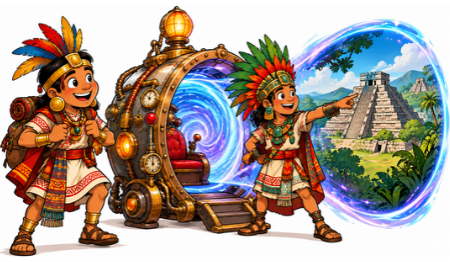
We’ve spent some time in the Andes, watching the dead make their rounds during Aya Marcay Quilla. But our investigation isn’t over. If we’re going to figure out who invented the idea of keeping the dead company, our little time machine still has some mileage left.
So let’s head north, to Mesoamerica, centuries before Mexico had a passport, a national anthem, or even a country called Mexico.
The Spanish Haven’t Arrived Yet
Modern borders are nowhere to be found. And the Indigenous peoples of this vast region already have their own beliefs about death, the afterlife, and what happens to the relationship between the living and the deceased when someone kicks the bucket.
Apparently, nobody needed a foreign consultant to explain that death was more complicated than a burial and a goodbye.
Not One People, Not One Afterlife
Now, let’s not turn Mesoamerica into one enormous village where everybody believes the same thing, follows the same calendar, and gets the same handbook on what happens after death.
The Mexica, Maya, Mixtec, Zapotec, and other peoples had distinct histories, beliefs, and practices. They weren’t members of one giant Indigenous club with a universal membership card.
Archaeological remains, inscriptions, codices, and colonial chronicles offer different windows into the past. Some traditions also survived through centuries of transformation.
How Do We Know?
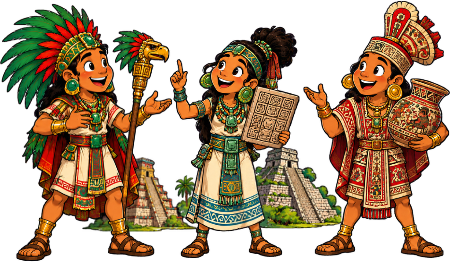
Take the Mexica. In the sixteenth-century Florentine Codex, compiled after the Spanish conquest, Bernardino de Sahagún recorded Indigenous accounts of funerary rites. These included offerings for the deceased and the belief that a dog helped them cross a river on the journey to Mictlan.
This isn’t Día de Muertos as celebrated today. It’s a recorded Mexica practice of caring for the dead.
UNESCO Has Something to Say
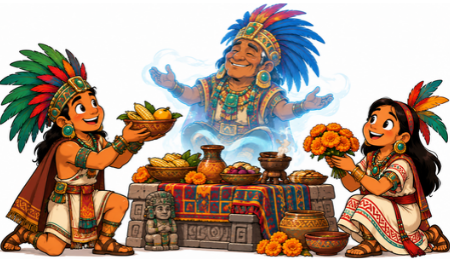
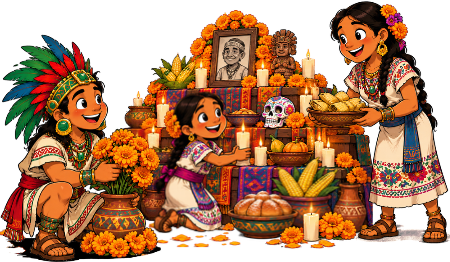
The UNESCO description of Indigenous festivities dedicated to the dead in Mexico highlights offerings for deceased relatives, the agricultural cycle, and the importance of maize. It also recognizes the diversity of the communities involved.
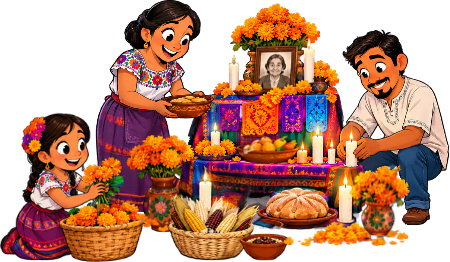
Picture families preparing food, arranging flowers, lighting candles, and gathering to welcome their deceased. These aren’t interchangeable decorations on a national holiday. They’re living traditions with meanings rooted in particular communities.
Two Regions, One Very Old Question
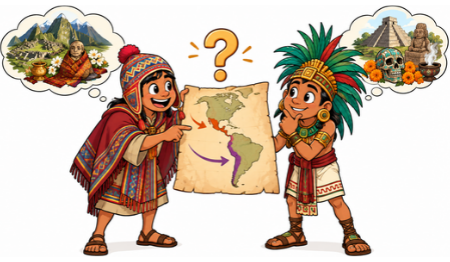
So, yes: the Andes had rich traditions concerning the dead. Mesoamerica did, too. Both regions were home to Indigenous civilizations long before Peru and Mexico became modern countries.
But let’s not get ahead of ourselves. That doesn’t mean their practices were identical, that one necessarily borrowed from the other, or that every modern celebration can be traced directly to a single ancient ritual.
Spain brought the same Catholic calendar to both regions. So before we treat November as evidence of a Peruvian export, we’d better call that calendar to the witness stand.
History Is NOT a Museum
Traditions survive, adapt, mix, and acquire new meanings. History isn’t a museum where everything stays exactly where somebody left it.
And here’s where the prosecution’s case begins to wobble. If finding an ancient tradition involving the dead automatically gives a modern country ownership of every similar practice, the world is going to need a much bigger courthouse.
And a considerably larger waiting room.
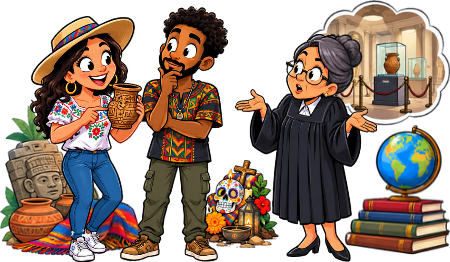
No Smoking Gun, Your Honor.
Well, we haven’t exactly found the smoking gun. The Andes had their traditions involving the dead long before Peru became a republic.
Mesoamerica had its own, long before Mexico appeared on a map. Apparently, neither civilization needed to import the idea that the dead deserved some attention.
Death was nothing new to the ancient peoples of Mexico or Peru—or to any other civilization.
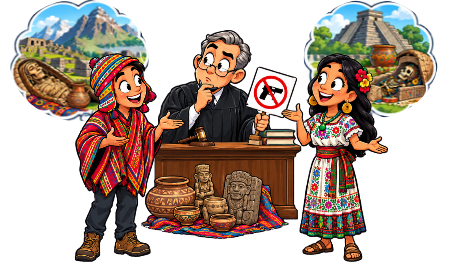
But Hold Your Extradition Orders!
Hold on, folks! Before we drag Mexico into court and demand that it hand over Día de Muertos to Peru, let’s remember one tiny detail: finding ancient traditions involving the dead in Peru doesn’t prove that Mexicans stole theirs. If it did, half the world would be suing the other half over who got to talk to the dead first.
We have ancient traditions, historical accounts, and plenty of reasons to keep investigating. The dead may have been around for thousands of years, but that doesn’t make every country with a tradition of honoring them a suspect in the same crime.
Does that Mean the Case Is Closed?
Not quite. We’re not ready to dismiss the case just yet.
We still have the Catholic calendar to examine, along with Spanish colonial rule and the long, complicated process through which different traditions encountered, resisted, and reshaped one another. After that, we’ll tackle the question lurking behind this whole cultural courtroom circus: who gets to claim ownership of the ways human beings remember their dead?
For now, the prosecution will have to hold its horses. We’ve got more witnesses to hear, and the dead aren’t going anywhere.
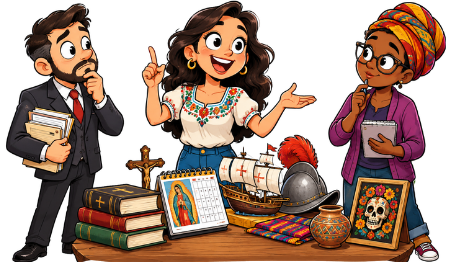
Session Adjourned!
The court may be adjourned, but the learning doesn’t have to stop here.
After all, we’ve spent this investigation examining traditions, challenging claims, and separating historical evidence from cultural assumptions. Along the way, we’ve also encountered some useful Spanish vocabulary.
Here are a few expressions worth taking with you before you leave the courtroom.
Spanish Vocabulary: Death, History, and Cultural Heritage
| Spanish term | English translation | Meaning and context |
|---|---|---|
| Día de Muertos | Day of the Dead | The Mexican observance honoring deceased relatives. Its modern form has a complex history involving Indigenous traditions, Catholic observances, and colonial-era change. |
| Aya Marcay Quilla | Month of bringing out the dead | An Inca month associated with bringing out the dead, as described by the Indigenous chronicler Guamán Poma de Ayala. This English rendering is a contextual translation, not a definitive word-for-word etymology. |
| Pucullo | Burial place | A term used in the article for the burial place mentioned in Guamán Poma’s account. Its precise linguistic origin and meaning should be verified against the historical source. |
| Guamán Poma de Ayala | — | An Indigenous Andean chronicler whose early seventeenth-century manuscript, El primer nueva corónica y buen gobierno, describes Inca society and its practices. |
| Mexica | Mexica people | The Indigenous people associated with the political and cultural power centered in Tenochtitlan. The term does not refer to all Indigenous peoples of Mexico. |
| Mesoamérica | Mesoamerica | A historical-cultural region encompassing parts of present-day Mexico and Central America, home to diverse Indigenous civilizations. |
| Sincretismo religioso | Religious syncretism | The blending or interaction of religious beliefs and practices. The article discusses disagreement over whether this concept adequately explains the development of modern Día de Muertos. |
| Día de Todos los Santos | All Saints’ Day | A Christian observance on November 1 that honors saints and forms part of the Catholic calendar discussed in the article. |
| Día de los Fieles Difuntos | All Souls’ Day | A Christian observance on November 2 that commemorates the faithful departed. Its history helps explain the dates associated with modern Día de Muertos. |
| Prehispánico / prehispánica | Pre-Hispanic | Refers to the period before Spanish conquest and colonization in the Americas. |
Want to Discuss These Ideas in Spanish?
Understanding a word is one thing. Using it to explain your ideas, defend an argument, or discuss cultural differences in Spanish is another.
At Kasa de Franko, our Spanish classes focus on communication, cultural context, and thinking in Spanish—not simply translating words. Whether you’re building your vocabulary, improving your fluency, or preparing to participate in more sophisticated conversations, we help you put what you learn into practice.
Explore our online Spanish classes and discover how language comes to life.

Keep Exploring
If this investigation has left you with more questions about language, identity, and cultural history, continue exploring these related articles from Kasa de Franko or attend our cultural events:
- How Spanish Has Contributed to American Identity — explore the historical influence of Spanish on American identity.
- El Día de la Hispanidad: Embrace or Ignore? — examine the complicated history and meaning of Hispanic identity and commemoration.
And stay tuned for further investigation, where we’ll examine the Catholic calendar, Spanish colonial rule, and the tangled history behind modern Día de Muertos.
