A Month That Loves the Spotlight!
Ever noticed how February is like that one guest at a party who shows up late, leaves early, and somehow still ends up at the center of everything?
It’s the shortest month of the year — and yet it keeps hosting some of the biggest cultural events on the calendar.
Which raises a surprisingly ancient question:
So why is February called February?
Because that turns out to have less to do with romance… and more to do with what societies used to do before hitting the reset button on the year — regardless of what language you call it in.
(And yes — we’ll get to what it’s called in Spanish and other languages in a moment.)

They Called It February
It was named after something societies did when they needed to clean things up before starting again.
A period set aside for purification.
For clearing out what didn’t belong before the year could properly begin.
Before the celebrations.
Before the planting.
Before the politics.
Before the taxes.
Before the chaos began all over again.
Because historically speaking, nothing says “new year, new me” quite like ritualistically cleansing the entire community of last year’s bad decisions.

The Dwarf Month in the Calendar
Ah, February. The calendar’s designated overachiever with a short attention span.
It has fewer days than everyone else, its name is a linguistic obstacle course (seriously — outside of spelling bees and overly confident news anchors, who is actually out here saying Feb-ROO-ary?), and every four years it casually throws in an extra day like a group project member who shows up at the last minute with a “surprise” PowerPoint nobody asked for.
And yet… somehow… this is the month that insists on hosting:
- Valentine’s Day
- Carnival season
- Lunar New Year (half the time)
- Black History Month (in the U.S.)
- And occasionally the Super Bowl
All packed into 28 days.
It’s the chronological equivalent of a studio apartment trying to host a wedding reception.
February may be the smallest month on paper — but culturally, it behaves like it pays the rent for the entire calendar.

From Februa to febrero
Which is strange, considering this wasn’t meant to be a celebratory month in the first place.
The name february comes from Februa — an ancient Roman purification festival held before the new year could properly begin.
From the Latin februum, meaning cleansing or purification.
That’s why in Spanish, the month is called febrero — and unlike in English, it doesn’t need a capital letter.
The same goes for many other Romance languages, where month names are treated as common nouns rather than proper ones.
Different spelling rules. Same ancient ritual behind the name.
The Month of Ritual Cleansing
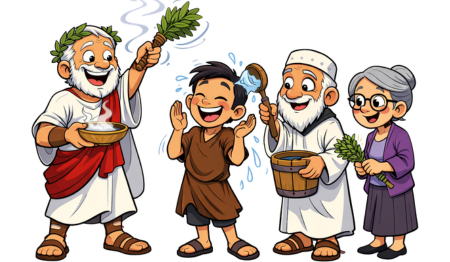
In ancient Rome, February wasn’t about romance — it was about purification.
The festival of Februa was a period dedicated to ritual cleansing before the new year could properly begin. Homes were swept. Offerings were made. Communities took part in ceremonies meant to drive out whatever misfortune, guilt, or spiritual residue the previous year had left behind.
Because in the original Roman calendar, the year didn’t begin in January.
It began in March.
Which meant February was the final stop on the way out — the time to clean house before everything started again.
At Least It’s Got Personality!
So, if you ever find yourself confused by this month, just remember: it’s all part of its strange, ritualistic charm. And hey, at least it’s got personality, right?
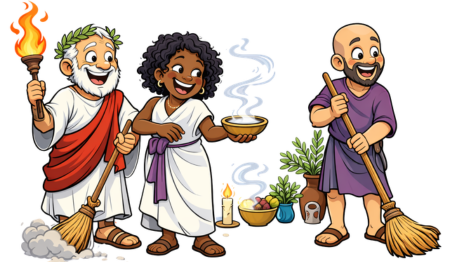
Picture it: the Romans in togas, moving through the city in the final days before the new year, performing purification rites meant to sweep away whatever the previous year had left behind.
Homes were symbolically cleansed. Offerings were made. The atmosphere was part solemn ritual, part civic reset.

As Human as It Can Get
It was messy. It was symbolic. It was deeply human.
And somehow, over centuries, that ancient season of cleansing evolved into our modern February — a month of hearts and holidays, leap days and long weekends, cultural celebrations and commercial chaos.
From ritual purification to romantic expectations.
Not bad for the shortest month on the calendar.
How the Romans Were Really Into Cleaning
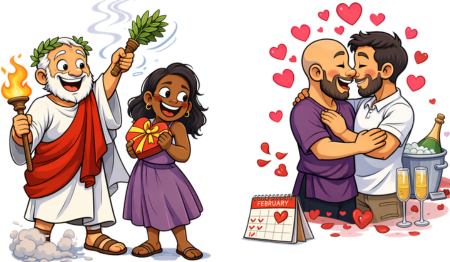
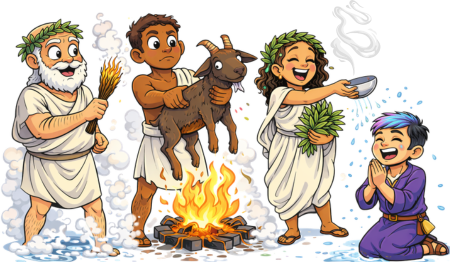
Well, ancient Romans weren’t exactly doing face masks and sipping cucumber water. Instead, they had Februa, a festival of:
- Cleansing rituals
- Sacrifices
- General atonement
It was their way of getting spiritually clean before the new year — which, by the way, used to begin in March.
The Reset Button
That meant February wasn’t the start of anything.
It was the reset button.
The final sweep.
The moral deep clean.
The cosmic “let’s try that again.”
And while some historians connect later calendar changes to traditions like April Fools’ Day, the real takeaway is simpler:
February was never meant to be romantic.
It was meant to be redemptive.
The Last Month of the Year
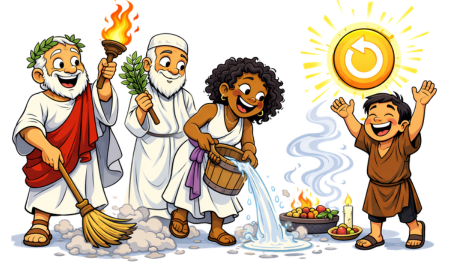
Yep — February was originally the last month of the Roman calendar.
The final stop before the year reset in March.
The last chance to scrub away:
✅ Sins
✅ Bad omens
✅ Whatever questionable decisions were made earlier in the year
It wasn’t about fresh starts.
It was about making sure nothing from the old year followed you into the next one.

Why February Feels So Strange
Ever feel like February is a weird, limbo-like month where nothing makes sense?
Congratulations — you’re channeling ancient Roman energy.
Because originally, this wasn’t a month for beginnings.
It was a month for endings.
A kind of ceremonial waiting room between what had happened… and what was about to start again in March.
Not quite the past.
Not quite the future.
Just a period set aside to clear things out before the calendar reset.
Lupercalia: When February Was… Wild
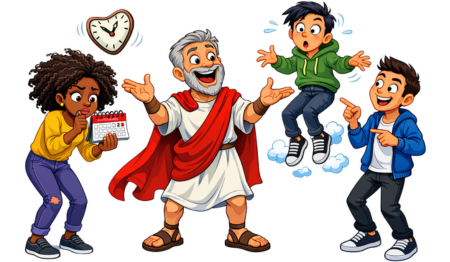
Now, if February was all about purification, it should have been a peaceful, meditative month, right?
Wrong.
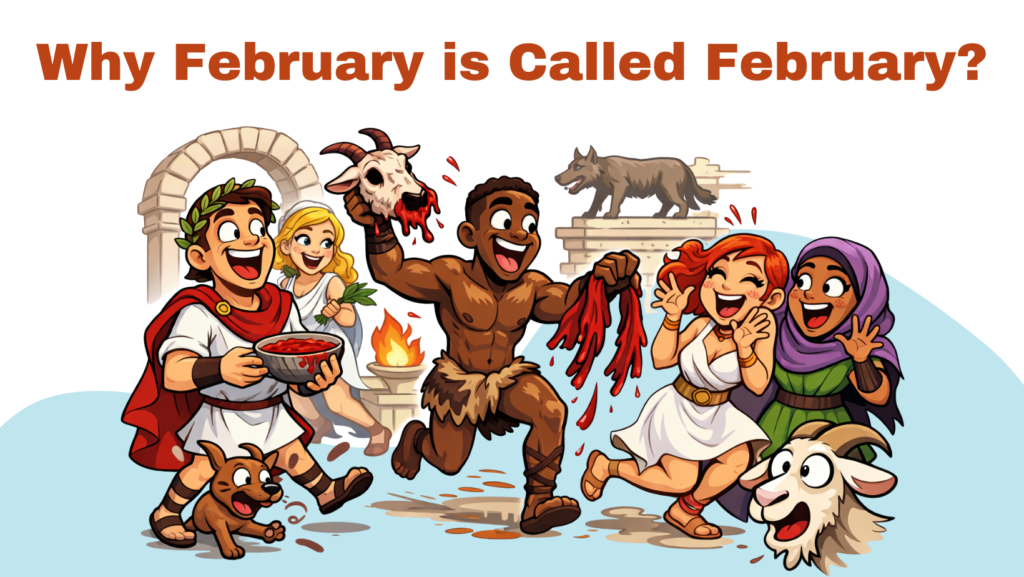
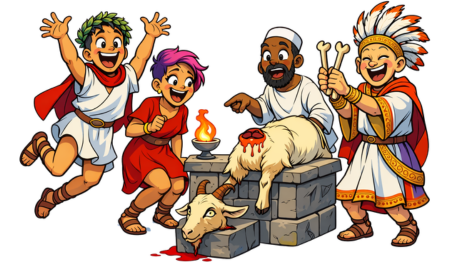
Because smack in the middle of February, the Romans celebrated Lupercalia — an absolute fever dream of a festival that involved sacrifices, fertility rites…
Rituals, But Make It Chaotic
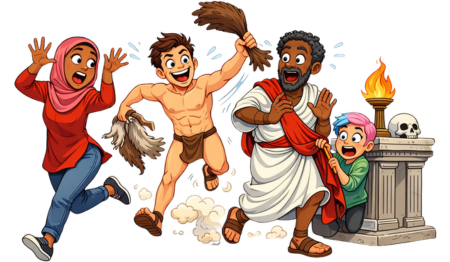
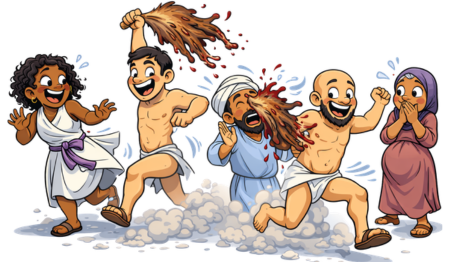
…and a bunch of half-naked men running around slapping people with goat hides — which people actually believed would promote fertility and easy childbirth.
It was chaotic.
It was symbolic.
It was deeply Roman.
So while February began as a month of cleansing, it also carried this strange, electric energy — part purification ritual, part fertility frenzy.
Suddenly, modern February doesn’t seem so dramatic after all.
Yes, You Read That Right!
Here’s how it worked: priests would sacrifice goats and dogs (apologies to modern sensibilities), then cut the goat hides into strips and run through the streets striking women who willingly participated in the ritual — because it was believed to promote fertility and ensure healthy childbirth.
It sounds bizarre now.
It probably looked chaotic then.
But to the Romans, this wasn’t random madness — it was symbolic. A physical act meant to drive away impurity and invite new life.

A Wild Valentine’s Day!
A sadomasochistic day of love? Oh yes.
But instead of chocolate and flowers, picture half-naked men sprinting through the streets, smacking willing participants with freshly cut goat hides in the name of fertility.
Welcome to Lupercalia — the Roman love fest that makes modern dating apps look downright wholesome.
If you’re curious how other cultures express desire and festivity, check out A Sensual Christmas in Japan — where Valentine’s Day is celebrated on December 25th.
Roman Festival of Fertility & Chaos
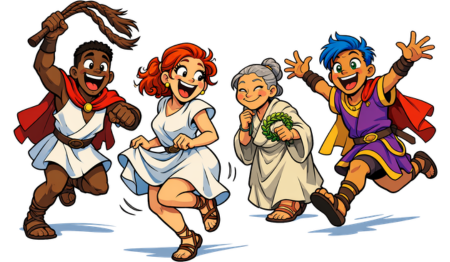
Some historians believe Lupercalia — the wild Roman festival of fertility and chaos — may have influenced the timing of Valentine’s Day.
So next time you buy a card covered in pink hearts, just remember: ancient Romans preferred their romantic gestures with a side of ritual sacrifice.
February, The Month That Got Robbed!
Ever feel like February gets the short end of the stick? Well, that’s because it literally did.
While every other month was getting its full set of days, February got left with the scraps — like that one friend who shows up late to a potluck and is stuck eating plain crackers while everyone else fights over dessert.

Why Does February Have Fewer Days?
Now let’s talk about the biggest insult February ever suffered: its chronic lack of days.
Why does it only have 28 (or 29 if it’s feeling fancy)?
Well… the blame falls on the Roman calendar — which, before being reformed, was an absolute mess.
Roman Ten Months Calendar!
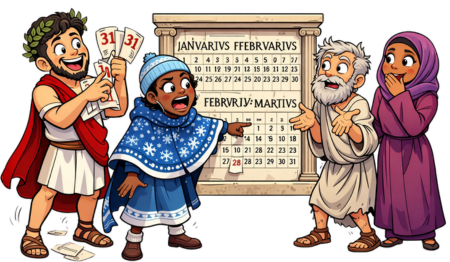
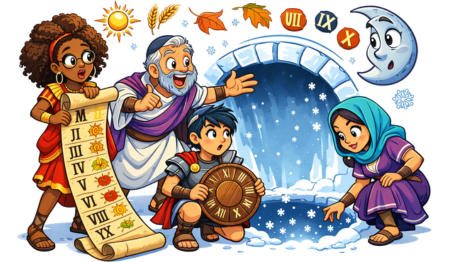
Originally, the Roman year only had ten months, starting in March and ending in December (which is why September, October, November, and December are named after numbers—septem = 7, octo = 8, etc.).
So where did that leave the rest of the winter?
And more importantly… Why Does February Have 28 Days? Keep reading to find out why!
Keep reading to find out why.
February Got Stuck with the Leftovers!
But that left about 60 extra days of winter just… floating around with no official months.
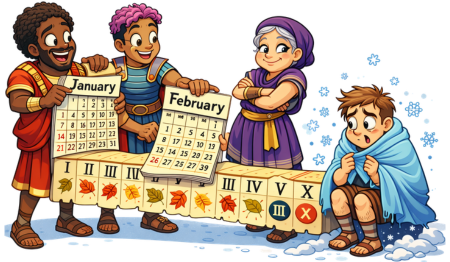
The solution? The Romans eventually added January and February.
But by then, the numerical names for the later months had already been assigned — so February, now sitting awkwardly at the end of the year, got whatever days were left.
Not exactly prime calendar real estate.
Julius Caesar’s Calendar Makeover
Eventually, someone had to step in and clean up this chronological chaos.
Enter Julius Caesar.
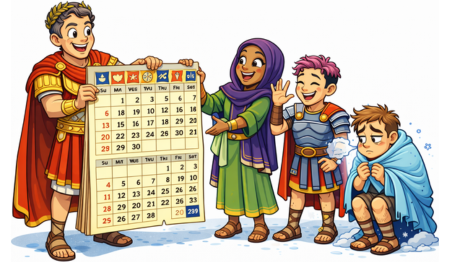
In 46 BCE, he reformed the Roman calendar, creating the 12-month Julian system and finally standardizing the lengths of most months so the year would more closely match the solar cycle.
No more floating winter days.
No more guessing where the year ended.
But February?
It still got stuck with 28 days — with the occasional leap day thrown in every four years to keep things (mostly) on track.
Because even after a full calendar makeover, somebody still had to be the shortest month.
Augustus & the Case of Calendar Envy
Just when you thought February couldn’t catch a break, along came Augustus Caesar.
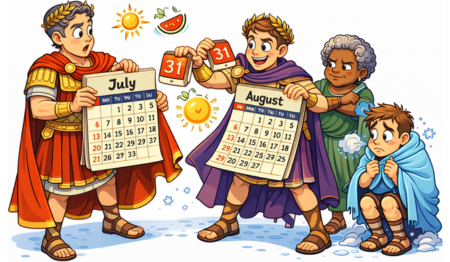
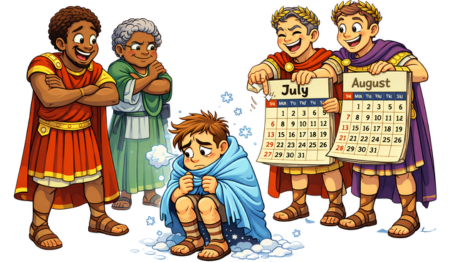
He decided that his month (August) should be just as long as Julius Caesar’s month (July).
So — according to the traditional story — like a jealous sibling, he snatched a day from February to make August a full 31 days.
Historians today debate whether that’s exactly how it happened.
But either way, February was still the one that ended up losing sleep over it.
The Runt of the Calendar Litter
And that, folks, is how February became the shortest month — forever doomed to be the runt of the calendar.
All thanks to imperial ego and a bit of sibling rivalry, after later emperors reshuffled the days to make their own months look just as important as July.
Because in Rome, even the calendar was political.
Unfortunately for the Romans, the universe doesn’t negotiate with politicians.
And eventually, the sky itself forced February back into the spotlight.
Leap Years: When February Demands Attention
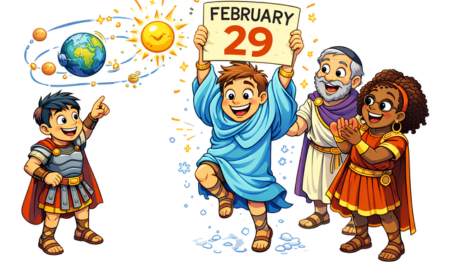
Every four years, February gets an extra day — but not because it feels left out.
The real reason? Earth’s orbit around the sun takes 365.2422 days, not a clean 365. That tiny fraction adds up. And if we ignored it, the seasons would slowly drift out of place.
So to keep the calendar aligned with the seasons, we add February 29 every four years.
Because while emperors could rearrange months, they couldn’t argue with the planet.
Wait… It’s Still Not Perfect?
Turns out, even after emperors stopped rearranging the months to suit their egos, the calendar still had one problem left: the planet.
Here’s the kicker: even that system isn’t flawless. If we added a leap day every four years, we’d actually overcompensate over time. So, to fix that:
✅ Century years (like 1900) don’t get a leap day — unless…
✅ They’re divisible by 400 (which is why 2000 had a leap day, but 2100 won’t).

A Calendar’s Confession
Leap years are basically the calendar shrugging and saying, “Yeah, we messed up, but we’re trying our best.”
Or more accurately:
“Close enough.”
Every four years, February quietly adds a day — not for drama, not for politics, just to keep everything from falling apart.
For the shortest month on the calendar, that’s a surprisingly big responsibility.

A Dwarf Month with a Giant Agenda
February might be short, but it packs a punch when it comes to global celebrations. Some highlights:
- Chinese New Year (Lunar New Year) – Often falling in February, this is one of the biggest celebrations in the world, marking the start of the lunar calendar with fireworks, feasts, and dragon dances.
- Carnival (Mardi Gras) – The ultimate pre-Lenten festival, where people eat, drink, and party like there’s no tomorrow (because, for Christians observing Lent, there isn’t much indulgence tomorrow).
- Groundhog Day (U.S.) – A day where people take weather advice from a rodent. Why? Nobody really knows.
- Valentine’s Day – As we’ve established, this holiday may be the distant, much more sanitized cousin of Lupercalia.

A Short Month with a Long Legacy
From ancient purification rituals to modern chocolate-fueled declarations of love, February has somehow remained what it always was:
a strange little checkpoint between endings and beginnings.
Not bad for the shortest month on the calendar. Despite being short, awkward, and often cold (for the Northern Hemisphere), February has left its mark on history.
So next time you’re trudging through this peculiar month, take a moment to appreciate its chaotic past. And if someone ever complains that February feels weird, just remind them:
“Yeah, but at least no one’s hitting you with a goat hide.”

Wanna Make February More Exciting?
At Kasa de Franko, we don’t just teach Spanish — we unpack the history, culture, and occasionally chaotic traditions behind it.
Because February isn’t just a short month with fewer days — it’s packed with celebrations across the Spanish-speaking world.
Ever wondered how Carnaval turns entire cities in Latin America and Spain into music-filled street parties?
Or why people in Peru celebrate Día de la Candelaria by dancing caporales through the streets?
Or how Valentine’s Day is celebrated differently across Spanish-speaking countries — with less goat-hide whipping and more chocolate?

Say February in Other Languages
By the way — in Spanish, February is febrero. And unlike in English, it’s not capitalized.
That’s because in Spanish (and many other Romance languages), the names of the months aren’t treated as proper nouns — they’re just regular calendar words that come from Latin.
Here’s how February looks across a few related languages:
| Language | Word for “February” | Notes |
|---|---|---|
| Spanish | febrero | From Latin februarius; not capitalized |
| Portuguese | fevereiro | Same Latin origin |
| French | février | Softened from Latin |
| Italian | febbraio | Retains Latin structure |
| Romanian | februarie | Very close to original Latin |
| English | February | From Latin via Old French |
| German | Februar | Direct Latin inheritance |
| Dutch | februari | Lowercase common noun |
| Swedish | februari | Same Latin root |
| Norwegian | februar | Simplified spelling |
| Danish | februar | Same as Norwegian |
| Finnish | helmikuu | Means “pearl month,” not Roman |
| Polish | luty | From a word meaning “fierce” (winter) |
| Czech | únor | Related to ice formations |
| Slovak | február | Retains Latin structure |
| Russian | февраль (fevral’) | From Latin via Byzantine tradition |
| Ukrainian | лютий (liutyi) | Means “fierce” or “severe” |
| Greek | Φεβρουάριος | Direct from Latin |
| Turkish | Şubat | From Arabic |
| Arabic | فبراير (fibrāyir) | Loanword from European forms |
| Japanese | 2月 (nigatsu) | Literally “second month” |
| Chinese | 二月 (èr yuè) | “Month two” |
| Korean | 2월 (i-wol) | Same numeric system |
| Quechua | febrero (loanword) | Modern borrowed usage |
Join us at Kasa de Franko!
Languages may spell it differently, pronounce it differently, or even treat it grammatically differently — but the story behind February is the same everywhere.
At Kasa de Franko, that’s exactly what we explore.
You won’t just memorize words — you’ll uncover the history behind them, laugh at the calendar’s weird twists, and see how language and culture are inseparable.
February may be short, but your Spanish learning doesn’t have to be.

Beyond Rituals and Romance
Think February is just about Valentine’s Day and an oddly short month? Think again!
Of course, February’s strange legacy doesn’t stop with purification rituals and goat-hide fertility festivals.
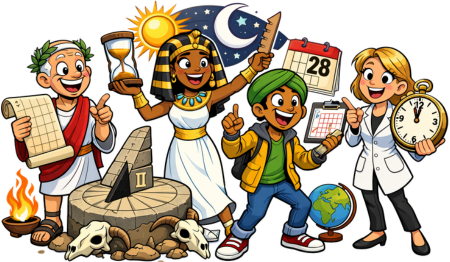
It may look like just another short month on the calendar, but behind it sits a long history of timekeeping experiments, political power plays, and cultural traditions that still shape how we measure the year today.
Because February was never really just about romance.
It was about reset.
Go Beyond February!
At Kasa de Franko, we turn every calendar month into a deep dive into history, culture, and wild Roman shenanigans — from ancient rituals to modern-day fiestas.
Our Spanish classes immerse you in the juicy backstories behind the calendar, showing how language, tradition, and timekeeping are more connected than they seem.
Curious about why the months are named the way they are? Wondering how leap years quietly mess with time itself?
Check out our Leap Year and Days & Months sections on the Kasa de Franko Blog — because timekeeping has never been this entertaining.
Want to Spice Up Your Spanish?
If learning Spanish by the book sounds boring, don’t worry—we prefer things with a little more picante like Things Spanish People Say in the Bedroom! Our cheeky series includes gems like:
- Spanish is Sexy
- Dancing with Words
- Unleashing the Spanish Passion
- Peru’s Pre-Hispanic Erotic Ceramics
- Learning Spanish is Hot—Only $9.50/hr!
- Sexy Christmas in Japan!
- How to use Ser or Estar to say Sexy in Spanish?
- Unveil The Secrets of the Language of Love
- How to Say ‘Happy Valentine’s Day’ in Spanish?
And the best part? You’re learning real Spanish—perfect for actual conversations… or just impressing (or confusing) your friends.

Legends & Folktales!
We also explore the wild, spooky, and downright bizarre stories behind la LLorona, la Ciguapa, El Sexi Chupacabras, Sarita Colonia & Her Magic Kitty, Santa Muerte: People’s Saint! —but with that KDF twist that makes legends feel like your telenovela-loving aunt is telling them over a glass of wine.

Laugh & Learn!
Nothing beats learning Spanish and laughing at the same time. Our Language Bloopers collection includes classics like:
- “Me gusta la chucha de tu madre” (Yeah! Don’t say it.)
- “Feliz Año Nuevo” (Say it wrong, & you’re wishing a Happy Butt Year.)
- “Can I molestate you?” (No. Just… no.)
Trust us, you’ll never forget these lessons.

Spanish Lessons at Just $9.50/hr?
Wait… what? Yes! Learn real, conversational Spanish for just $9.50 an hour! Whether you’re a total beginner or just need to brush up on your skills, we make it fun, effective, and affordable. Learn Spanish from Your City or Anywhere!

Red Means Free!
Click the big red button for your holiday gift—because at Kasa de Franko, we believe learning should be full of love, laughter, and a little bit of mischief. And while you’re here, uncover the real story behind December’s name—you might be surprised!