
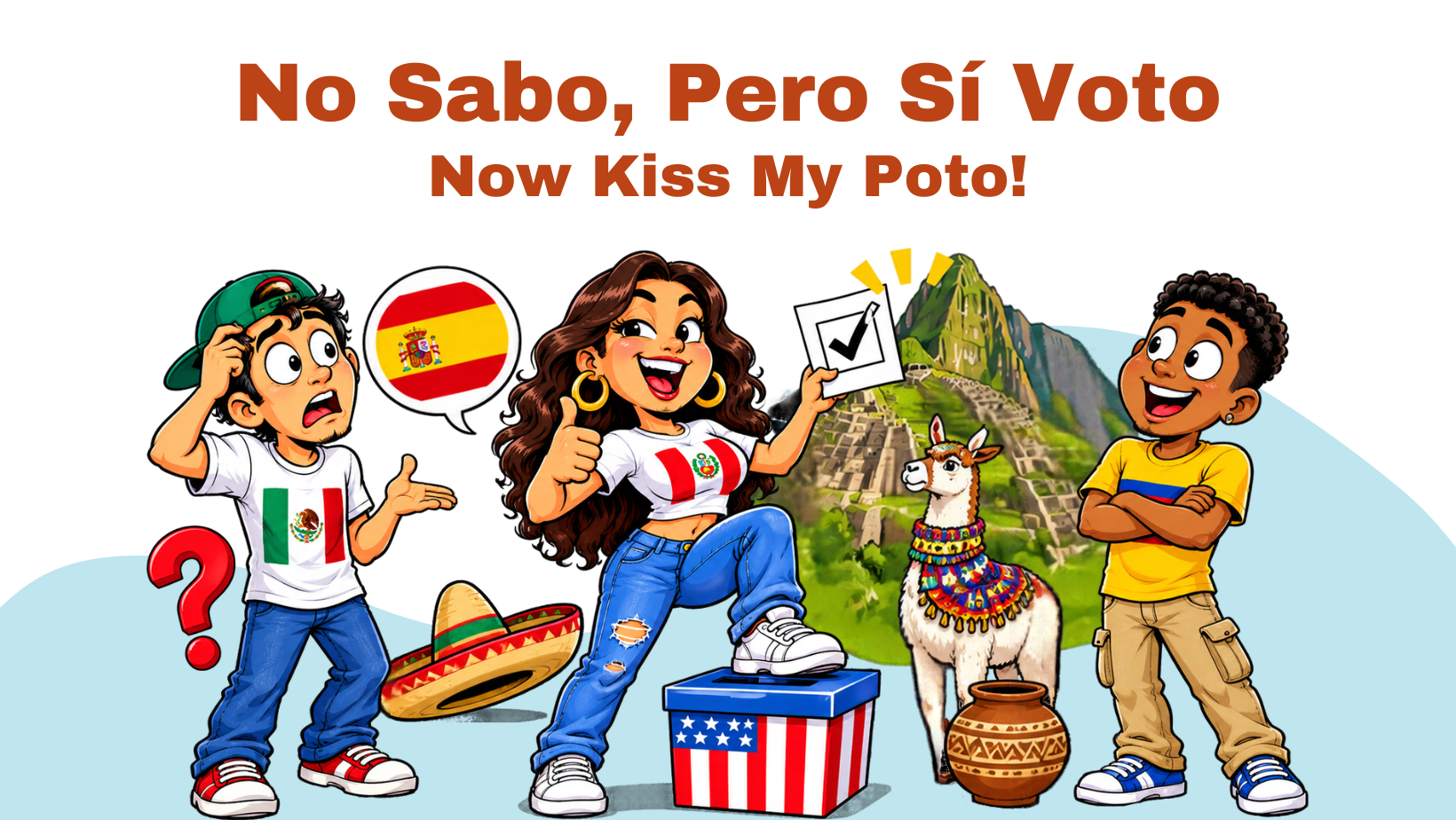
So, Where in Mexico Is Peru? ¡Si No Sabo, Don’t Be a Nabo Bro!
That’s how he answered her question. But why explain it when we can let these two do the talking? And here they are, Lorna Dummy & Gilberto Nabo:
— So, do you know I’m Peruvian, right? Gilberto asked her.
— Yeah! I know! That’s why I’m asking whether Peru is in northern or southern Mexico. ¡Yo no sabo! she replied, very confused.
— First of all, Peru is its own country. So, it’s not part of Mexico. And… ¡Yo no sabo! is grammatically incorrect.
— What’s your problem with my No Sabo Spanish?
— Well, I don’t have a problem at all with your No Sabo Spanish, but there is a problem with assuming all Hispanics are Mexican.
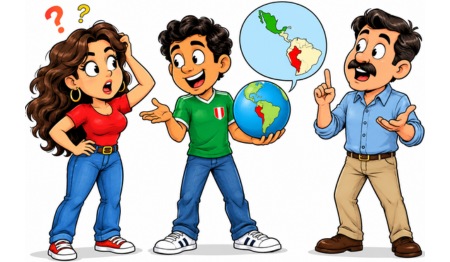
— Okay… So What Are You?
— Well, I just told you: I am Peruvian. You know, Peru? South America? Machu Picchu? Ceviche? The country that gave the world the potato, quinoa, pisco, etc.? You’re welcome.
— What’s that got to do with anything?
— Apparently, everything. Because every time I see one of those No Sabo posts, there’s a Mexican flag, Mexican music, and somebody acting like the entire Latino population was born somewhere between Tijuana and Guadalajara. News flash: not all Hispanics are Mexican. And not all Mexicans are the official representatives of the Spanish-speaking world. So, relax.
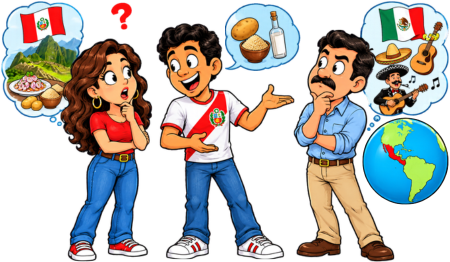
— So, You’re a No Sabo Kid?
— I’m happy to be a No Sabo whatever. But do you even know what No Sabo means?
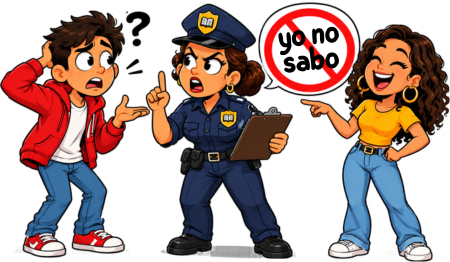
— No, I don’t, but more importantly, who appointed you the Spanish police?
— As I said, the problem wasn’t your Spanish. The problem was you assuming I am Mexican when I am not. It’s not that complicated. You don’t need to speak Spanish to understand basic geography and general knowledge, because when you assume, you make an ass of yourself and me.

— Ah, sí sabes hablar español…
… Now we’re getting somewhere. But here’s a little problem: you seem to have a lot to say about my Spanish. I wonder whether you’ll have as much to say about your vote.
— My vote? Well… knowing the difference between yo sé and yo sabo may not be enough to speak Spanish, but at least I know where the ballot box is.
And there it is. The No Sabo generation: apparently not qualified to speak Spanish, but perfectly qualified to help decide who runs the country.
Funny how that works. Okay, enough talking. Let’s get to the point! Mucho floro y pocas nueces.

Welcome to the No Sabo Club
By now, you’ve probably seen the internet having a collective nervous breakdown over kids who say yo no sabo. Apparently, one little conjugation mistake is enough to send an entire comment section into linguistic police mode.
Basically, a No Sabo Kid is what people call someone who says yo no sabo instead of yo no sé.
That’s it. One little verb. Two little words. And somehow we’ve managed to turn a conjugation mistake into a cultural identity crisis.
Congratulations, Spanish grammar. You’ve officially been promoted to immigration officer.
No Sabo, No Problem? Let’s Talk About It!
Now, here’s where things get interesting. Making a mistake in Spanish is hardly a crime. If it were, half the Spanish-speaking world would need a lawyer, and the other half would be serving time.
But somehow, this little expression has become everybody’s business. What started as a joke about a grammatical mistake is now being used to judge an entire generation. Suddenly, everybody has an opinion about somebody else’s Spanish, and apparently, some people have appointed themselves guardians of Latino identity. Seriously?
But why? And who exactly gets to decide how much Spanish is enough? Before we start handing out cultural membership cards, perhaps we should look at what we’re actually arguing about.

One Little Verb, One Big Problem
Okay, let’s get one thing straight before somebody calls the Real Academia Española and reports a grammatical emergency.
The verb saber means “to know.” And if you want to say “I know” in Spanish, you say yo sé, not yo sabo. That’s it. No secret code, no hidden conjugation, no grammatical conspiracy against the No Sabo generation.
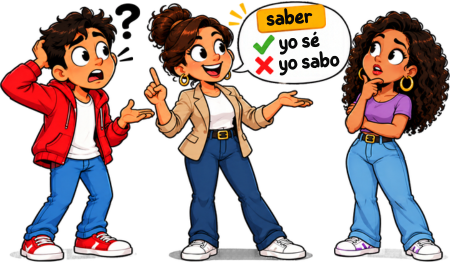
So Where Does “No Sabo” Come From?
Well, Spanish has a little habit of making verbs follow patterns. You learn one, then another, and another, and eventually your brain starts thinking it’s figured out the system. Until saber shows up and ruins the party.
It’s an irregular verb. In other words, it refuses to play by the rules. And somebody, somewhere, decided to make it regular. Congratulations! We have a new verb. Unfortunately, the Real Academia Española hasn’t approved the application.
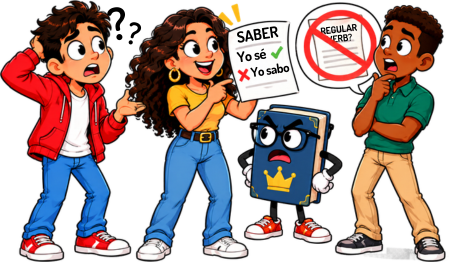
Mistakes Don’t Mean Not Belonging
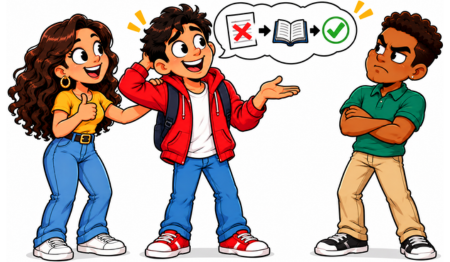
But here’s the thing: making a mistake doesn’t mean you don’t belong. Kids make mistakes all the time. So do people learning a second or third language. And before anybody gets too comfortable pointing fingers, native speakers aren’t exactly walking dictionaries either.
That’s how learning works. You try, you mess up, somebody corrects you, you try again. Big deal. Nobody came out of the womb conjugating irregular verbs.
But apparently, that’s not good enough for everybody. Some people would rather turn your conjugation into a cultural background check. Suddenly, yo no sabo becomes proof that you’re not Latino enough.
And that’s where this conversation gets a whole lot more interesting.
So, Who Are These No Sabo Kids?
The expression usually refers to young Latinos in the United States who grew up with Spanish somewhere in the family background but never really picked it up themselves.
Or maybe they did, just not enough to have a comfortable conversation without getting stuck every other sentence. Some understand everything but struggle to answer.
Others can get by just fine until somebody throws an unfamiliar word at them. Some speak enough to order food, argue with Grandma, or get themselves into trouble.
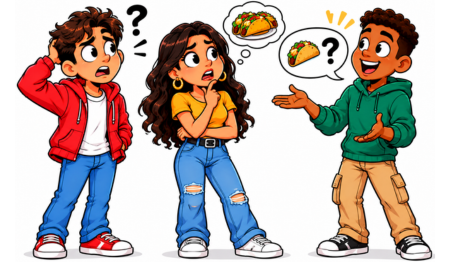
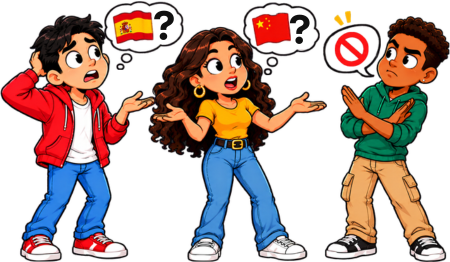
And For Others? Is It Chinese?
Well, Spanish might as well be Mandarin. Then there are those who simply don’t want to speak it. And that’s another conversation altogether.
Because lumping everybody into one big No Sabo category doesn’t tell us much about who they are, how they grew up, or what Spanish means to them.
People aren’t factory-produced cultural packages. There’s no standard Latino starter kit.
The Language Didn’t Disappear by Magic
So how does a kid grow up in a Latino household and not speak Spanish?
Well, you’d be surprised how many different stories there are behind that question. Some families have been in the United States for generations.
Others arrived more recently. Some parents speak Spanish at home, others switch to English, and some do a little of both. And the kids? They grow up speaking whatever language they use every day. Go figure.

When Spanish Doesn’t Make It to the Next Generation
Then you have parents who actually make a point of speaking English to their children. Not because they hate Spanish, but because they remember what it was like not to speak English well.
They don’t want their kids dealing with the same crap. Fair enough. But sometimes the result is that Spanish stays with the parents while the kids grow up without much of it.
So, before we start questioning somebody’s Latino credentials over a badly conjugated verb, perhaps we should remember one little detail: Spanish isn’t hereditary. Grandma can speak it all day long. That doesn’t mean her grandchildren will.
